



The training required for a Medical Degree requires a sufficient faculty structure to guarantee the acquisition of general practitioner skills. The National Conference of Deans of Spanish Medical Schools (CNDFME) has highlighted the significant faculty shortage, maintaining collaboration with university and healthcare institutions, promoting an increase in accredited faculty, modifications to the accreditation model, and the implementation of new teaching positions.
The evolution of accredited faculty for the Health Sciences Branch (2019–2024) is described: the number of accredited permanent teachers has increased significantly. The modifications to the accreditation processes incorporated in the Organic Law of the University System (LOSU) and the new accreditation model (RD 678/2023) are considered positive in encouraging the best professionals to join the faculty of the Schools of Medicine.
La formación que requiere el Grado de Medicina precisa una estructura suficiente de profesorado que garantice la adquisición de las competencias de médicos generalistas. Desde la Conferencia Nacional de Decanas/os de Facultades de Medicina Españolas (CNDFME) se ha puesto de manifiesto el importante déficit de profesorado existente, manteniendo una colaboración con instituciones universitarias y sanitarias, promoviendo un aumento del profesorado acreditado, modificaciones en el modelo de acreditación e implementación de nuevas figuras docentes.
Se describe la evolución del profesorado acreditado por ANECA para la Rama de Ciencias de la Salud (2019–2024): el número de personas acreditadas ha aumentado de manera significativa. Las modificaciones sobre los procesos de acreditación incorporadas en la Ley Orgánica del Sistema Universitario (LOSU) y el nuevo modelo de acreditación (RD 678/2023) se consideran positivas para favorecer que los mejores profesionales se incorporen como profesorado a las facultades que ofertan el Grado de Medicina.

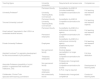
In order to guarantee students acquire the competencies of a general practitioner, the education provided in undergraduate medical degrees1 requires a sufficient structure of permanent basic and clinical faculty (University Professors, Tenured University Lecturers, and Hired Permanent Lecturers), temporary hired faculty (Assistant Lecturers and Associate Lecturers), and clinical tutors/honorary collaborators, who must receive the highest possible academic and professional recognition. Table 1 shows the main characteristics of these teaching figures.
Teaching positions, university affiliation, requirements, and access routes.
| Teaching figure | University connection | Requirements and access route | Competences |
|---|---|---|---|
| University Professora | Permanent faculty | Accreditation by ANECA (includes leadership) | Full teaching and research capacity |
| University Teaching Body Civil Servant | Competitive examinations for access | ||
| Tenured University Lecturera | Permanent faculty | Accreditation by ANECA | Full teaching and research capacity |
| University Teaching Body Civil Servant | Competitive examinations for access | ||
| Hired Lecturera (equivalent in the LOSU to a contracted doctoral lecturer) | Permanent faculty | Accreditation by ANECA or autonomous community agency | Full teaching and research capacity |
| Permanent employees | Competitive examinations for access | ||
| Private University Professor | Employees | Accreditation by ANECA or autonomous community agency | Full teaching and research capacity |
| Established by each university | |||
| Assistant Lecturersa (in regulatory development for the announcement of joint positions) | Non-permanent faculty | Doctoral degree (accreditation no longer required) | Full-time dedication |
| Temporary employees | Competitive examinations for access | ||
| Associate Professors (possibility of a joint position in agreement with healthcare institutions, CIS) | Non-permanent faculty | Professionals of recognized competence | Development of teaching tasks |
| Competitive examinations for access | |||
| Temporary employees | A Ph.D. may be required | ||
| Collaborator, Clinical Tutor | Not contractually bound | Professionals of recognized competence | Conduct of teaching tasks |
| Specialist with teaching commitment |
AQU, the Catalan University Quality Assurance Agency, also accredits the following teaching figures: Lecturer (equivalent to Assistant Lecturer), Associate Professors (accreditation of research, permanent work contract with competencies equivalent to those of Tenured University Lecturer and Hired Permanent Lecturer), and Hired University Lecturers (accreditation of advanced research, permanent work contract with competencies equivalent to those of University Professor).
UNIBASK, the Agency for Quality of the Basque University System, also accredits the following teaching figures: Researcher Doctoral Lecturer (equivalent to Assistant Lecturer), Associate Professors (accreditation of research, permanent work contract with competencies equivalent to those of Tenured University Lecturer and Hired Permanent Lecturer), full professors (accreditation of advanced research, permanent work contract with competencies equivalent to those of University Professor), and Research Professors (it is necessary to hold a Ph.D. and have a significant research trajectory in addition to teaching experience).
The accreditation of University Professors (CU, for its initials in Spanish) and Tenured University Lecturers (PTU) is carried out through the Academia Program2 of the National Agency for Quality Assessment and Accreditation (ANECA), though Organic Law 2/2023 on the University System3 (LOSU) stipulates that autonomous community quality agencies may enter into agreements to carry out these accreditations (art. 69). Accreditation as a Hired Permanent Lecturer (PPL) and Private University Professor (PUP) can be obtained through ANECA4 and through autonomous community university quality agencies.
The term Adjunct Permanent Professor is used when this teaching position includes a simultaneous position in the healthcare and public health services of healthcare institutions. National or autonomous region regulations establish the amount of time to be spent at each of the institutions, which is generally distributed in two-thirds of the working day at the health institution and the remaining one-third in the university institution.
In the worrying scenario of lack of teaching staff for undergraduate medical degrees, especially in clinical areas, some actions carried out by the National Conference of Deans of Spanish Faculties of Medicine (CNDFME) and the changes in permanent teaching staff accredited by ANECA in the health sciences branch are described. In addition, the expectations proposed by the LOSU,3RD 678/2023, which regulates state accreditation for access to university teaching bodies and the system of competitive examinations for access to positions in these bodies,5 and the new Evaluation criteria for obtaining accreditation6 are discussed.
Accreditation is a merit of those who obtain it, but it is essential that the criteria are in line with the reality of our university and healthcare systems, making it possible for the best medical professionals to serve as faculty in order to provide a quality education for the next generations of professionals who will care for our health.
Evolution of the permanent teaching staff accredited by aneca in the health sciences branchShortage of professorsThere is a worrying shortage of teaching staff, which has an impact on other health sciences degrees.7 This was highlighted in the study “Predicted change in the number of permanent medical teachers from 2017 to 2026. The training of future physicians in critical condition,”8 which showed that 43% of the permanent teaching staff will retire in this decade (55% for those linked to health centers). This highlights the need to adopt urgent measures.
Very few people applied for accreditation and even fewer obtained it. In 2019, the criteria were modified without addressing the proposals made.9 That year, only 40 individuals were accredited as PTU for all the faculties that offer undergraduate medical degrees (then 43), involving up to 25 knowledge areas. Only 102 applications were submitted and the favorable report rate was only 40%, demonstrating the excessive difficulty of the current criteria. Potential candidates did not even try, a situation that reflects disaffection for collaborating with university education.
Estimation of the need for professorsSince 2015, the CNDFME has made numerous proposals to ANECA requesting a higher valuation of teaching activity, including clinical tutoring and honorary collaborations; healthcare activity, which should be as important as teaching and research; and adequate research activity.
The willingness shown by the General Secretariat of the Ministry of Universities and the ANECA Management from 2020 to the present to seek solutions to such a serious situation is very much appreciated. In fact, in 2021, the CNDFME presented the “Study of the academic half-life of permanent professors with teaching in the degree of medicine. Estimation of the need for professors,”10 agreed on by both institutions. For public universities, the deficit of Permanent Professors and Assistant Lecturers (PAD) amounted to 2654 adjunct and 1163 non-adjunct professors. The average age for a PTU position was 54 years; for adjunct CU positions, it was 65 years. Another review of the accreditation criteria was insisted upon, as well as the priority of extending the figure of Adjunct Hired Lecturer (now in the LOSU, adjunct PPL) to the national level and implementing the figure of an adjunct PAD.8
The increase in the number of accreditations has a real impact on teaching quality. First, among many other considerations, permanent teaching staff bear the major responsibilities regarding the coordination, organization, and quality of the teaching provided. A dearth in this type professor means responsibilities must be assumed—and this happens frequently—by non-permanent teaching staff with less availability. It also requires additional dedication, which highlights their commitment to teaching. On the other hand, the increase in permanent faculty entails an improvement in the student/faculty ratio in the health sciences branch. As has been noted,10 this ratio should be similar to that of the sciences, since both branches share similar teaching needs in terms of the small number of students that must make up the internship groups, especially in healthcare centers. However, according to information from the Ministry of Universities, the current ratio is similar to that of the social and legal sciences branch. It would be necessary to hire three times the current faculty to have a ratio similar to that of the sciences. With the increase in the number of accreditations, this imbalance is beginning to be corrected.
Modification of the criteria in December 2022ANECA, in agreement with the General Secretariat of the Ministry of Universities, immediately set up a commission to review these criteria (in accordance with RD 415/2015), in which members of the CNDFME and other colleagues participated. The commission worked for 18 months, leading to a significant modification of the criteria for the health sciences branch in 2022.11
Pursuant to RD 415/2015, the criteria prioritized research and teaching; a positive evaluation in these two dimensions was sufficient to obtain accreditation. In the event that the minimum level required was not reached, it could be compensated by virtue of relevant merits in the remaining dimensions: knowledge transfer and professional activity, management, and training. ANECA and the committees were responsible for approving these criteria. They were collected in a 122-page document of tables with an exhaustive list of the curricular merits that could be provided. Research activity in the health sciences branch had to be accredited by a high number of publications with a very high impact factor—which was almost exclusively within the reach of very consolidated research groups—and neither teaching collaboration nor the healthcare and transfer activity of professionals at healthcare institutions was adequately recognized.
Regarding research, following the modifications to the criteria for the health sciences branch in 2022,11 the range of publications evaluated was expanded and the required impact factor was adapted. In teaching, difficulties were resolved, such as the appropriate certification of years and hours of teaching, the justification of teaching quality, the number of hours required, and the teaching of honorary positions. In transfer and professional activity, the number of merits was increased to compensate for a deficit in research or teaching (present, above all, in health professional profiles).
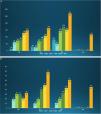
Changes in ANECA-accredited teaching personnelChanges in the accreditations of Tenured University Lecturers and University Professors in the Health Sciences Branch by the evaluating committees: Committee of Biomedical Sciences and Related Clinical Specialties (B6), Committee of Clinical Medicine and Clinical Specialties (B7), and Committee of Health Specialties I and II (B8 and B9). The graphs have been prepared by the CNDFME based on the annual reports published by ANECA.
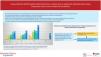
There has been a significant increase in the number of accreditations (Fig. 1A and B). In the case of PTU, compared to 2019, there was a 1,064% increase (149 accreditations) in Committee B6, 635% increase (165 accreditations) in Committee B7, and 479% increase (378 accreditations) in Committees B8 and B9 by 2024. In the case of CU, compared to 2020, there was a 73% increase (33 accreditations) in Committee B6, 780% increase (78 accreditations) in Committee B7, and 972% increase (107 accreditations) in Committees B8 and B9 by 2024. Just as remarkable as the increase in the number of accreditations was the increase in the number of applications and the percentage of accreditations out of the total number of applications. This shows that there is now indeed a greater interest in becoming involved with university education. Although these changes are very significant, their number is still insufficient to make up for the existing professor shortage, which began in 2010.

A. Accreditations to Tenured University Lecturers in the Health Sciences Branch in the period 2019–2024 (ANECA Academy Program). B. Accreditations to University Professor in the Health Sciences Branch in the period 2020–2024 (ANECA ACADEMIA Program).
B6: Committee on Biomedical Sciences and Related Clinical Specialties; B7: Committee on Clinical Medicine and Clinical Specialties; B8 AND B9: Committee on Health Specialties I and II. Each column shows the number of favorable accreditation reports. It also indicates the number of applications and the percentage of favorable reports for those applications. Graphs prepared by the authors based on data published by ANECA.
ANECA also has the Teacher Evaluation Program for Recruitment4 (PEP), in which the evaluation for hired teaching positions is carried out. In the case of public universities, the law requires a favorable evaluation for PPL figures. With the LOSU,3 accreditation prior to PAD is not required (art. 78); quality agencies no longer perform this accreditation, although it will be considered meritorious until 2027. In the case of private universities, the LOSU3 establishes that 60% of the total number of doctoral professors must have obtained a positive evaluation from ANECA for the position of PUP (art. 99).
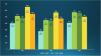
It also shows changes in the number of accredited faculty hired in the PEP Program (period 2020/2024) by ANECA, which has seen no significant changes during this period (Fig. 2). They are the group of people accredited in the health sciences branch, which includes 12 undergraduate degrees, medicine among them. In addition to this teaching staff are those accredited by the autonomous community quality agencies (partial data available in their annual reports), where, in general, no significant changes have been observed. The diversity of teaching figures included in AQU Catalunya12 and Unibasq-Agency for Quality of the Basque University System13 should also be considered (Table 1).

Accreditations to Hired Permanent Lecturer (previously Hired Lecturer), Professors at Private Universities, and Assistant Lecturers in the Health Sciences Branch in the 2020–2024 period (ANECA’s PEP Program).
PPL: Hired Permanent Lecturer, PUP: Private University Professor, PAD: Assistant Lecturer. Each column shows the number of favorable accreditation reports. It also indicates the number of applications and the percentage of favorable reports for those applications. Graphs prepared by the authors based on data published by ANECA.
It is also noteworthy that at least the ACCUA14 Agency of Andalusia and the ACPUA15 Agency of Aragon have specific accreditation procedures for the accreditation of PPL with clinical agreements in which the health quality agencies also participate, with a specific assessment of the healthcare activity. It is surprising that some autonomous communities have not yet implemented the figure of the adjunct PPL (formerly Adjunct Hired Lecturer), since it is one of the effective measures to alleviate the deficit of clinical faculty,16 which is the most pressing.
In regard to the accreditation model of countries in this setting, the European Association for Quality Assurance in Higher Education provides general criteria and guidelines on everything related to university teaching. Although there is no single accreditation at the European level, a parallel can be drawn between Spain’s system of university teaching staff accreditation and that of other European Union countries such as Italy, France, Germany, and Portugal. This is provided for in Spain in RD 678/2023, which regulates accreditation for access to university teaching bodies5 so that the accreditation procedure does not constitute a barrier to internationalization. This decree stipulates that ANECA must have procedures in place to recognize the permanent teaching staff of universities in European Union member states as accredited. It also stipulates that the teaching staff of universities in other European Union member states who have attained a position at least comparable to that of PTU may apply for accreditation as CU.
Expectations of the LOSU and the new accreditation modelThe new accreditation model reflects many of the proposals made by CNDFME, other health sciences conferences, and many colleagues, as shown below. Knowledge of the model has generated satisfaction among healthcare professionals. It is already being implemented and it will be very interesting to monitor its results. It is foreseeable—and it has been suggested by the first data available—that there will be a considerable increase in the number of accredited teachers. However, it would be necessary to reconsider the recognition of associate professors (PAs), since they often have to perform tasks that correspond to permanent faculty, especially in clinical knowledge areas. Likewise, regarding the requirement of having completed a practicum at a research center, the request is reiterated that research activity conducted at the university institution may be recognized for such purposes.
Simplification of the ANECA Academia Program accreditation procedure. Analogous consideration of teaching experience and research experienceRD 678/2023,5 which regulates state accreditation for access to university teaching bodies, unifies the accreditation and competitive examinations for access in a single regulation and expounds upon the innovations included in the LOSU.
The LOSU3 introduces the analogous consideration of teaching and research experience, including transfer, in the accreditation process (art. 51). It provides for its simplification and the inclusion of a greater variety of methods, criteria, and contributions evaluated (art. 69). The evaluation is based on the selection of a limited number of contributions and the narrative on their quality, relevance, and impact.5,6 It guarantees a “qualitative as well as quantitative” evaluation of merits, with a wide range of indicators of scientific relevance and social impact (previously based mainly on the Journal Citation Report impact factor).3,5,6. It integrates feedback from the international movement for reform of research evaluation,5,6which have also been incorporated into the evaluation of merits for ANECA accreditation of the six-year research and transfer periods.17
For sufficient teaching accreditation, the number of full-time equivalent hours/year has been reduced6 (e.g., a minimum of four years is required for PTU accreditation).
It also includes a repeated request for adequate recognition of the teaching activity carried out by PAs and clinical tutors/honorary collaborators (called “specialists with teaching commitment” by ANECA).6 “Associate professor and temporary substitute professor contracts shall be considered full-time when they reach 6h of class time per week (180h of annual teaching capacity). The rest of the contracts for associate professors and temporary substitute professors shall be considered part-time. In the case of contracts for adjunct faculty (health sciences), each 1.5 years of clinical activity as a specialist with a teaching commitment with a university (clinical professor or similar figure) will be considered 1year of full-time dedication.”
For CU accreditation, it is necessary to demonstrate leadership skills,6 including leadership of teaching and research teams, university and scientific direction and management, doctoral theses and Master’s theses, and responsibility in scientific organizations and scientific-technical committees. These merits are not required for PTU accreditation.
Evaluation of the professional healthcare activityFrom the CNDFME, we requested that the Ministry of Universities consider professional healthcare activity to be as important as teaching and research for health sciences clinical areas. For the accreditation of university teaching bodies, the LOSU3 stipulates that professional healthcare activity must be evaluated (art. 69): “(…) An evaluation based on the specificity of the area or field of knowledge taking professional experience into account, among other criteria, especially when it concerns, among others, regulated professions in the health field (…).”
RD 678/2023,5 which regulates state accreditation for access to university teaching bodies (art. 21), does as well, including merits related to professional activity: “(…) after hearing the corresponding committees, ANECA will establish the merits and competencies to be considered in the assessment of applicants’ professional experience, especially in the case of regulated professions and artistic education." In fact, ANECA indicates in its evaluation criteria document,6"For accreditation to PTU and CU in the health sciences clinical areas, it will be necessary to justify five years of professional experience in clinical activity, public or private, with the period of Specialized Health Training able to be included.” These criteria must be specified by ANECA and the specific health sciences committees.
Connection of healthcare positions with any type of university professorshipsThe LOSU3 includes another of the CNDFME’s requests in its second final provision, modifying art. 105 of Law 14/1986, the General Health Law: “Within the framework of the healthcare and teaching planning of the public administrations, the system of agreements between universities and healthcare institutions may establish a connection between certain healthcare and public health positions of the healthcare institution with any type of university teaching position (…) A health sciences specialist degree will be essential in the case of individuals with a university degree in medicine (…).”
The accreditation of adjunct PPL and the possibility of initiating the implementation of the figure of PAD are provided for, defining a professional promotion pathway—both at the university and healthcare institution—for young specialists with special interest in research and teaching. In fact, some autonomous communities are approving regulations for this new teaching figure (the most advanced projects are in Murcia, Aragon, and Andalusia). It is also important to promote support programs that allow the hiring of young specialists, facilitating their accreditation as PPL. This is the case of the María Castellano Arroyo Program18 in Andalusia, where the first positions have been announced.19
The first evaluations under the new model and accreditation criteria are being conducted. It may lead to a significant increase in the number of individuals accredited as permanent faculty in medical schools.
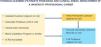
Academic pathways for accreditation as a permanent professorOne of the consequences of the above is that access to adjunct or non-adjunct faculty positions (CU, PTU, or PPL) can be obtained from different teaching positions and pathways (Fig. 3):
- a)
The most common way is to access these positions from the position of Associate Professor, normally in positions with an Agreement with Health Institutions (CIS).
- b)
Those interested in an academic career can start teaching as an honorary clinical collaborators/lecturers. Such participation in teaching is considered meritorious in a relevant way for accreditation, as mentioned above. It can even begin after completing the second year of residency, depending on the Autonomous Community. ANECA refers to them as specialists with teaching commitment.
- c)
For those who have recently completed the specialty, it will be especially interesting to know about the implementation and calls for adjunct PAD positions, in the terms discussed above, or the figure that exists in Andalusia and which is being studied in other Autonomous Communities, namely the María Castellano Arroyo Program. The objective of both figures is to incorporate professionals with an interest in teaching and research, offering them a six-year temporary contract that allows them to be accredited as permanent professors.
- d)
It should be noted that a minimum of 15% of the total number of open positions are reserved for the incorporation of teachers with a highly consolidated research profile, mostly from biomedical research institutes (accredited by the Incentive Program for the Incorporation and Intensification of Research Activity (I3)), or those who have obtained a certificate as an established researcher (R3).3,5,6
- e)
Access to the positions of University Professor or Tenured University Lecturers from the position of Hired Permanent Lecturer.
- f)
The LOSU provides for accreditation as PTU and CU to be requested simultaneously, in the event that very relevant research merits are provided.

For too many years, university accreditation for medical degree faculty has been an obstacle course, even causing disaffection for teaching. The situation is different now, with a new accreditation model and criteria that will facilitate the incorporation of professionals who stand out in their healthcare work and show a special interest in teaching and research.
This information, which will continue to be updated, should be adequately disseminated via coordinated actions among university and health institutions so that it reaches all professionals and serves as a motivation for the youngest among them. It will also be necessary to approve a sufficient financial allocation for the call for teaching positions that guarantee quality training for future classes of medical professionals who will take care of our health.
FundingThis paper has received funding from the University of Málaga / CBUA for open access publication.
The authors of the paper have held meetings, prepared reports that have been submitted to ANECA, and participated in ANECA committees to make proposals on the accreditation model and criteria, as shown in the article.
To Prof. Miguel Ángel Barbancho Fernández and Prof. Encarnación Blanco Reina of the University of Málaga School of Medicine and Ms. Mercedes de Blas Martínez, Technical Secretary of the CNDFME, for her collaboration in the preparation of this manuscript.
Antonio F. Compañ Rosique (Presidente), Facultad de Medicina de la Universidad Miguel Hernández
Tomás Chivato Pérez (Vicepresidente), Facultad de Medicina de la Universidad CEU San Pablo
Anna Casanovas Llorens (Secretaria General), Facultad de Medicina de la Universitat de Lleida
Francisco J. Lanuza Giménez (Tesorero), Facultad de Medicina de la Universidad de Zaragoza
Joseba G. Pineda Ortiz (Vocal), Facultad de Medicina y Enfermería de la Universidad del País Vasco/Euskal Herriko Unibertsitatea
Inmaculada Ballesteros Yáñez (Vocal), Facultad de Medicina de Ciudad Real de la Universidad de Castilla la Mancha
Marta Ferrer Puga, Facultad de Medicina de la Universidad de Navarra
Pilar López García (Vocal), Facultad de Medicina de la Universidad Autónoma de Madrid