
Suggestions
Idioma
Guide for authors
Searcher
Journal Information
Vol. 225. Issue 3.
Pages 117-178 (March 2025)
Cite
Cite
Share
Download PDF
More article options
Visits
1672
Vol. 225. Issue 3.
Pages 117-178 (March 2025)
Special article

Diagnosis and treatment of pulmonary embolism. Recommendations of the Thromboembolic Disease Group of the Spanish Society of Internal Medicine 2024

Diagnóstico y tratamiento de la embolia pulmonar. Recomendaciones del Grupo de Enfermedad Tromboembólica de la Sociedad Española de Medicina Interna 2024
Visits
1672
M.A. Fidalgo Fernándeza, O. Madridano Cobob, C. Sánchez del Hoyoc, A. Rodríguez Iglesiasd, N. Muñoz-Rivase,
Corresponding author
nurmun02@ucm.es

Corresponding author.
, M. Martín Asenjof
a Medicina Interna, Hospital Universitario de Salamanca, Universidad de Salamanca, Salamanca, Spain
b Medicina Interna, Hospital Universitario Infanta Sofía, Madrid, Spain
c Medicina Interna, Hospital de Medina del Campo, Medina del Campo, Valladolid, Spain
d Medicina Interna, Hospital Clínico Universitario de Valladolid, Valladolid, Spain
e Medicina Interna, Hospital Universitario Infanta Leonor, Universidad Complutense Madrid, Madrid, Spain
f Medicina Interna, Hospital Clínico Universitario de Valladolid, Universidad de Valladolid, Valladolid, Spain
This item has received
Article information
Abstract
Full Text
Bibliography
Download PDF
Statistics
Abstract

Pulmonary embolism (PE) is a disease with a rising incidence rate. This article presents the recommendations for the diagnosis and treatment of PE of the Thromboembolic Disease Group of the Spanish Society of Internal Medicine (SEMI). The main objective is to facilitate decision making to improve the diagnostic and therapeutic approach based on published evidence. The final justification of the document is to improve the comprehensive care of the patient with PE.

Keywords:
Pulmonary embolism
Diagnosis
Treatment
Anticoagulation
Fibrinolysis
Abbreviations:
DOACs
VKA
CrCl
DD
VTE
PE
VCF
LMWH
UFH
PESI
CPR
rTPA
APS
SBP
DVT
RV
PPV
NPV
IU
Resumen

La embolia pulmonar (EP) es una enfermedad con tasa de incidencia en ascenso. Este artículo recoge las recomendaciones para el diagnóstico y el tratamiento de la EP del Grupo de Enfermedad Tromboembólica de la Sociedad Española de Medicina Interna (SEMI). El objetivo principal es facilitar la toma de decisiones para mejorar del abordaje diagnóstico y terapéutico basándonos en las evidencias publicadas. La justificación final del documento es mejorar la atención integral del paciente con EP.

Palabras clave:
Embolia pulmonar
Diagnóstico
Tratamiento
Anticoagulación
Fibrinólisis

Article

These are the options to access the full texts of the publication Revista Clínica Española (English Edition)
Member
Si es usted socio de FESEMI siga los siguientes pasos:

Diríjase desde aquí a la web de la >>>https://www.fesemi.org/publicaciones/revista-clinica/noticias<<< e inicie sesión mediante el formulario que se encuentra en la barra superior, pulsando sobre el candado.
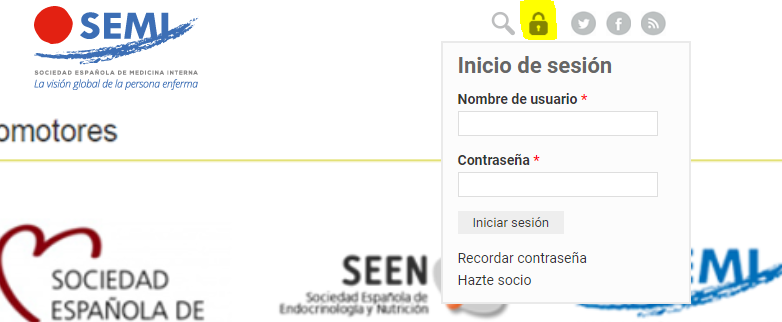
Deslice el cursor hacia abajo hasta la sección "PUBLICACIONES" y pinche en "Revista Clínica Española":

>>>https://www.fesemi.org/publicaciones/revista-clinica/noticias<<<


Subscriber
Subscriber

If you already have your login data, please click here .

If you have forgotten your password you can you can recover it by clicking here and selecting the option “I have forgotten my password”
Subscribe
Subscribe to
Revista Clínica Española (English Edition)
Purchase
Purchase article

Purchasing article the PDF version will be downloaded

Purchase now
Contact
Phone for subscriptions and reporting of errors
From Monday to Friday from 9 a.m. to 6 p.m. (GMT + 1) except for the months of July and August which will be from 9 a.m. to 3 p.m.
Calls from Spain
932 415 960
Calls from outside Spain
+34 932 415 960
Email
References
[1]
S.V. Konstantinides, G. Meyer, C. Becattini, H. Bueno, G.J. Geersing, V.P. Harjola, et al.
2019 ESC Guidelines for the diagnosis and management of acute pulmonary embolism developed in collaboration with the European Respiratory Society (ERS).
Eur Heart J, 41 (2020), pp. 543-603
[2]
L. Vicent, D. Martín de la Mota Sanz, N. Rosillo, E. Peñaloza-Martínez, G. Moreno, J.L. Bernal, et al.
Sex differences in temporal trends in main and secondary pulmonary embolism diagnosis and case fatality rates: 2003-2019.
Eur Heart J Qual Care Clin Outcomes, 9 (2023), pp. 184-193
[3]
T.L. Ortel, I. Neumann, W. Ageno, R. Beyth, N.P. Clark, A. Cuker, et al.
American Society of Hematology 2020 guidelines for management of venous thromboembolism: treatment of deep vein thrombosis and pulmonary embolism.
Blood Adv, 4 (2020), pp. 4693-4738
[4]
NICE Guideline Updates Team (UK).
Evidence review for the use of the pulmonary embolism rule-out criteria for diagnosis of pulmonary embolism: venous thromboembolic diseases: diagnosis, management and thrombophilia testing, National Institute for Health and Care Excellence (UK), (2020),
[5]
C. Kearon, E.A. Akl, J. Ornelas, A. Blaivas, D. Jimenez, H. Bounameaux, et al.
Antithrombotic therapy for VTE disease: CHEST Guideline and Expert Panel Report.
[6]
M. Scott, M.D. Stevens.
Antithrombotic therapy for VTE disease second update of the CHEST Guideline and Expert Panel Report.
Chest, 160 (2021), pp. e545-e608
[7]
J.L. Lobo, S. Alonso, J. Arenas, P. Domenech, P. Escribano, C. Fernández-Capitán, et al.
Consenso multidisciplinar para el manejo de la tromboembolia de pulmón.
Arch Bronconeumol, 58 (2022), pp. 246-254
[8]
P.S. Wells, D.R. Anderson, M. Rodger, J.S. Ginsberg, C. Kearon, M. Gent, et al.
Derivation of a simple clinical model to categorize patients probability of pulmonary embolism: increasing the models utility with the SimpliRED D-dimer.
Thromb Haemost, 83 (2000), pp. 416-420
[9]
A. Penaloza, C. Soulie, T. Moumneh, Q. Delmez, A. Ghuysen, D. el Kouri, et al.
Pulmonary embolism rule-out criteria (PERC) rule in European patients with low implicit clinical probability (PERCEPIC): a multicentre, prospective, observational study.
Lancet Haematol, 4 (2017), pp. e615-e621
[10]
M. Righini, J. Van Es, P.L. den Exter, P.M. Roy, F. Verschuren, A. Ghuysen, et al.
Age-adjusted D-dimer cutoff levels to rule out pulmonary embolism: the ADJUST-PE study.
JAMA, 311 (2014), pp. 11171124
[11]
T. Van der Hulle, W.Y. Cheung, S. Kooij, L.F.M. Beenen, T. van Bemmel, J. van Es, et al.
Simplified diagnostic management of suspected pulmonary embolism (the YEARS study): a prospective, multicentre, cohort study.
Lancet, 390 (2017), pp. 289-297
[12]
L.M. Van der Pol, C. Tromeur, I.M. Bistervels, F.N. Ainle, T. van Bemmel, L. Bertoletti, et al.
Pregnancy-adapted YEARS algorithm for diagnosis of suspected pulmonary embolism.
N Engl J Med, 380 (2019), pp. 1139-1149
[13]
P.M. Roy, I. Colombet, P. Durieux, G. Chatellier, H. Sors, G. Meyer.
Systematic review and meta-analysis of strategies for the diagnosis of suspected pulmonary embolism.
[14]
D. Jimenez, D. Aujesky, L. Moores, V. Gomez, J.L. Lobo, F. Uresandi, et al.
RIETE Investigators. Simplification of the pulmonary embolism severity index for prognostication in patients with acute symptomatic pulmonary embolism.
Arch Intern Med, 170 (2010), pp. 13831389
[15]
S.M. Stevens, S.C. Woller, K.A. Bauer, R. Kasthuri, M. Cushman, M. Streiff, et al.
Guidance for the evaluation and treatment of hereditary and acquired thrombophilia.
J Thromb Thrombolysis, 41 (2016), pp. 154-164
[16]
V. Pachón, J. Trujillo-Santos, P. Domènech, E. Gallardo, C. Font, J.R. González-Porras, et al.
Cancer-associated thrombosis: beyond clinical practice guidelines — a multidisciplinary (SEMI-SEOM-SETH) expert consensus.
TH Open, 2 (2018), pp. e373-e386
[17]
P.M. Erkens, M.H. Prins.
Fixed dose subcutaneous low molecular weight heparins versus adjusted dose unfractionated heparin for venous thromboembolism.
Cochrane Database Syst Rev, 9 (2010), pp. CD001100
[18]
S. Chatterjee, A. Chakraborty, I. Weinberg, M. Kadakia, R.L. Wilensky, P. Sardar, et al.
Thrombolysis for pulmonary embolism and risk of all cause mortality, major bleeding, and intracranial hemorrhage: a meta-analysis.
JAMA, 311 (2014), pp. 2414-2421
[19]
N. Kucher, P. Boekstegers, O.J. Müller, C. Kupatt, J. Beyer-Westendorf, T. Heitzer, et al.
Randomized, controlled trial of ultrasound-assisted catheter-directed thrombolysis for acute intermediate-risk pulmonary embolism.
Circulation, 129 (2014), pp. 479-486
[20]
G. Meyer, E. Vicaut, T. Danays, G. Agnelli, C. Becattini, J. Beyer-Westendorf, et al.
PEITHO Investigators. Fibrinolysis for patients with intermediate-risk pulmonary embolism.
N Engl J Med, 370 (2014), pp. 1402-1411
[21]
E. Renner, G.D. Barnes.
Antithrombotic management of venous thromboembolism. JACC Focus Seminar.
J Am Coll Cardiol, 76 (2020), pp. 2142-2154
[22]
S.R. Khahn, K. Wit.
Pulmonary Embolism.
N Engl J Med, 387 (2022), pp. 45-57
[23]
J.J. López-Nuñez.
Tratamiento de la embolia de pulmón. Detección de la hipertensión pulmonar tromboembólica crónica.
Rev Clin Esp, 220 (2020), pp. 69-77
[24]
N. Van Es, M. Coppens, S. Schulman, S. Middeldorp, H.R. Büller.
Direct oral anticoagulants compared with vitamin K antagonists for acute venous thromboembolism: evidence from phase 3 trials.
Blood, 124 (2014), pp. 1968-1975
[25]
Malhotra A, Weinberger SE. Deep vein thrombosis and pulmonary embolism in pregnancy: treatment. Available from: https://www.uptodate.com/contents/deep-vein-thrombosis-and-pulmonary-embolism-in-pregnancy-treatment.
[26]
V. Regitz-Zagrosek, J.W. Roos-Hesselink, J. Bauersachs, C. Blomström-Lundqvist, R. Cífková, M. de Bonis, et al.
ESC Scientific Document Group 2018. ESC Guidelines for the management of cardiovascular diseases during pregnancy.
Eur Hear J, 39 (2018), pp. 3165-3241
[27]
E. Romualdi, F. Dentali, E. Rancan, A. Squizzato, L. Steidl, S.A.W. Middeldorp.
Anticoagulant therapy for venous thromboembolism during pregnancy: a systematic review and a meta-analysis of the literature.
J Thromb Haemost, 42 (2013), pp. 1325-1330
[28]
S.M. Bates, I.A. Greer, S. Middeldorp, D.L. Veenstra, A.M.V.P. Prabulos.
VTE, thrombophilia, antithrombotic therapy, and pregnancy: antithrombotic therapy and prevention of thrombosis, 9th ed: American College of Chest Physicians Evidence-Based Clinical Practice Guidelines.
Chest, 141 (2012), pp. e691S-e736S
[29]
H. Cohen, D.R. Arachchillage, S. Middeldorp, J.A.-K.R. Beyer-Westendorf.
Management of direct oral anticoagulants in women of childbearing potential: guidance from the SSC of the ISTH.
J Thromb Haemost, 14 (2016), pp. 1673-1676
[30]
L. Leffert, A. Butwick, B. Carvalho, K. Arendt, S.M. Bates, A.H. Friedman, et al.
The Society for Obstetric Anesthesia and Perinatology Consensus Statement on the anesthetic management of pregnant and postpartum women receiving thromboprophylaxis or higher dose anticoagulants.
Anesth Analg, 126 (2018), pp. 928-944
[31]
W. Lim, F. Dentali, J.W.C.M. Eikelboom.
Meta-analysis: low-molecular-weight heparin and bleeding in patients with severe renal insufficiency.
[32]
M.D. Adam Bariteau, L.K. Stewart, T.W. Emmett, J.A. Kline.
Systematic review and meta-analysis of outcomes of patients with subsegmental pulmonary embolism with and without anticoagulation treatment.
Acad Emerg Med, 25 (2018), pp. 828-835
Idiomas
Revista Clínica Española (English Edition)
Article options
Tools
Supplemental materials
