

Suggestions
Idioma
Guide for authors
Searcher
Journal Information
Vol. 223. Issue 4.
Pages 193-254 (April 2023)
Cite
Cite
Share
Download PDF
More article options
Visits
697
Vol. 223. Issue 4.
Pages 193-254 (April 2023)
Original article

Achievement of long-term lipid targets in a cohort of patients with acute coronary syndrome in real-world clinical practice

Grado de consecución de los objetivos lipídicos a largo plazo en una cohorte de pacientes con síndrome coronario agudo en práctica clínica real
Visits
697
C. Baldeón Condea,
Corresponding author
cristina.baldeon@scsalud.es

Corresponding author.
, N. Royuela Martínezb, C. García Ibarbiaa,d,e, A.R. Guerra Ruizc, I. Olavarri Miguelb,e, M. Cobo Belausteguib,e, B. Alio Lavínc,e, F.J. González Vilchezb,e, J.M. de la Torre Hernándezb,d,e, J.L. Hernández Hernándeza,d,e
a Unidad de Lípidos y Riesgo Vascular, Servicio de Medicina Interna, Hospital Marqués de Valdecilla, Santander, Cantabria, Spain
b Servicio de Cardiología, Hospital Marqués de Valdecilla, Santander, Cantabria, Spain
c Servicio de Análisis Clínicos, Hospital Marqués de Valdecilla, Santander, Cantabria, Spain
d Departamento de Medicina y Psiquiatría, Universidad de Cantabria, Santander, Cantabria, Spain
e Instituto de Investigación Valdecilla (IDIVAL), Santander, Cantabria, Spain
This item has received
Article information
Abstract
Full Text
Bibliography
Download PDF
Statistics
Abstract
Introduction and objectives

According to the recent European epidemiological studies, the degree of lipid control in patients with very high vascular risk is suboptimal. This study analyzes the epidemiological characteristics, cardiovascular risk factors, lipid profile, recurrence, and degree of achievement of long-term lipid targets, according to the ESC/EAS Guidelines, in a cohort of patients with acute coronary syndrome (ACS) in a real-world clinical practice setting.

Methods

This work is a retrospective cohort study of patients diagnosed with ACS admitted to the Coronary Unit of a tertiary hospital from January 1, 2012 to December 31, 2015 and followed-up on until March 2022.

Results

A total of 826 patients were studied. During the follow-up period, greater prescribing of combined lipid-lowering therapy was observed, mainly high- and moderate-intensity statins and ezetimibe. At 24 months after the ACS, 33.6% of living patients had LDL levels <70 mg/dl and 9.3% had LDL levels <55 mg/dl. At the end of the follow-up (101 [88–111] months), the corresponding figures were 54.5% and 21.1%. Some 22.1% of patients had a recurrent coronary event and only 24.6% achieved an LDL level <55 mg/dl.

Conclusions

Achievement of the LDL targets recommended by the ESC/EAS guidelines is suboptimal in patients with ACS, both at two years and in the long-term (7–10 years), especially in patients with recurrent ACS.

Keywords:
Acute coronary syndrome
Dyslipidemia
LDL cholesterol
ESC/EAS dyslipidemia guidelines
Resumen
Introducción y objetivos

Según los recientes estudios epidemiológicos europeos, el grado de control lipídico de los pacientes de muy alto riesgo vascular es subóptimo. En este estudio se han analizado las características epidemiológicas, los factores de riesgo cardiovascular, el perfil lipídico, la recurrencia y el grado de consecución de los objetivos lipídicos a largo plazo, según las Guías ESC/EAS, en una cohorte de pacientes con síndrome coronario agudo (SCA), en condiciones de práctica clínica real.

Métodos

Estudio de cohorte retrospectivo de los pacientes con diagnóstico de SCA ingresados en la unidad coronaria de un hospital de tercer nivel, entre el 1 de enero de 2012 y el 31 de diciembre de 2015, y seguidos hasta marzo de 2022.

Resultados

Se estudiaron 826 pacientes. Durante el periodo de seguimiento se observó una mayor prescripción de terapia hipolipemiante combinada, principalmente estatinas de alta y moderada intensidad y ezetimibe. A los 24 meses del SCA, un 33,6% de los pacientes vivos tenían un LDL < 70 mg/dl y en un 9,3% los niveles eran < 55 mg/dl. Al final del seguimiento (101 [88–111] meses), las correspondientes cifras eran del 54,5 y 21,1%. Un 22,1% de los pacientes presentaron un evento coronario recurrente, y solamente un 24,6% de ellos alcanzaron un nivel de LDL < 55 mg/dl.

Conclusiones

El cumplimiento de los objetivos recomendados por las Guías ESC/EAS en pacientes con SCA, es subóptimo, tanto a los 2 años como a largo plazo (7-10 años) desde el evento, y en especial en los pacientes con SCA recurrente.

Palabras clave:
Síndrome coronario agudo
Dislipemia
LDL-colesterol
Guías de dislipemia ESCEAS

Article

These are the options to access the full texts of the publication Revista Clínica Española (English Edition)
Member
Si es usted socio de FESEMI siga los siguientes pasos:

Diríjase desde aquí a la web de la >>>https://www.fesemi.org/publicaciones/revista-clinica/noticias<<< e inicie sesión mediante el formulario que se encuentra en la barra superior, pulsando sobre el candado.

Deslice el cursor hacia abajo hasta la sección "PUBLICACIONES" y pinche en "Revista Clínica Española":
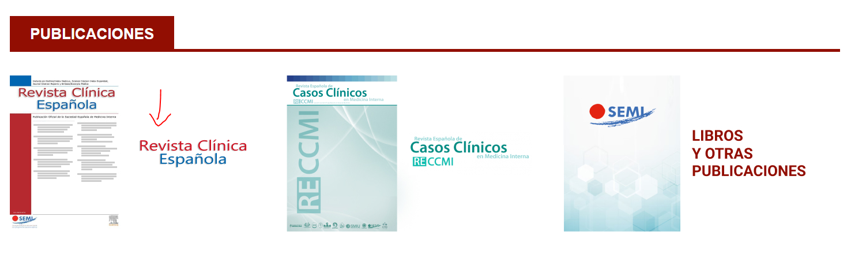
>>>https://www.fesemi.org/publicaciones/revista-clinica/noticias<<<


Subscriber
Subscriber

If you already have your login data, please click here .

If you have forgotten your password you can you can recover it by clicking here and selecting the option “I have forgotten my password”
Subscribe
Subscribe to
Revista Clínica Española (English Edition)
Purchase
Purchase article

Purchasing article the PDF version will be downloaded

Purchase now
Contact
Phone for subscriptions and reporting of errors
From Monday to Friday from 9 a.m. to 6 p.m. (GMT + 1) except for the months of July and August which will be from 9 a.m. to 3 p.m.
Calls from Spain
932 415 960
Calls from outside Spain
+34 932 415 960
Email
References
[1]
Instituto Nacional de Estadística. Estadística de defunciones según la causa de muerte [Accessed 30 November 2022] Available from: http://www.ine.es.
[2]
A. Ference, H. Ginsberg, I. Graham, K.R. Kausik, C. Packard, E. Bruckert, et al.
Low-density lipoproteins cause atherosclerotic cardiovascular disease. Evidence from genetic, epidemiologic, and clinical studies. A consensus statement from the European Atherosclerosis Society Consensus Panel.
Eur Heart J, 38 (2017), pp. 2459-2472
[3]
C.P. Cannon, M.A. Blazing, R. Giugliano, A. McCagg, J. White, P. Theroux, et al.
IMPROVE-IT Investigators. Ezetimibe added to statin therapy after acute coronary syndromes.
N Engl J Med, 372 (2015), pp. 2387-2397
[4]
G. Schwartz, G. Steg, M. Szarek, et al.
ODYSSEY outcomes. Alirocumab and outcomes after acute coronary syndrome.
N Engl J Med, 279 (2018), pp. 2097-2107
[5]
Marc S. Sabatine, Robert P. Giugliano, Anthony C. Keech, Narimon Honarpour, Stephen D. Wiviott, Sabina A. Murphy, FOURIER Steering Committee and Investigators, et al.
Evolocumab and Clinical outcomes in patients with cardiovascular disease.
N Engl J Med, 376 (2017), pp. 1713-1722
[6]
J. Stephen Nicholls, Rishi Puri, Todd Anderson, M. Christie Ballantyne, Leslie Cho, J.P. John Kastelein, et al.
Effect of evolocumab on progression of coronary disease in statin-treated patients: the GLAGOV randomized clinical trial.
JAMA, 316 (2016), pp. 2373-2384
[7]
L. Alberico Catapano, Ian Graham, Guy De Backer, Olov Wiklund, M. John Chapman, Heinz Drexel, et al.
Guía ESC/EAS 2016 sobre el tratamiento de las dislipemias Grupo de Trabajo de la Sociedad Europea de Cardiología (ESC) y la European Atherosclerosis Society (EAS) sobre el Tratamiento de las Dislipemias.
Rev Esp Cardiol, 70 (2017), pp. 72-77
[8]
Francois Mach, Colin Baigent, L. Alberico Catapano, C. Konstantinos Koskinas, Manuela Casula, Lina Badimon, et al.
Guía ESC/EAS 2019 sobre el tratamiento de las dislipemias: modificación de los lípidos para reducir el riesgo cardiovascular.
Rev Esp Cardiol, 73 (2020), pp. 403
[9]
K. Kausik Ray, Bart Molemans, W. Marieke Schoonen, Periklis Giovas, Sarah Bray, Gaia Kiru, et al.
EU-wide cross-sectional observational study of lipid-modifying therapy use in secondary and primary care: the DA VINCI study.
Eur J Prev Cardiol, 28 (2020), pp. 1279-1289
[10]
Guy De Backer, Piotr Jankowski, Kornelia Kotseva, Erkin Mirrakhimov, Željko Reiner, Lars Rydén, et al.
Management of dyslipidaemia in patients with coronary heart disease: results from the ESC-EORP EUROASPIRE V survey in 27 countries.
Atherosclerosis, 285 (2019), pp. 135-146
[11]
Juan Carlos Vella Ramírez, Enrique Rodríguez García, Carlos Romero Román, Beatriz Candás Estébanez, María José Castro Castro, Teresa Arrobas Velilla, et al.
Recomendaciones para la estandarizaciín de la medida de lápidos y lipoproteánas. Recomendaciín (2018).
Rev Lab Clán, 12 (2019), pp. 57-66
[12]
Enrique Galve, Alberto Cordero, Angel Cequier, Emilio Ruiz, José Ramón González-Juanatey.
Grado de control lipédico en pacientes coronarios y medidas adoptadas por los módicos. Estudio REPAR.
Rev Esp Cardiol, 69 (2016), pp. 931-938
[13]
Ministerio de Sanidad, Servicios Sociales e Igualdad. Agencia Española de Medicamentos y Productos Sanitarios. Informe de Posicionamiento Terapéutico PT-EVOLOCUMAB/V1/03032016. Informe de Posicionamiento Terapéutico de evolocumab (Repatha®) en hipercolesterolemia (3/3/2016) [Accessed 30 November 2022] Available from: https://www.aemps.gob.es/medicamentosUsoHumano/informesPublicos/docs/IPT-evolocumab-repatha.pdf.
[14]
Ministerio de Sanidad, Servicios Sociales e Igualdad. Agencia Española de Medicamentos y Productos Sanitarios. Informe de Posicionamiento Terapéutico PT-ALIROCUMAB/V1/22042016. Informe de Posicionamiento Terapéutico de alirocumab (Praluent®) en hipercolesterolemia (22/4/2016) [Accessed 30 November 2022] Available from: https://www.aemps.gob.es/medicamentosUsoHumano/informesPublicos/docs/IPT-alirocumab-Praluent-hipercolesterolemia.pdf.
[15]
K. Fiscella, S. Meldrum, S. Barnett.
Hospital discharge against advice after myocardial infarction: deaths and readmissions.
Am J Med, 120 (2007), pp. 1047-1053
[16]
Eva Andrés, Alberto Cordero, Purificación Magán, Eduardo Alegría, Montserrat León, Emilio Luengo, et al.
Mortalidad a largo plazo y reingreso hospitalario tras infarto agudo de miocardio, un estudio de seguimiento de ocho años.
Rev Esp Card, 65 (2012), pp. 414-420
[17]
J. Mark Alberts, L. Deepak Bhatt, Jean-Louis Mas, E. Magnus Ohman, T. Alan Hirsch, Joachim Röther, et al.
Reduction of Atherotombosis for continued health (REACH) Registry Investigators. Three-year follow-up and event rates in the international Reduction of Arterothrombosis for Continued Health Registry.
Eur Heart J, 30 (2009), pp. 2318-2326
Idiomas
Revista Clínica Española (English Edition)
Article options
Tools
