



Article information
La intervención quirúrgica provoca un estado inflamatorio que desencadena una respuesta de fase aguda (RFA). En este estudio evaluamos las variaciones de las proteínas reactantes de fase aguda (PRFA) y su relación con el estado de fatiga. Participaron 58 pacientes programados para cirugía abdominal. En el preoperatorio (PRE), y postoperatorio (9 días [9-P], 27 días [27-P] y 45 días [45-P]) analizamos las variaciones séricas de PRFA y la fatiga. En el postoperatorio (9-P) observamos un descenso significativo de proteínas totales, albúmina, prealbúmina, transferrina y aumento de ceruloplasmina. En el día 27-P observamos descensos significativos de prealbúmina y PBR, con incremento de proteínas totales y ceruloplasmina, sin variaciones significativas de la albúmina y la transferrina. En el día 45-P se observó un aumento de proteínas totales concomitante con un incremento de la ceruloplasmina. Las variables dinamométricas también disminuyeron significativamente en el postoperatorio (9-P). En conclusión, nuestros resultados muestran que tras la intervención quirúrgica abdominal electiva se producen alteraciones de las proteínas séricas y de las PRFA, acompañadas de un estado de fatiga valorado tanto por métodos subjetivos, objetivos (dinamometría) y mediante la utilización de un modelo matemático que tiene en cuenta el peso, las proteínas y las PRFA.
Palabras clave:
reactantes de fase aguda (RFA), fatiga, cirugía abdominal
Surgery originates an inflammatory state which triggers an acute phase response (APR). In this study, variations in the acute phase reactant proteins (APRP) and their relationship with fatigue were assessed. A total of 58 candidate patients for elective abdominal surgery participated in this study. In the preoperative period (PRE) and in the post-operative period (9 days [9-P], 27 days [27-P] and 45 days [45-P]), variations in serum APRP and fatigue were analyzed. In the post-operative period (9-P), a significant decrease in PT, ALB, PAB, TRF, and an increase in CER were observed. In 27-P, significant decreases were observed in PAB and PBR, with increased PT and CER, and without significant variations in ALB ad TRF. In the 45-P day, a concomitant increase in PT and CER was observed. Dynamometric parameters also decreased significantly in the post-operative period (9-P). In conclusion, our results demonstrate the existence of changes in serum proteins and in APRP after an elective abdominal surgical intervention, which are associated with fatigue, evaluated both by subjective and objective (dynamometry) means and the use of a mathematical model that considers weight, proteins and APRP.
Keywords:
acute phase reactants (APR), fatigue, abdominal surgery
Article
These are the options to access the full texts of the publication Revista Clínica Española (English Edition)
Member
Si es usted socio de FESEMI siga los siguientes pasos:
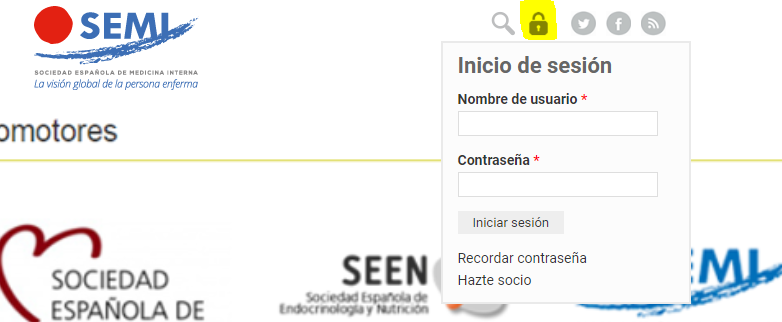
Diríjase desde aquí a la web de la >>>FESEMI<<< e inicie sesión mediante el formulario que se encuentra en la barra superior, pulsando sobre el candado.
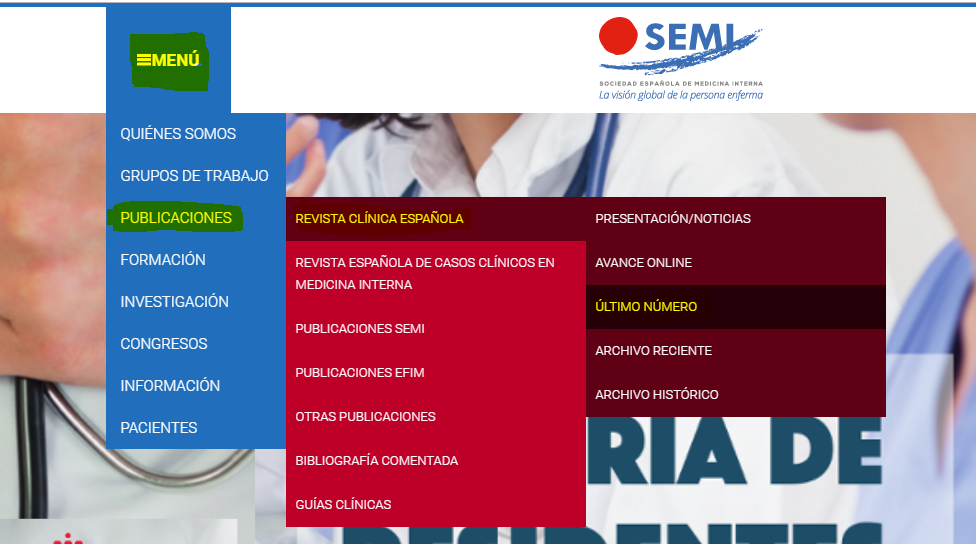
Una vez autentificado, en la misma web de FESEMI, en el menú superior, elija la opción deseada.
>>>FESEMI<<<
Purchase