
Suggestions
Idioma
Guide for authors
Searcher
Journal Information
Vol. 225. Issue 6.
(June - July 2025)
Cite
Cite
Share
Download PDF
More article options
Visits
1545
Vol. 225. Issue 6.
(June - July 2025)
Original

Comparación de pacientes reales y estandarizados en el Grado de Medicina: un estudio de intervención aleatorizado y controlado

Comparison of real and standardized patients in Degree in Medicine: a randomized controlled intervention study
Visits
1545
N. Díeza,
Corresponding author
ndiez@unav.es

Autor para correspondencia.
, B. Franchezb, M.C. Rodríguez-Díezc, M. Vidaurretad, M.T. Betése, S. Fernándezf, P. Palaciog, F.J. Pueyoa,h, N. Martín-Calvoi
a Unidad de Formación Clínica, Facultad de Medicina, Universidad de Navarra, Pamplona, España
b Facultad de Medicina, Universidad de Navarra, Pamplona, España
c Área de Medicina, Departamento de Ciencias de la Salud, Universidad Pública de Navarra, Pamplona, España
d Clínica Universidad de Navarra, Pamplona, España
e Departamento de Digestivo, Clínica Universidad de Navarra, Pamplona, España
f Departamento de Otorrinolaringología, Clínica Universidad de Navarra, Pamplona, España
g Atención Primaria, Servicio Navarro de Salud-Osasunbidea, Pamplona, España
h Departamento de Anestesia y Reanimación, Clínica Universidad de Navarra, Pamplona, España
i Departamento de Medicina Preventiva y Salud Pública, Facultad de Medicina, Universidad de Navarra, Pamplona, España
Ver más
This item has received
Article information
Abstract
Full Text
Bibliography
Download PDF
Statistics
Resumen
Introducción

Los escenarios clínicos simulados permiten a los estudiantes aprender en un entorno seguro. Aunque se recomienda la participación de pacientes estandarizados (PE) en estos escenarios, existen pocos estudios que comparen el impacto en la educación médica entre PE y pacientes reales (PR).

Métodos

Se seleccionaron 40 estudiantes de medicina por curso (4.°, 5.° y 6.°) y se asignaron aleatoriamente (1:1) a dos grupos: escenario con PR o con PE. Los estudiantes y el observador externo desconocían el tipo de paciente que participaba en el escenario. Los estudiantes completaron cuestionarios de sensaciones y conocimientos, y los profesores responsables y el observador externo, cuestionarios de sensaciones. La información cualitativa se recogió mediante grupos focales con los estudiantes.

Resultados

No se encontraron diferencias significativas entre ambos grupos en las sensaciones percibidas ni en los conocimientos adquiridos, pero sí en la probabilidad de identificar correctamente el tipo de paciente (p<0,001). La mayoría de los estudiantes del escenario con PE lo identificaron como PR. Tampoco se encontraron diferencias entre grupos, en los cuestionarios completados por profesores y observador externo. Los estudiantes se preparan e involucran más si creen estar ante un PR y consideran que el feedback del paciente es enriquecedor, independientemente del tipo de paciente.

Conclusiones

Los estudiantes de medicina no diferencian a los PE de los PR en los escenarios, y los evalúan de manera similar. Ante la dificultad de disponer de PR con diversas patologías y niveles de gravedad, el PE es una buena alternativa para la formación de los estudiantes de medicina.

Palabras clave:
Simulación
Paciente estandarizado
Paciente real
Estudiantes de medicina
Abstract
Introduction

Simulated clinical scenarios allow students to learn in a safe environment. Although it is recommended that standardized patients (SP) participate in these scenarios, few studies compare the impact of SP and real patients (RP) on medical education.

Methods

Forty medical students per course (4th, 5th, and 6th) were selected and randomly assigned (1:1) to two groups: a scenario with RP or SP. The students and the external observer were unaware of the type of patient participating in the scenario. The students completed questionnaires on perceptions and knowledge, and the responsible professors and external observer completed questionnaires on perceptions. Qualitative information was collected through focus groups with the students.

Results

No significant differences were found between both groups in perceptions and acquired knowledge, but there was a significant difference in the probability of correctly identifying the type of patient (P<.001): most students in the scenario with SP identified it as RP. No differences were found between groups in the professor and external observer questionnaires. Students were more prepared and involved if they believed they were facing a RP and considered the patient's feedback enriching, regardless of the type of patient.

Conclusions

Medical students do not differentiate SP from RP in scenarios and evaluate them similarly. Given the difficulty of having PR with diverse pathologies and severity levels, SP is a good alternative for training medical students.

Keywords:
Simulation
Standardized patient
Real patient
Medical student

Article

These are the options to access the full texts of the publication Revista Clínica Española (English Edition)
Member
Si es usted socio de FESEMI siga los siguientes pasos:

Diríjase desde aquí a la web de la >>>https://www.fesemi.org/publicaciones/revista-clinica/noticias<<< e inicie sesión mediante el formulario que se encuentra en la barra superior, pulsando sobre el candado.
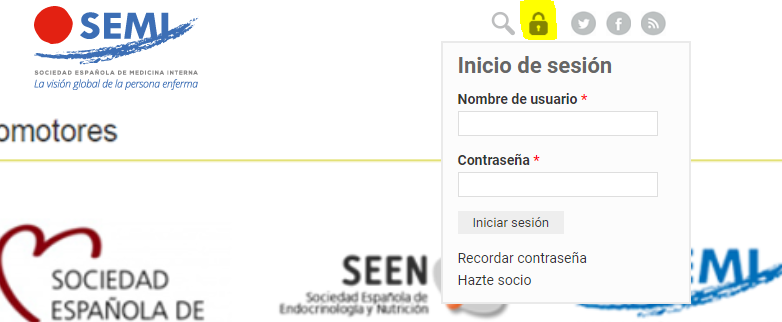
Deslice el cursor hacia abajo hasta la sección "PUBLICACIONES" y pinche en "Revista Clínica Española":

>>>https://www.fesemi.org/publicaciones/revista-clinica/noticias<<<


Subscriber
Subscriber

If you already have your login data, please click here .

If you have forgotten your password you can you can recover it by clicking here and selecting the option “I have forgotten my password”
Subscribe
Subscribe to
Revista Clínica Española (English Edition)
Purchase
Purchase article

Purchasing article the PDF version will be downloaded

Purchase now
Contact
Phone for subscriptions and reporting of errors
From Monday to Friday from 9 a.m. to 6 p.m. (GMT + 1) except for the months of July and August which will be from 9 a.m. to 3 p.m.
Calls from Spain
932 415 960
Calls from outside Spain
+34 932 415 960
Email
Bibliografía
[1]
C. Elendu, D.C. Amaechi, A.U. Okatta, E.C. Amaechi, T.C. Elendu, C.P. Ezeh, et al.
The impact of simulation-based training in medical education: A review.
Medicine (Baltimore)., 103 (2024), pp. e38813
[2]
N. McInerney, D. Nally, M.F. Khan, H. Heneghan, R.A. Cahill.
Performance effects of simulation training for medical students — a systematic review.
GMS J Med Educ., 39 (2022), pp. Doc51
[3]
BOE.es. BOE-A-2017-1200. Orden SSI/81/2017, de 19 de enero, por la que se publica el Acuerdo de la Comisión de Recursos Humanos del Sistema Nacional de Salud, por el que se aprueba el protocolo mediante el que se determinan pautas básicas destinadas a asegurar y proteger el derecho a la intimidad del paciente por los alumnos y residentes en Ciencias de la Salud. Acceso: 21 de octubre de 2024. Disponible en: https://www.boe.es/diario_boe/txt.php?id=BOE-A-2017-1200
[4]
H.S. Barrows.
An overview of the uses of standardized patients for teaching and evaluating clinical skills. AAMC.
[5]
A. Lovink, M. Groenier, A. van der Niet, H. Miedema, J.J. Rethans.
How simulated patients contribute to student learning in an authentic way, an interview study.
Adv Simul (Lond)., 9 (2024), pp. 4
[6]
O.L. Flanagan, K.M. Cummings.
Standardized patients in medical education: A review of the literature.
Cureus., 15 (2023), pp. e42027
[7]
E. Sureda-Demeulemeester, C. Ramis-Palmer, A. Sesé-Abad.
The assessment of medical competencies.
Rev Clin Esp (Barc)., 217 (2017), pp. 534-542
[8]
L. Bokken, J.J. Rethans, A.J. Scherpbier, C.P. van der Vleuten.
Strengths and weaknesses of simulated and real patients in the teaching of skills to medical students: A review.
Simul Healthc., 3 (2008), pp. 161-169
[9]
J. Plaksin, J. Nicholson, S. Kundrod, S. Zabar, A. Kalet, L. Altshuler.
The benefits and risks of being a standardized patient: A narrative review of the literature.
[10]
J. Isaksson, J. Krabbe, M. Ramklint.
Medical students’ experiences of working with simulated patients in challenging communication training.
Adv Simul (Lond)., 7 (2022), pp. 32
[11]
L. Bokken, J.J. Rethans, L. van Heurn, R. Duvivier, A. Scherpbier, C. van der Vleuten.
Students’ views on the use of real patients and simulated patients in undergraduate medical education.
Acad Med., 84 (2009), pp. 958-963
[12]
L. Bokken, J.J. Rethans, Q. Jöbsis, R. Duvivier, A. Scherpbier, C. van der Vleuten.
Instructiveness of real patients and simulated patients in undergraduate medical education: A randomized experiment.
Acad Med., 85 (2010), pp. 148-154
[13]
S.L. Clever, R.A. Dudas, B.S. Solomon, H.C. Yeh, D. Levine, A. Bertram, et al.
Medical student and faculty perceptions of volunteer outpatients versus simulated patients in communication skills training.
Acad Med., 86 (2011), pp. 1437-1442
[14]
J.J. Rethans, S. Gorter, L. Bokken, L. Morrison.
Unannounced standardised patients in real practice: A systematic literature review.
[15]
S. Zabar, K. Hanley, D. Stevens, J. Murphy, A. Burgess, A. Kalet, et al.
Unannounced standardized patients: A promising method of assessing patient-centered care in your health care system.
BMC Health Serv Res., 14 (2014), pp. 157
[16]
A.S. Chung, S. Bogoch, S. Mody, C. Smith, I. Pushkar, J. Drapkin, et al.
Videotaped unannounced standardized patient encounters to evaluate interpersonal and communication skills in emergency medicine residents.
AEM Educ Train., 4 (2019), pp. 419-422
[17]
H. Mohiaddin, A. Malik, G.M. Murtagh.
Maximizing the acquisition of core communication skills at the start of medical training.
Adv Med Educ Pract., 10 (2019), pp. 727-735
[18]
A.L. Sattler, S.B. Merrell, S.Y. Lin, E. Schillinger.
Actual and standardized patient evaluations of medical students’ skills.
Fam Med., 49 (2017), pp. 548-552
[19]
R.C. McGraw, H.M. O’Connor.
Standardized patients in the early acquisition of clinical skills.
Idiomas
Revista Clínica Española (English Edition)
Article options
Tools
Supplemental materials
