
Sugerencias
Idioma
Guía para autores
Buscador
Información de la revista
Vol. 224. Núm. 8.
Páginas 485-552 (Octubre 2024)
Cita
Cita
Compartir
Descargar PDF
Más opciones de artículo
Visitas
988
Vol. 224. Núm. 8.
Páginas 485-552 (Octubre 2024)
Original

La amiloidosis cardiaca empeora el pronóstico en los pacientes con insuficiencia cardiaca: hallazgos del estudio PREVAMIC

Cardiac amyloidosis worsens prognosis in patients with heart failure: findings from the PREVAMIC study
Visitas
988
R. Ruiz Huesoa, P. Salamanca Bautistaa,b,
Autor para correspondencia
msalamanca2@us.es

Autor para correspondencia.
, M.A. Quesada Simónc, S. Yund, A. Conde Martele, J.L. Morales Rullf, I. Fiteni Merag, D. Abad Pérezh, I. Páez Rubioi, Ó. Aramburu Bodasa,b, en representación del grupo de trabajo PREVAMIC ◊
a Hospital Universitario Virgen Macarena, Sevilla, España
b Departamento de Medicina, Universidad de Sevilla, Sevilla, España
c Hospital Universitario La Paz, Madrid, España
d Unidad de Insuficiencia Cardiaca Comunitaria. Servicios de Cardiología y Medicina Interna. Hospital Universitario de Bellvitge. Instituto de Investigación Biomédica de Bellvitge (IDIBELL), Hospitalet de Llobregat, Barcelona, España
e Hospital Universitario de Gran Canaria Dr. Negrín, Las Palmas de Gran Canaria, España
f Hospital Universitario Arnau de Vilanova, Lleida, España
g Hospital Royo Villanova, Zaragoza, España
h Hospital Universitario de Getafe, Getafe, Madrid, España
i Hospital Juan Ramón Jiménez, Huelva, España
Ver más
Este artículo ha recibido
Información del artículo
Resumen
Texto completo
Bibliografía
Descargar PDF
Estadísticas
Resumen
Antecedentes y objetivos

La amiloidosis cardiaca (AC) es una patología frecuente en pacientes ancianos que suele manifestarse como insuficiencia cardiaca (IC). Sin embargo, no está claro si la AC asociada a IC confiere un peor pronóstico.

Material y métodos

Estudio de cohortes, observacional, prospectivo que reclutó pacientes ≥65 años con IC en 30 centros nacionales. Se dividió la cohorte según si los pacientes tenían o no AC. Los pacientes fueron seguidos durante un año.

Resultados

Se incluyeron 484 pacientes en el análisis. La población tenía edad avanzada (mediana 86 años) y el 49% eran mujeres. El 23,8% de los pacientes incluidos tenían AC. En el grupo de AC, había una menor prevalencia de diabetes mellitus y enfermedad valvular. Al año de seguimiento, la mortalidad fue significativamente más frecuente en los pacientes con AC comparados con los que no la tenían (33,0 vs. 14,9%, p<0,001). Sin embargo, no hubo diferencias entre ambos grupos en las visitas a Urgencias o reingresos. En el análisis multivariante, las variables que mostraron predecir la mortalidad por cualquier causa al año de seguimiento fueron la enfermedad renal crónica (HR 1,75 [1,01-3,05] p=0,045), los niveles de NT-proBNP (HR 2,51 [1,46-4,30] p<0,001), la confusión (HR 2,05 [1,01-4,17], p=0,048) y la presencia de AC (HR 1,77 [1,11-2,84], p=0,017).

Conclusión

La presencia de AC en pacientes ancianos con IC se relaciona con peor pronóstico al año de seguimiento. Un diagnóstico precoz de la patología y un manejo multidisciplinar pueden ayudar a mejorar la evolución de los pacientes.

Palabras clave:
Insuficiencia cardiaca
Amiloidosis cardiaca
Pronóstico
Abstract
Background and objectives

Cardiac amyloidosis (CA) is a common pathology in elderly patients that usually presents as heart failure (HF). However, it is not clear whether CA associated with HF has a worse prognosis compared with HF due to other etiologies.

Material and methods

Prospective, observational cohort study that recruited patients ≥65 years of age with HF in 30 Spanish centers. The cohort was divided according to whether the patients had AC or not. Patients were followed for 1 year.

Results

A total of 484 patients were included in the analysis. The population was elderly (median 86 years) and 49% were women CA was present in 23.8% of the included patients. In the CA group, there was a lower prevalence of diabetes mellitus and valvular disease. At one year of follow-up, mortality was significantly more frequent in patients with CA compared to those without (33.0 vs.14.9%, p<0.001). However, there were no differences between both groups in visits to the emergency room or readmissions. In the multivariate analysis, the variables that were shown to predict all-cause mortality at one year of follow-up were chronic kidney disease (HR 1.75 (1.01-3.05) p=0.045), NT-proBNP levels (HR 2.51 (1.46-4.30) p<0.001), confusion (HR 2.05 (1.01-4.17), p=0.048), and the presence of CA (HR 1.77 (1.11-2.84), p=0.017).

Conclusion

The presence of CA in elderly patients with HF is related to a worse prognosis at one year of follow-up. Early diagnosis of the pathology and multidisciplinary management can help improve patient outcomes.

Keywords:
Heart failure
Cardiac amyloidosis
Prognosis

Artículo

Opciones para acceder a los textos completos de la publicación Revista Clínica Española
Socio
Si es usted socio de FESEMI siga los siguientes pasos:

Diríjase desde aquí a la web de la >>>https://www.fesemi.org/publicaciones/revista-clinica/noticias<<< e inicie sesión mediante el formulario que se encuentra en la barra superior, pulsando sobre el candado.

Deslice el cursor hacia abajo hasta la sección "PUBLICACIONES" y pinche en "Revista Clínica Española":
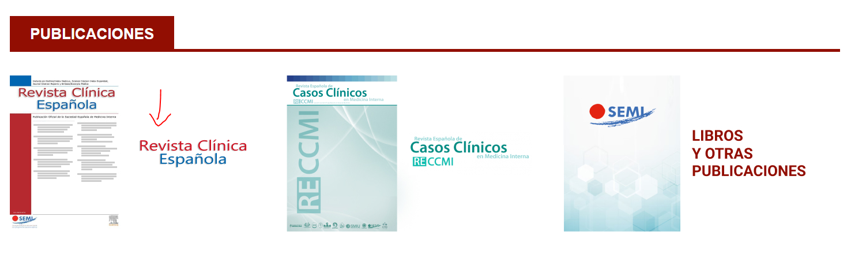
>>>https://www.fesemi.org/publicaciones/revista-clinica/noticias<<<


Suscriptor
Suscriptor de la revista

Si ya tiene sus datos de acceso, clique aquí.

Si olvidó su clave de acceso puede recuperarla clicando aquí y seleccionando la opción "He olvidado mi contraseña".
Suscribirse
Suscribirse a:
Revista Clínica Española
Comprar
Comprar acceso al artículo

Comprando el artículo el PDF del mismo podrá ser descargado

Comprar ahora
Contactar
Teléfono para suscripciones e incidencias
De lunes a viernes de 9h a 18h (GMT+1) excepto los meses de julio y agosto que será de 9 a 15h
Llamadas desde España
932 415 960
Llamadas desde fuera de España
+34 932 415 960
Email
Bibliografía
[1]
G. Savarese, P.M. Becher, L.H. Lund, P. Seferovic, G.M.C. Rosano, AJSl. Coats.
Global burden of heart failure: a comprehensive and updated review of epidemiology.
Cardiovasc Res., 118 (2023), pp. 3272-3287
[2]
A. Aimo, M. Merlo, A. Porcari, G. Georgiopoulos, L. Pagura, G. Vergaro, et al.
Redefining the epidemiology of cardiac amyloidosis. A systematic review and meta-analysis of screening studies.
Eur J Heart Fail., 24 (2022), pp. 2343-2351
[3]
A.S. Antonopoulos, I. Panagiotopoulos, A. Kouroutzoglou, G. Koustis, P. Toskas, G. Lazaros, et al.
Prevalence and clinical outcomes of transthyretin amyloidosis: a systematic review and meta-analysis.
Eur J Heart Fail., 24 (2022), pp. 1677-1696
[4]
P. García-Pavía, C. Rapezzi, Y. Adler, M. Arad, C. Basso, A. Brucato, et al.
Diagnosis and treatment of cardiac amyloidosis: a position statement of the ESC Working Group on Myocardial and Pericardial Diseases.
Eur Heart J., 42 (2021), pp. 1554-1568
[5]
R. Ruiz-Hueso, P. Salamanca-Bautista, M.A. Quesada-Simón, S. Yun, A. Conde-Martel, J.L. Morales-Rull, et al.
Estimating the prevalence of cardiac amyloidosis in old patients with heart failure-Barriers and opportunities for improvement: The PREVAMIC Study.
J Clin Med., 12 (2023), pp. 2273
[6]
P. Salamanca-Bautista, R. Ruiz-Hueso, A. González-Franco, J. Casado-Cerrada, F. Formiga, P. Llàcer-Iborra, et al.
Prevalence of cardiac amyloidosis in Spanish patients with heart failure: The PREVAMIC study design.
Span J Med., 2 (2022), pp. 46-50
[7]
P. Ponikowski, A.A. Voors, S.D. Anker, H. Bueno, J.G.F. Cleland, A.J.S. Coats, et al.
2016 ESC Guidelines for the diagnosis and treatment of acute and chronic heart failure: The Task Force for the diagnosis and treatment of acute and chronic heart failure of the European Society of Cardiology (ESC) developed with the special contribution of the Heart failure association (HFA) of the ESC.
Eur Heart J., 37 (2016), pp. 2129-2200
[8]
C. Mueller, K. McDonald, R.A. de Boer, A. Maisel, J.G.F. Cleland, N. Kozhuharov, et al.
Heart Failure Association of the European Society of Cardiology practical guidance on the use of natriuretic peptide concentrations.
Eur J Heart Fail., 21 (2019), pp. 715-731
[9]
H.J. Lachmann, P.N. Hawkins.
Systemic amyloidosis.
Curr Opin Pharmacol., 6 (2006), pp. 214-220
[10]
J.D. Gillmore, M.S. Maurer, R.H. Falk, G. Merlini, T. Damy, A. Dispenzieri, et al.
Nonbiopsy diagnosis of cardiac transthyretin amyloidosis.
Circulation, 133 (2016), pp. 2404-2412
[11]
M.A. Gertz.
Inmunoglobulin light chain amyloidosis: 2022 update on diagnosis, prognosis and treatment.
Am J Hematol., 97 (2022), pp. 818-829
[12]
M.S. Maurer, J.H. Schawartz, B. Gundapaneni, P.M. Elliot, G. Merlini, M. Waddington-Cruz, et al.
Tafamidis treatment for patients with transthyretin amyloid cardiomyopathy.
N Engl J Med., 379 (2018), pp. 1007-1016
[13]
L.H. Connors, F. Sam, M. Skinner, F. Salinaro, F. Sun, F.L. Ruberg, et al.
Heart failure resulting from age-related cardiac amyloid disease associated with wild-type transthyretin.
Circulation, 133 (2016), pp. 282-290
[14]
A. Maestro-Benedicto, P. Vela, F. de Frutos, N. Mora, A. Pomares, E. Gonzalez-Vioque, et al.
Frequency of hereditary transthyretin amyloidosis among elderly patients with transthyretin cardiomyopathy.
Eur J Heart Fail., 24 (2022), pp. 2367-2373
[15]
G. Barge-Caballero, E. Barge-Caballero, M. López-Pérez, R. Bilbao-Quesada, E. Gónzalez-Babarro, I. Gómez-Otero, et al.
Amiloidosis cardiaca: descripción de una serie de 143 casos.
Med Clin (Barc)., 159 (2022), pp. 207-213
[16]
P. Martens, S. Bhattacharya, J. Longinow, L. Ives, M. Jacob, J. Valent, et al.
Hemodynamic profiling and prognosis in cardiac amyloidosis.
Circ Heart Fail., 16 (2023), pp. e010078
[17]
A. Ioannou, P. Massa, R.K. Patel, Y. Razvi, A. Porcari, M.U. Rauf, et al.
Conventional heart failure therapy in cardiac ATTR amyloidosis.
Eur Heart J., 44 (2023), pp. 2893-2907
[18]
E. González-López, M. Gallego-Delgado, G. Guzzo-Merello, F.J. de Haro-del Moral, M. Cobo-Marcos, C. Robles, et al.
Wild-type transthyretin amyloidosis as a cause of heart failure with preserved ejection fraction.
Eur Heart J., 36 (2015), pp. 2585-2594
[19]
A. Castaño, D.L. Narotsky, N. Hamid, O.K. Khalique, R. Morgenstern, A. DeLuca, et al.
Unveiling transthyretin cardiac amyloidosis and its predictors among elderly patients with severe aortic stenosis undergoing transcatheter aortic valve replacement.
Eur Heart J., 38 (2017), pp. 2879-2887
[20]
J.C. Trullàs, J.I. Pérez-Calvo, A. Conde-Martel, P. Llácer-Iborra, I. Suarez-Pedreira, G. Ormaechea, et al.
Epidemiology of heart failure with preserved ejection fraction: Results from the RICA Registry.
Med Clín (Barc)., 157 (2021), pp. 1-9
[21]
E. Ruiz-Duque, A. Briasoulis, P.A. Alvarez.
Heart failure with preserved ejection fraction in the elderly: pathophysiology, diagnostic and therapeutic approach.
J Geriatr Cardiol., 16 (2019), pp. 421-428
[22]
G. Barge-Caballero, E. Barge-Caballero, M. López-Pérez, R. Bilbao-Quesada, E. González-Babarro, I. Gómez-Otero, et al.
Beta-blocker exposure and survival in patients with transthyretin amyloid cardiomyopathy.
Mayo Clin Proc., 97 (2022), pp. 261-273
[23]
B.W. Sperry, M. Hanna, S.J. Shah, W.A. Jaber, J.A. Spertus.
Spironolactone in patients with an echocardiographic HFpEF phenotype suggestive of cardiac amyloidosis. Results from TOPCAT.
JACC Heart Fail., 9 (2021), pp. 795-802
[24]
M. González-Montes, M. Maccallini, G. Barge-Caballero, D. Enríquez-Vázquez, E. Barge-Caballero, M. Crespo-Leiro.
Use of SGLT2i in patients with transthyretin amyloid cardiomyopathy: prevalence and safety in a Spanish prospective cohort.
Rev Esp Cardiol (Engl Ed)., (2023),
[25]
P. García-Pavía, M.B. Sultan, B. Gundapaneni, Y. Sekijima, F. Perfetto, M. Hanna, et al.
Tafamidis efficacy among octogenarian patients in the Phase 3 ATTR-ACT and ongoing long-term extension study.
JACC Heart Fail., 12 (2024), pp. 150-160
[26]
M. Sato, Y. Sakata, K. Sato.
Clinical characteristics and prognosis factors in elderly patients with chronic heart failure. A report from the CHART-2 study.
Int J Cardiol Heart Vasc., 27 (2020), pp. 100497
[27]
Z. Niu, J. Zhou, Y. Li.
Prognostic significance of delirium in patients with heart failure: a systematic review and meta-analysis.
Front Cardiovasc Med., 10 (2023), pp. 1217965
[28]
S. Arora, N.S. Patil, P.D. Strassle, A. Qamar, M. Vaduganathan, A. Fatima, et al.
Amyloidosis and 30-day outcomes among patients with heart failure.
JACC CardioOncol., 2 (2020), pp. 710-718
[29]
E. Berthelot, A. Broussier, L. Hittinger, C. Donadio, X. Rovani, E. Salengro, et al.
Patients with cardiac amyloidosis are at a greater risk of mortality and hospital readmission after acute heart failure.
ESC Heart Fail., 10 (2023), pp. 2042-2050
Idiomas
Revista Clínica Española
Opciones de artículo
Herramientas