
Sugerencias
Idioma
Guía para autores
Buscador
Información de la revista
Vol. 224. Núm. 8.
Páginas 485-552 (Octubre 2024)
Cita
Cita
Compartir
Descargar PDF
Más opciones de artículo
Visitas
1296
Vol. 224. Núm. 8.
Páginas 485-552 (Octubre 2024)
Original

Factores de riesgo de mortalidad en pacientes con enfermedad del coronavirus 2019 con hipoxemia silente

Risk factors for mortality in coronavirus disease 2019 patients with silent hypoxemia
Visitas
1296
B. Ximenes Braza,b, G. Cavalcante Menesesa,c, G.B. da Silva Juniorc,d, A.M. Costa Martinsc, A.F. de S. Mourão Feitosaa, G.C. Lima Chagasa,
Autor para correspondencia
gabrielchagas.gc@gmail.com

Autor para correspondencia.
, E. De Francesco Dahera
a Programa de Posgrado en Ciencias Médicas, Departamento de Medicina Interna, Facultad de Medicina, Universidad Federal de Ceará, Fortaleza, CE, Brasil
b Departamento de Medicina Interna, University of Miami, Miami, FL, Estados Unidos
c Departamento de Análisis Clínicos y Toxicológicos, Facultad de Farmacia, Universidad Federal de Ceará, Fortaleza, CE, Brasil
d Programa de Posgrado en Salud Colectiva, Centro de Ciencias de la Salud, Universidad de Fortaleza – UNIFOR, Fortaleza, CE, Brasil
Este artículo ha recibido
Información del artículo
Resumen
Texto completo
Bibliografía
Descargar PDF
Estadísticas
Resumen
Objetivo

Describir los predictores de mortalidad en pacientes hospitalizados con síndrome respiratorio agudo severo (SARS) debido a COVID-19 que presentan hipoxemia silente.

Material y métodos

Estudio de cohorte retrospectivo de pacientes hospitalizados con SARS debido a COVID-19 e hipoxemia silente al ingreso, en Brasil, de enero a junio de 2021. El resultado principal de interés fue la muerte intrahospitalaria. Se realizó un análisis de regresión logística multivariable.

Resultados

De 46.102 pacientes, la edad media fue de 59±16años, y el 41,6% eran mujeres. Durante la hospitalización fallecieron 13.149 pacientes. En comparación con los sobrevivientes, los no sobrevivientes eran de mayor edad (edad media, 66 vs. 56años; p<0,001), menos frecuentemente mujeres (43,6% hombres vs. 40,9%; p<0,001) y más propensos a tener comorbilidades (74,3% vs. 56,8%; p<0,001). Los no sobrevivientes tuvieron mayores necesidades de ventilación mecánica invasiva (42,4% vs. 6,6%; p<0,001) y admisión a la unidad de cuidados intensivos (56,9% vs. 20%; p<0,001) en comparación con los sobrevivientes. En el análisis de regresión multivariable, la edad avanzada (OR: 1,04; IC del 95%: 1,037-1,04), la presencia de comorbilidades (OR: 1,54; IC del 95%: 1,47-1,62), la tos (OR: 0,74; IC del 95%: 0,71-0,79), la dificultad respiratoria (OR: 1,32; IC del 95%: 1,26-1,38) y la necesidad de soporte respiratorio no invasivo (OR: 0,37; IC del 95%: 0,35-0,40) permanecieron independientemente asociadas con la muerte.

Conclusiones

La edad avanzada, la presencia de comorbilidades y la dificultad respiratoria fueron factores de riesgo independientes para la mortalidad, mientras que la tos y la necesidad de soporte respiratorio no invasivo fueron factores protectores independientes contra la mortalidad en pacientes hospitalizados por SARS debido a COVID-19 con hipoxemia silente en la presentación.

Palabras clave:
COVID-19
Hipoxia
Mortalidad
Predictor
Factor de riesgo
Síndrome respiratorio agudo severo
Abstract
Objective

To describe the predictors of mortality in hospitalized patients with severe acute respiratory syndrome (SARS) due to COVID-19 presenting with silent hypoxemia.

Material and methods

Retrospective cohort study of hospitalized patients with SARS due to COVID-19 and silent hypoxemia at admission, in Brazil, from January to June 2021. The primary outcome of interest was in-hospital death. Multivariable logistic regression analysis was performed.

Results

Of 46,102 patients, the mean age was 59±16years, and 41.6% were female. During hospitalization, 13,149 patients died. Compared to survivors, non-survivors were older (mean age, 66 vs. 56 years; P<0.001), less frequently female (43.6% vs. 40.9%; P<0.001), and more likely to have comorbidities (74.3% vs. 56.8%; P<0.001). Non-survivors had higher needs for invasive mechanical ventilation (42.4% vs 6.6%; P<0.001) and intensive care unit admission (56.9% vs 20%; P<0.001) compared to survivors. In the multivariable regression analysis, advanced age (OR: 1.04; 95%CI: 1.037-1.04), presence of comorbidities (OR: 1.54; 95%CI: 1.47-1.62), cough (OR: 0.74; 95%CI: 0.71-0.79), respiratory distress (OR: 1.32; 95%CI: 1.26-1.38), and need for non-invasive respiratory support (OR: 0.37; 95%CI: 0.35-0.40) remained independently associated with death.

Conclusions

Advanced age, presence of comorbidities, and respiratory distress were independent risk factors for mortality, while cough and requirement for non-invasive respiratory support were independent protective factors against mortality in hospitalized patients with SARS due to COVID-19 with silent hypoxemia at presentation.

Keywords:
COVID-19
Hypoxia
Mortality
Predictor
Risk factor
Severe acute respiratory syndrome

Artículo

Opciones para acceder a los textos completos de la publicación Revista Clínica Española
Socio
Si es usted socio de FESEMI siga los siguientes pasos:

Diríjase desde aquí a la web de la >>>https://www.fesemi.org/publicaciones/revista-clinica/noticias<<< e inicie sesión mediante el formulario que se encuentra en la barra superior, pulsando sobre el candado.

Deslice el cursor hacia abajo hasta la sección "PUBLICACIONES" y pinche en "Revista Clínica Española":
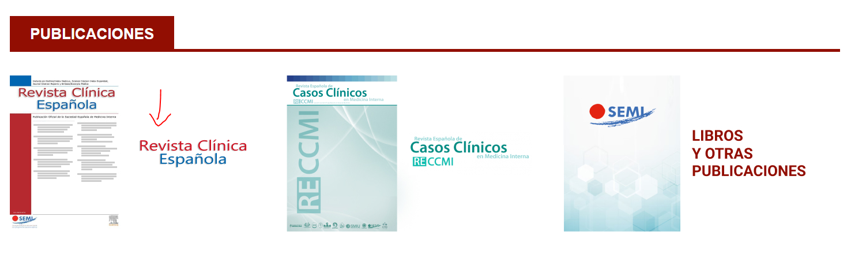
>>>https://www.fesemi.org/publicaciones/revista-clinica/noticias<<<


Suscriptor
Suscriptor de la revista

Si ya tiene sus datos de acceso, clique aquí.

Si olvidó su clave de acceso puede recuperarla clicando aquí y seleccionando la opción "He olvidado mi contraseña".
Suscribirse
Suscribirse a:
Revista Clínica Española
Comprar
Comprar acceso al artículo

Comprando el artículo el PDF del mismo podrá ser descargado

Comprar ahora
Contactar
Teléfono para suscripciones e incidencias
De lunes a viernes de 9h a 18h (GMT+1) excepto los meses de julio y agosto que será de 9 a 15h
Llamadas desde España
932 415 960
Llamadas desde fuera de España
+34 932 415 960
Email
Bibliografía
[1]
C. Huang, Y. Wang, X. Li, L. Ren, J. Zhao, Y. Hu, et al.
Clinical features of patients infected with 2019 novel coronavirus in Wuhan, China.
[2]
W.-J. Guan, Z.-Y. Ni, Y. Hu, W.-H. Liang, C.-Q. Ou, J.-X. He, et al.
Clinical characteristics of coronavirus disease 2019 in China.
[3]
M. Sarkar, N. Niranjan, P.K. Banyal.
Mechanisms of hypoxemia.
[4]
Centers for Disease Control and Prevention (CDC). National Institutes of Health. Coronavirus disease 2019 (COVID-19) treatment guidelines. Publicado en 2023. Consultado 20 Abr 2023. Disponible en: https://www.covid19treatmentguidelines.nih.gov/
[5]
A. Chandra, U. Chakraborty, J. Pal, P. Karmakar.
Silent hypoxia: A frequently overlooked clinical entity in patients with COVID-19.
[6]
M. Busana, A. Gasperetti, L. Giosa, G.B. Forleo, R. Sicuso, A. Battaglia, et al.
Prevalence and outcome of silent hypoxemia in COVID-19.
[7]
M. García-Grimshaw, F.D. Flores-Silva, E. Chiquete, L.E. Hernández-Vanegas, M. Figueroa-Cucurachi, A. Michel-Chávez, et al.
Characteristics and predictors for silent hypoxemia in a cohort of hospitalized COVID-19 patients.
[8]
A. Okuhama, M. Ishikane, M. Hotta, M. Ota, N. Kinoshita, T. Suzuki, et al.
Clinical and radiological findings of silent hypoxia among COVID-19 patients.
[9]
K. Alamé, E.L. Lemaitre, L. Abensur Vuillaume, A. Troya, J. Swiecki, N. Berger, et al.
Silent hypoxemia in the emergency department: a retrospective cohort of two clinical phenotypes in critical COVID-19.
[10]
P. Sirohiya, A. Elavarasi, H.K.R. Sagiraju, S. Singh, V. Maher.
Silent hypoxia in coronavirus disease-2019: Is it more dangerous? A retrospective cohort study.
[11]
F. Alhusain, A. Alromaih, G. Alhajress, A. Alabdulsalam, A. Alhammad, A. Almutairi, et al.
Predictors and clinical outcomes of silent hypoxia in COVID-19 patients, a single-center retrospective cohort study.
[12]
Ministério da Saúde. Saiba como é feita a definição de casos suspeitos de Covid-19 no Brasil. Publicado en 2021. Consultado 9 Sep 2023. Disponible en: https://www.gov.br/saude/pt-br/coronavirus/artigos/definicao-e-casos-suspeitos
[13]
L. Gattinoni, D. Chiumello, P. Caironi, M. Busana, F. Romitti, L. Brazzi, et al.
COVID-19 pneumonia: Different respiratory treatments for different phenotypes?.
[14]
L. Gattinoni, A. Pesenti, L. Avalli, F. Rossi, M. Bombino.
Pressure-volume curve of total respiratory system in acute respiratory failure: Computed tomographic scan study.
[15]
L. Gattinoni, P. Caironi, M. Cressoni, D. Chiumello, V.M. Ranieri, M. Quintel, et al.
Lung recruitment in patients with the acute respiratory distress syndrome.
[16]
B. Oeung, K. Pham, I.M. Olfert, P.N. Ainslie, T.A. Day, J. Duffin, et al.
The normal distribution of the hypoxic ventilatory response and methodological impacts: A meta-analysis and computational investigation.
[17]
L. Gattinoni, S. Coppola, M. Cressoni, M. Busana, S. Rossi, D. Chiumello.
COVID-19 does not lead to a “typical” acute respiratory distress syndrome.
[18]
E.E. Benarroch.
Pain-autonomic interactions.
[19]
L. Gattinoni, D. Chiumello, S. Rossi.
COVID-19 pneumonia: ARDS or not?.
[20]
L. Brochard, A. Slutsky, A. Pesenti.
Mechanical ventilation to minimize progression of lung injury in acute respiratory failure.
[21]
E. Spinelli, T. Mauri, J.R. Beitler, A. Pesenti, D. Brodie.
Respiratory drive in the acute respiratory distress syndrome: Pathophysiology, monitoring, and therapeutic interventions.
[22]
P. Pelosi, L. d’Andrea, G. Vitale, A. Pesenti, L. Gattinoni.
Vertical gradient of regional lung inflation in adult respiratory distress syndrome.
[23]
A. González-Duarte, L. Norcliffe-Kaufmann.
Is “happy hypoxia” in COVID-19 a disorder of autonomic interoception? A hypothesis.
[24]
B. Lambermont, E. Davenne, F. Maclot, P. Delvenne.
SARS-CoV-2 in carotid body.
[25]
B.H. Machado, J.F.R. Paton.
Relevance of carotid bodies in COVID-19: A hypothetical viewpoint.
[26]
M. Nouri-Vaskeh, A. Sharifi, N. Khalili, R. Zand, A. Sharifi.
Dyspneic and non-dyspneic (silent) hypoxemia in COVID-19: Possible neurological mechanism.
[27]
M. Haidar, Z. Shakkour, M. Reslan, A. Najjar, G. Pintus, A.H. Eid.
SARS-CoV-2 involvement in central nervous system tissue damage.
[28]
D. Armocida, M. Palmieri, A. Frati, A. Santoro, A. Pesce.
How SARS-CoV-2 can involve the central nervous system. A systematic analysis of literature of the department of human neurosciences of Sapienza University, Italy.
[29]
K. Romero Starke, D. Reissig, G. Petereit-Haack, S. Schmauder, A. Nienhaus, A. Seidler.
The isolated effect of age on the risk of COVID-19 severe outcomes: A systematic review with meta-analysis.
BMJ Glob Heal., 6 (2021), pp. e006434
[30]
P.B. McCray, L. Pewe, C. Wohlford-Lenane, M. Hickey, L. Manzel, L. Shi, et al.
Lethal infection of K18-hACE2 mice infected with severe acute respiratory syndrome coronavirus.
[31]
K.E. Telle, M. Grøsland, J. Helgeland, S.E. Håberg.
Factors associated with hospitalization, invasive mechanical ventilation treatment and death among all confirmed COVID-19 cases in Norway: Prospective cohort study.
[32]
V. Jounieaux, D.O. Rodenstein, Y. Mahjoub.
On happy hypoxia and on sadly ignored “acute vascular distress syndrome” in patients with COVID-19.
[33]
R. Verity, L.C. Okell, I. Dorigatti, P. Winskill, C. Whittaker, N. Imai, et al.
Estimates of the severity of coronavirus disease 2019: A model-based analysis.
[34]
P. Goyal, J.J. Choi, L.C. Pinheiro, E.J. Schenck, R. Chen, A. Jabri, et al.
Clinical characteristics of COVID-19 in New York City.
[35]
J. Zhang, X. Dong, G. Liu, Y. Gao.
Risk and protective factors for COVID-19 morbidity, severity, and mortality.
[36]
B. Bepouka, O. Odio, N. Mayasi, M. Longokolo, D. Mangala, M. Mandina, et al.
Prevalence and outcomes of COVID-19 patients with happy hypoxia: A systematic review.
[37]
P. Brouqui, S. Amrane, M. Million, S. Cortaredona, P. Parola, J.C. Lagier, et al.
Asymptomatic hypoxia in COVID-19 is associated with poor outcome.
[38]
M.J. Tobin, F. Laghi, A. Jubran.
Why COVID-19 silent hypoxemia is baffling to physicians.
[39]
L.J. Herbert, I.H. Wilson.
Pulse oximetry in low-resource settings.
Breathe., 9 (2012), pp. 90LP-98LP
[40]
A.M. Luks, E.R. Swenson.
Pulse oximetry for monitoring patients with COVID-19 at home. Potential pitfalls and practical guidance.
[41]
C.R. Van Son, D.U. Eti.
Screening for COVID-19 in older adults: Pulse oximeter vs. temperature.
Front Med., 8 (2021), pp. 660886
[42]
L.S. Nguyen, M. Helias, L. Raia, C. Rafat, P. Coriat, A. El-Banayosy, et al.
Impact of COVID-19 on the association between pulse oximetry and arterial oxygenation in patients with acute respiratory distress syndrome.
[43]
J. Clarke, K. Flott, R. Fernandez Crespo, R. Assaker, J. Leitch, A. Wiper, et al.
Assessing the safety of home oximetry for COVID-19: A multisite retrospective observational study.
[44]
Z. Wu, J.M. McGoogan.
Characteristics of and important lessons from the coronavirus disease 2019 (COVID-19) outbreak in China.
[45]
L. Guo, Z. Jin, T.J. Gan, E. Wang.
Silent hypoxemia in patients with COVID-19 pneumonia: A review.
Idiomas
Revista Clínica Española
Opciones de artículo
Herramientas