

Suggestions
Idioma
Guide for authors
Searcher
Journal Information
Vol. 222. Issue 2.
Pages 63-122 (February 2022)
Cite
Cite
Share
Download PDF
More article options
Visits
2162
Vol. 222. Issue 2.
Pages 63-122 (February 2022)
Original article

Changes over time in the association between type 2 diabetes and post-discharge outcomes in decompensated chronic heart failure patients: Findings from the RICA Registry

Evolución de la asociación de diabetes y eventos posalta en pacientes con insuficiencia cardíaca crónica descompensada: hallazgos del registro RICA
Visits
2162
F.J. Carrasco-Sáncheza,
Corresponding author
, M.I. Páez-Rubioa, J.C. Arévalo-Loridob, J. Carretero-Gómezb, A. Conde-Martelc, F. Epelded, P. Álvarez-Rochae, M.P. Salamanca-Bautistaf, J.M. Cepeda-Rodrigog, M. Montero-Pérez-Barqueroh, on behalf of the RICA Registry working group 1
a Área de Insuficiencia Cardíaca, Diabetes y Riesgo Vascular, UGC Medicina Interna y Cuidados Paliativos, Hospital Universitario Juan Ramón Jiménez, Huelva, Spain
b Servicio de Medicina Interna, Hospital de Zafra, Zafra, Badajoz, Spain
c Servicio de Medicina Interna, Hospital Universitario de Gran Canaria Dr. Negrín, Las Palmas de Gran Canaria, Las Palmas, Spain
d Unidad de Estancia Corta, Hospital Universitari Parc Taulí, Sabadell, Barcelona, Spain
e Unidad Multidisciplinaria de Insuficiencia Cardíaca, Medicina Interna y Cardiología, Hospital de Clínicas Dr. Manuel Quintela, Montevideo, Uruguay
f Servicio de Medicina Interna, Hospital Universitario Virgen Macarena, Sevilla, Spain
g Servicio de Medicina Interna, Hospital Vega Baja, Orihuela, Alicante, Spain
h Servicio de Medicina Interna, IMIBIC/Hospital Reina Sofía, Universidad de Córdoba, Córdoba, Spain
This item has received
Article information
Abstract
Full Text
Bibliography
Download PDF
Statistics
Abstract
Aims

Heart failure (HF) and diabetes are 2 strongly associated diseases. The main objective of this work was to analyze changes in the prognosis of patients with diabetes who were admitted for heart failure in 2 time periods.

Methods

This work is a prospective study comparing prognosis at one year of follow-up among patients with diabetes who were hospitalized for HF in either 2008–2011 or 2018. The patients are from the Spanish Society of Internal Medicine's National Heart Failure Registry (RICA, for its initials in Spanish). The primary endpoint was to analyze the composite outcome of total mortality and/or readmission due to HF in 12 months. A multivariate Cox regression model was used to evaluate the strength of association (hazard ratio [HR]) between diabetes and the outcomes between both periods.

Results

A total of 936 patients were included in the 2018 cohort, of which 446 (48%) had diabetes. The baseline characteristics of the populations from the 2 periods were similar. In patients with diabetes, the composite outcome was observed in 233 (47.5%) in the 2008–2011 cohort and 162 (36%) in the 2018 cohort [HR 1.48; 95% confidence interval (95%CI) 1.18–1.85; p < .001]. The proportion of readmissions (HR 1.39; 95%CI 1.07–1.80; p = .015) and total mortality (HR 1.60; 95%CI 1.20–2.14; p < .001) were also significantly higher in patients with diabetes from the 2008-2011 cohort compared to the 2018 cohort.

Conclusions

In 2018, an improvement was observed in the prognosis for all-cause mortality and readmissions over one year of follow-up in patients with diabetes hospitalized for HF compared to the 2008–2011 period.

Keywords:
Diabetes mellitus
Heart failure
Mortality
Hospitalization
Readmissions
Prognosis
Resumen
Objetivos

La insuficiencia cardíaca (IC) y la diabetes son 2 procesos fuertemente asociados. El objetivo principal fue analizar la evolución del pronóstico de los pacientes con diabetes que ingresan por IC a lo largo de 2 períodos.

Métodos

Estudio prospectivo para comparar el pronóstico a un año de seguimiento entre los pacientes con diabetes que ingresan por IC en 2008–2011 y 2018. Los pacientes proceden del Registro Nacional de Insuficiencia Cardíaca (RICA) de la Sociedad Española de Medicina Interna. El objetivo primario fue analizar el desenlace combinado de mortalidad total o ingreso por IC durante 12 meses. Se utilizó una regresión multivariante de Cox para evaluar la fuerza de asociación (hazard ratio [HR]) de la diabetes y los desenlaces entre ambos períodos.

Resultados

Se incluyó a un total de 936 pacientes en la cohorte de 2018, de los que 446 (48%) tenían diabetes. Las características basales de la población de los 2 períodos fueron similares. En los pacientes con diabetes se observó el desenlace combinado en 233 (47,5%) en la cohorte de 2008−2011 y 162 (36%) en la cohorte de 2018 (HR 1,48; intervalo de confianza del 95% [IC95%] 1,18–1,85; p < 0,001). La proporción de ingresos (HR 1,39; IC95% 1,07–1,80; p = 0,015) y la mortalidad total (HR 1,60; IC95% 1,20–2,14; p < 0,001) también fueron significativamente mayores en los pacientes con diabetes de la cohorte de 2008–2011 con respecto a la del 2018.

Conclusiones

En 2018 se observa una mejoría del pronóstico de la mortalidad total y los reingresos durante un año de seguimiento en pacientes con diabetes hospitalizados por IC con respecto al período de 2008–2011.

Palabras clave:
Diabetes mellitus
Insuficiencia cardíaca
Mortalidad
Hospitalización
Reingresos
Pronóstico

Article

These are the options to access the full texts of the publication Revista Clínica Española (English Edition)
Member
Si es usted socio de FESEMI siga los siguientes pasos:

Diríjase desde aquí a la web de la >>>https://www.fesemi.org/publicaciones/revista-clinica/noticias<<< e inicie sesión mediante el formulario que se encuentra en la barra superior, pulsando sobre el candado.

Deslice el cursor hacia abajo hasta la sección "PUBLICACIONES" y pinche en "Revista Clínica Española":
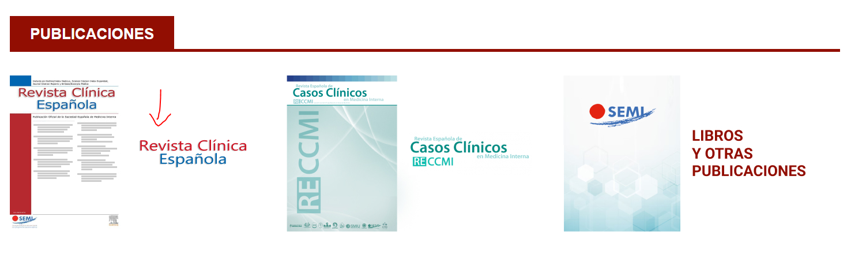
>>>https://www.fesemi.org/publicaciones/revista-clinica/noticias<<<


Subscriber
Subscriber

If you already have your login data, please click here .

If you have forgotten your password you can you can recover it by clicking here and selecting the option “I have forgotten my password”
Subscribe
Subscribe to
Revista Clínica Española (English Edition)
Purchase
Purchase article

Purchasing article the PDF version will be downloaded

Purchase now
Contact
Phone for subscriptions and reporting of errors
From Monday to Friday from 9 a.m. to 6 p.m. (GMT + 1) except for the months of July and August which will be from 9 a.m. to 3 p.m.
Calls from Spain
932 415 960
Calls from outside Spain
+34 932 415 960
Email
References
[1]
P. Zhang, X. Zhang, J. Brown, D. Vistisen, R. Sicree, J. Shaw, et al.
Global healthcare expenditure on diabetes for 2010 and 2030.
Diabetes Res Clin Pract., 87 (2010), pp. 293-301
[2]
F. Formiga, M. Camafort, F.J. Carrasco Sánchez.
Heart failure and diabetes: the confrontation of two major epidemics of the 21st century.
Rev Clin Esp., 220 (2020), pp. 135-138
[3]
L.M. Pérez-Belmonte, C.M. Lara-Rojas, M.D. López-Carmona, R. Guijarro-Merino, M.R. Bernal-López, R. Gómez-Huelgas.
National trends in heart failure hospitalization rates in patients with diabetes mellitus: 1997–2010.
Rev Esp Cardiol., 71 (2018), pp. 408-410
[4]
F.J. Carrasco-Sánchez, R. Gomez-Huelgas, F. Formiga, A. Conde-Martel, J.C. Trullàs, P. Bettencourt, et al.
Association between type-2 diabetes mellitus and post-discharge outcomes in heart failure patients: findings from the RICA registry.
Diabetes Res Clin Pract., 104 (2014), pp. 410-419
[5]
T.T. Win, H.T. Davis, W.K. Laskey.
Mortality among patients hospitalized with heart failure and diabetes mellitus.
[6]
B.H. Greenberg, W.T. Abraham, N.M. Albert, K. Chiswell, R. Clare, W.G. Stough, et al.
Influence of diabetes on characteristics and outcomes in patients hospitalized with heart failure: a report from the organized program to initiate lifesaving treatment in hospitalized patients with heart failure (OPTIMIZE-HF).
Am Heart J., 154 (2007), pp. 277.e1-277.e8
[7]
S. Sarma, R.J. Mentz, M.J. Kwasny, A.J. Fought, M. Huffman, H. Subacius, et al.
Association between diabetes mellitus and post-discharge outcomes in patients hospitalized with heart failure: findings from the EVEREST trial.
Eur J Heart Fail., 15 (2013), pp. 194-202
[8]
M.R. MacDonald, M.C. Petrie, F. Varyani, J. Ostergren, E.L. Michelson, J.B. Young, et al.
Impact of diabetes on outcomes in patients with low and preserved ejection fraction heart failure: an analysis of the Candesartan in heart failure: assessment of reduction in mortality and morbidity (CHARM) programme.
Eur Heart J., 29 (2008), pp. 1377-1385
[9]
J.T. Parissis, P. Rafouli-Stergiou, A. Mebazaa, I. Ikonomidis, V. Bistola, M. Nikolaou, et al.
Acute heart failure in patients with diabetes mellitus: clinical characteristics and predictors of in-hospital mortality.
Int J Cardiol., 157 (2012), pp. 108-113
[10]
G. Targher, M. Dauriz, C. Laroche, P.L. Temporelli, M. Hassanein, P.M. Seferovic, et al.
In-hospital and 1-year mortality associated with diabetes in patients with acute heart failure: results from the ESC-HFA Heart Failure Long-Term Registry.
Eur J Heart Fail., 19 (2017), pp. 54-65
[11]
J.C. Van Den Berge, A.A. Constantinescu, H.J. Boiten, R.T. van Domburg, J.W. Deckers, K.M. Akkerhuis.
Short- and long-term prognosis of patients with acute heart failure with and without diabetes: changes over the last three decades.
Diabetes Care., 41 (2018), pp. 143-149
[12]
N. Muñoz-Rivas, R. Jiménez-García, M. Méndez-Bailón, V. Hernández-Barrera, J. de Miguel-Díez, N. Lorenzo-Villalba, et al.
Type 2 diabetes increases the risk of hospital admission for heart failure and reduces the risk of in hospital mortality in Spain (2001–2015).
Eur J Intern Med., 59 (2019), pp. 53-59
[13]
P. Ponikowski, A.A. Voors, S.D. Anker, H. Bueno, J.G.F. Cleland, A.J.S. Coats, et al.
2016 ESC guidelines for the diagnosis and treatment of acute and chronic heart failure.
Eur Heart J., 37 (2016), pp. 2129-2200m
[14]
G.C. Fonarow, K.F. Adams, W.T. Abraham, C.W. Yancy, W.J. Boscardin.
Risk stratification for in-hospital mortality in acutely decompensated heart failure: classification and regression tree analysis.
J Am Med Assoc., 293 (2005), pp. 572-580
[15]
J.P. Van Melle, M. Bot, P. de Jonge, R.A. de Boer, D.J. van Veldhuisen, M.A. Whooley.
Diabetes, glycemic control, and new-onset heart failure in patients with stable coronary artery disease: data from the heart and soul study.
Diabetes Care, 33 (2010), pp. 2084-2089
[16]
J.M. Cerqueiro, A. González-Franco, M. Montero-Pérez-Barquero, P. Llácer, A. Conde, M.F. Dávila, et al.
Reducción de ingresos y visitas a Urgencias en pacientes frágiles con insuficiencia cardíaca: resultados del programa asistencial UMIPIC.
Rev Clin Esp., 216 (2016), pp. 8-14
[17]
K.F. Adams, G.C. Fonarow, C.L. Emerman, T.H. LeJemtel, M.R. Costanzo, W.T. Abraham, et al.
Characteristics and outcomes of patients hospitalized for heart failure in the United States: rationale, design, and preliminary observations from the first 100,000 cases in the Acute Decompensated Heart Failure National Registry (ADHERE).
Am Heart J., 149 (2005), pp. 209-216
[18]
J.J.V. McMurray, M. Packer, A.S. Desai, J. Gong, M.P. Lefkowitz, A.R. Rizkala, et al.
Angiotensin-neprilysin inhibition versus enalapril in heart failure.
N Engl J Med., 371 (2014), pp. 993-1004
[19]
J.J.V. McMurray, A.M. Jackson, C.S.P. Lam, M.M. Redfield, I.S. Anand, J. Ge, et al.
Effects of sacubitril-valsartan versus valsartan in women compared with men with heart failure and preserved ejection fraction: insights from PARAGON-HF.
Circulation., 141 (2020), pp. 338-351
[20]
T.A. Zelniker, S.D. Wiviott, I. Raz, K. Im, E.L. Goodrich, M.P. Bonaca, et al.
SGLT2 inhibitors for primary and secondary prevention of cardiovascular and renal outcomes in type 2 diabetes: a systematic review and meta-analysis of cardiovascular outcome trials.
[21]
D. Giugliano, M.I. Maiorino, M. Longo, G. Bellastella, P. Chiodini, K. Esposito.
Type 2 diabetes and risk of heart failure: a systematic review and meta-analysis from cardiovascular outcome trials.
Endocrine., 65 (2019), pp. 15-24
Idiomas
Revista Clínica Española (English Edition)
Article options
Tools
