

Suggestions
Idioma
Guide for authors
Searcher
Journal Information
Vol. 223. Issue 3.
Pages 125-192 (March 2023)
Cite
Cite
Share
Download PDF
More article options
Visits
667
Vol. 223. Issue 3.
Pages 125-192 (March 2023)
Brief Original

Association between arterial stiffness and fat mass in patients with obesity

Asociación entre rigidez arterial y masa grasa en pacientes con obesidad
Visits
667
S. Tolosa-Álvareza, J.C. Arévalo-Loridoa,
Corresponding author
jose.arevalo@salud-juntaex.es

Corresponding author.
, J.F. Sánchez-Muñoz-Torrerob, A. Pijierro-Amadora, L. Nevado López-Alegríaa, J. Carretero-Gómeza
a Servicio de Medicina Interna, Hospital Universitario de Badajoz, Badajoz, Spain
b Servicio de Medicina Interna, Hospital San Pedro de Alcántara, Cáceres, Spain
This item has received
Article information
Abstract
Full Text
Bibliography
Download PDF
Statistics
Abstract
Objective

The aim is to observe whether body composition in patients with high-risk obesity (body mass index >35 or between 30 and 34.9kg/m2 with a waist circumference greater than 102cm in men or greater than 88cm in women) is related with vascular disease.

Methods

This is a cross-sectional study of patients with high-risk obesity. Their fat mass was measured through bioimpedance and arterial stiffness through pulse wave velocity (PWV). Tertiles of patients were analyzed according to PWV distribution.

Results

A total of 59 patients were analyzed. As PWV increased, BMI (p=0.02) and fat mass content (p<0.00) increased. There was also a significant increase in inflammation indicators.

Conclusions

In patients with high-risk obesity, there were differences in their body composition which were associated with changes in arterial stiffness and inflammatory burden.

Keywords:
Obesity
Arterial stiffness
Bioimpedance
Resumen
Objetivo

Comprobar si la composición corporal en los pacientes con obesidad de riesgo alto (índice de masa corporal >35 o entre 30 y 34,9kg/m2 con un perímetro abdominal mayor de 102cm en varones o mayor de 88cm en mujeres) se relaciona con la enfermedad vascular.

Métodos

Estudio transversal de pacientes con obesidad de riesgo alto. Se mide su masa grasa mediante bioimpedancia y la rigidez arterial mediante la velocidad de la onda de pulso (VOP). Se analizan los terciles de pacientes según la distribución de la VOP.

Resultados

Se ha estudiado a 59 pacientes. Con incrementos de la VOP, aumentan el IMC (p=0,02) y el contenido de masa grasa (p<0,00). Existe, además, un incremento significativo de los indicadores de inflamación.

Conclusiones

En pacientes con obesidad de riesgo alto existen diferencias relativas a su composición corporal que se asocian a modificaciones de su rigidez arterial y de su carga inflamatoria.

Palabras clave:
Obesidad
Rigidez arterial
Bioimpedancia

Article

These are the options to access the full texts of the publication Revista Clínica Española (English Edition)
Member
Si es usted socio de FESEMI siga los siguientes pasos:

Diríjase desde aquí a la web de la >>>https://www.fesemi.org/publicaciones/revista-clinica/noticias<<< e inicie sesión mediante el formulario que se encuentra en la barra superior, pulsando sobre el candado.

Deslice el cursor hacia abajo hasta la sección "PUBLICACIONES" y pinche en "Revista Clínica Española":
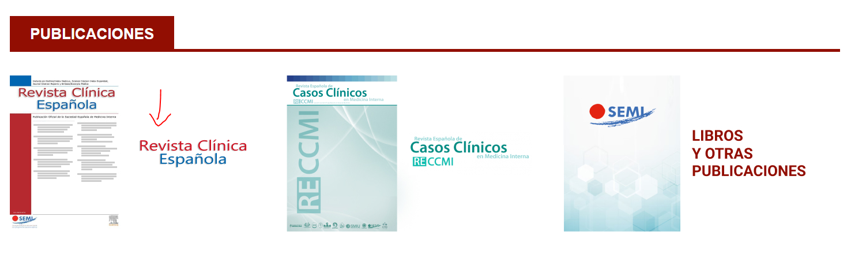
>>>https://www.fesemi.org/publicaciones/revista-clinica/noticias<<<


Subscriber
Subscriber

If you already have your login data, please click here .

If you have forgotten your password you can you can recover it by clicking here and selecting the option “I have forgotten my password”
Subscribe
Subscribe to
Revista Clínica Española (English Edition)
Purchase
Purchase article

Purchasing article the PDF version will be downloaded

Purchase now
Contact
Phone for subscriptions and reporting of errors
From Monday to Friday from 9 a.m. to 6 p.m. (GMT + 1) except for the months of July and August which will be from 9 a.m. to 3 p.m.
Calls from Spain
932 415 960
Calls from outside Spain
+34 932 415 960
Email
References
[1]
NCD, Risk Factor Collaboration (NCD-RisC).
Worldwide trends in body-mass index, underweight, overweight, and obesity from 1975 to 2016: a pooled analysis of 2416 population-based measurement studies in 128,9 million children, adolescents, and adults.
Lancet, 390 (2017), pp. 2627-2642
[2]
WHO. Obesity and overweight. June 9, 2021 [Accessed 22 September 2022]. Available in: https://www.who.int/news-room/fact-sheets/detail/obesity-and-overweight.
[3]
J. Carretero Gómez, J.C. Arévalo Lorido, R. Gómez Huelgas, M.T. Sánchez Vidal, M. Suárez Tembra, J.M. Varela Aguilar, et al.
Prevalence of obesity according to Edmonton staging in the Internal Medicine consultations. Results of the OBEMI study.
Rev Clin Esp (Barc), 217 (2017), pp. 71-78
[4]
C. Pérez-Rodrigo, G. Hervás Bárbara, M. Gianzo Citores, J. Aranceta-Bartrina.
Prevalence of obesity and associated cardiovascular risk factors in the Spanish population: the ENPE study.
Rev Esp Cardiol (Engl Ed), 75 (2022), pp. 232-341
[5]
P. Poirier, T.D. Giles, G.A. Bray, Y. Hong, J.S. Stern, F.X. Pi-Sunyer, et al.
American Heart Association; Obesity Committee of the Council on Nutrition, Physical Activity, and Metabolism. Obesity and cardiovascular disease: pathophysiology, evaluation, and effect of weight loss: an update of the 1997 American Heart Association Scientific Statement on Obesity and Heart Disease from the Obesity Committee of the Council on Nutrition, Physical Activity, and Metabolism.
Circulation, 113 (2006 Feb 14), pp. 898-918
[6]
Obesity: Identification, Assessment and Management. 2021 [Accessed 22 September 2022]. Available in: https://www.guidelines.co.uk/public-health/nice-obesity-guideline/252547.article.
[7]
J. Carretero-Gómez, P. Pérez-Martínez, J.M. Seguí-Ripoll, F.J. Carrasco-Sánchez, N. Lois Martínez, E. Fernández Pérez, et al.
High-Risk Obesity Phenotypes: Target for Multimorbidity Prevention at the ROFEMI Study.
J Clin Med, 11 (2022), pp. 4644
[8]
A.M. Cypess.
Reassessing human adipose tissue.
N Engl J Med, 386 (2022), pp. 768-779
[9]
J.F. Muñoz-Tsorrero, M. Tardio-Fernandez, J.M. Valverde-Valverde, F. Duque-Carrillo, J.M. Vega-Fernandez, P. Joya-Vazquez, et al.
Pulse wave velocity in four extremities for assessing cardiovascular risk using a new device.
J Clin Hypertens (Greenwich), 16 (2014), pp. 378-384
[10]
A. Yamashina, H. Tomiyama, K. Takeda, H. Tsuda, T. Arai, K. Hirose, et al.
Validity, reproducibility, and clinical significance of noninvasive brachial-ankle pulse wave velocity measurement.
Hypertens Res, 25 (2002), pp. 359-364
[11]
J.D. Ritchie, C.K. Miller, H. Smiciklas-Wright.
Tanita foot-to-foot bioelectrical impedance analysis system validated in older adults.
J Am Diet Assoc, 105 (2005), pp. 1617-1619
[12]
T. Ohkuma, H. Tomiyama, T. Ninomiya, K. Kario, S. Hoshide, Y. Kita, et al.
Collaborative Group for Japan Brachial-Ankle pulse wave VELocity individual participant data meta-analysis of prospective studies (J-BAVEL). Proposed Cutoff Value of Brachial-Ankle Pulse Wave Velocity for the Management of Hypertension.
Circ J, 81 (2017 Sep 25), pp. 1540-1542
[13]
J.Y. Han, D.H. Choi, S.W. Choi, B.B. Kim, Y.J. Ki, J.W. Chung, et al.
Predictive value of brachial-ankle pulse wave velocity for cardiovascular events.
Am J Med Sci, 346 (2013), pp. 92-97
[14]
Y. Maeda, T. Inoguchi, E. Etoh, Y. Kodama, S. Sasaki, N. Sonoda, et al.
Brachial-ankle pulse wave velocity predicts all-cause mortality and cardiovascular events in patients with diabetes: the Kyushu Prevention Study of Atherosclerosis.
Diabetes Care, 37 (2014), pp. 2383-2390
[15]
J. Zuo, B. Tang, M.F. O’Rourke, A.P. Avolio, A. Adji.
Association between brachial-ankle pulse wave velocity as a marker of arterial stiffness and body mass index in a Chinese population.
J Cardiovasc Dev Dis, 9 (2022), pp. 75
[16]
K.R. Sahakyan, V.K. Somers, J.P. Rodriguez-Escudero, D.O. Hodge, R.E. Carter, O. Sochor, et al.
Normal-weight central obesity: Implications for total and cardiovascular mortality.
Ann Intern Med, 163 (2015), pp. 827-835
[17]
Y. Furuncuoğlu, S. Tulgar, A.N. Dogan, S. Cakar, Y.K. Tulgar, B. Cakiroglu.
How obesity affects the neutrophil/lymphocyte and platelet/lymphocyte ratio, systemic immune-inflammatory index and platelet indices: a retrospective study.
Eur Rev Med Pharmacol Sci, 20 (2016), pp. 1300-1306
[18]
N. Iseda, S. Itoh, T. Yoshizumi, T. Tomiyama, A. Morinaga, T. Shimagaki, et al.
Lymphocyte-to-C-reactive protein ratio as a prognostic factor for hepatocellular carcinoma.
Int J Clin Oncol, 26 (2021), pp. 1890-1900
[19]
C.M. Larabee, O.C. Neely, A.I. Domingos.
Obesity: a neuroimmunometabolic perspective.
Nat Rev Endocrinol, 16 (2020), pp. 30-43
[20]
M. Iwabu, M. Okada-Iwabu, T. Yamauchi, T. Kadowaki.
Adiponectin/AdipoR re- search and its implications for lifestyle- related diseases.
Front Cardiovasc Med, 6 (2019), pp. 116
Idiomas
Revista Clínica Española (English Edition)
Article options
Tools
