
Sugerencias
Idioma
Guía para autores
Buscador
Información de la revista
Vol. 224. Núm. 10.
Páginas 627-694 (Diciembre 2024)
Cita
Cita
Compartir
Descargar PDF
Más opciones de artículo
Visitas
3671
Vol. 224. Núm. 10.
Páginas 627-694 (Diciembre 2024)
Artículo especial

Seguimiento y tratamiento de la enfermedad tromboembólica venosa a largo plazo: recomendaciones del Grupo de Enfermedad Tromboembólica de la Sociedad Española de Medicina Interna 2024

Long-term monitoring and treatment of venous thromboembolism disease: recommendations of venous thromboembolism group of the Spanish Society of Internal Medicine
Visitas
3671
M. Martín del Pozoa, M. Martín Asenjob,
Autor para correspondencia
miguel.martin.asenjo@gmail.com

Autor para correspondencia.
, A.I. Franco Morenoc, E. Usandizaga de Antoniod, F. Galeano Vallee
a Servicio de Medicina Interna, Hospital Infanta Sofia, Madrid, Universidad Europea de Madrid, Madrid, España
b Servicio de Medicina Interna, Hospital Clínico Universitario de Valladolid, Universidad de Valladolid, Valladolid, España
c Servicio de Medicina Interna, Hospital Universitario Intanta Leonor, Madrid, Universidad Complutense de Madrid, Madrid, España
d Medicina Interna, Clínica privada
e Servicio de Medicina Interna, Hospital General Universitaio Grergorio Marañon, Universidad Complutense de Madrid, Madrid, España
Este artículo ha recibido
Información del artículo
Resumen
Texto completo
Bibliografía
Descargar PDF
Estadísticas
Resumen

La enfermedad tromboembólica venosa (ETV) es una enfermedad altamente prevalente, que requiere de seguimiento y tratamiento extendidos. Este seguimiento implica diversos aspectos clave: 1) completar el estudio etiológico y determinar el riesgo de recurrencia de futuros eventos tromboembólicos; 2) establecer la duración óptima del tratamiento anticoagulante, así como el tipo de terapia y su dosis; 3) estimar el riesgo de hemorragia, y 4) identificar la posible aparición de complicaciones crónicas. El presente documento, elaborado por el Grupo de Enfermedad Tromboembólica de la Sociedad Española de Medicina Interna, pretende actualizar y establecer recomendaciones sobre estos aspectos. El documento se centra en 4 aspectos del manejo: el primero incluye los factores de riesgo de recurrencia en la ETV no provocada y las escalas predictivas de recurrencia; el segundo se centra en los factores predictores de hemorragia; el tercero ofrece recomendaciones sobre el seguimiento a largo plazo en la ETV y aborda consideraciones específicas para el despistaje de la hipertensión pulmonar tromboembólica crónica y del síndrome postrombótico; y el cuarto brinda orientación sobre la duración óptima del tratamiento anticoagulante extendido, así como el tipo de terapia y su dosis. Para cada área se realizó una exhaustiva revisión bibliográfica analizando diferentes guías clínicas de la ETV y estudios recientes que han valorado los aspectos tratados en el artículo. El objetivo del documento es que sirva de ayuda en el manejo de la ETV a largo plazo basado en el conocimiento más actual.

Palabras clave:
Anticoagulación
Embolia de pulmón
Enfermedad tromboembólica venosa
Escalas de riesgo hemorrágico
Recurrencia
Síndrome postembolia de pulmón
Trombosis venosa profunda
Abstract

Venous thromboembolim (VTE) is a highly prevalent condition that requires long-term monitoring and treatment. This monitoring includes: 1) completing the etiological study and determining the risk of VTE recurrence; 2) establishing the optimal duration of anticoagulant treatment, as well as the type of therapy and its dosage; 3) estimating the risk of bleeding, and 4) identifying the occurrence of chronic complications. This consensus document, prepared by the VTE Group of the Spanish Society of Internal Medicine (SEMI), aims to update and establish consensus recommendations on these aspects. The document focuses on four aspects of management: the first includes risk factors for VTE recurrence after an unprovoked VTE episode and describes the predictive scores of VTE recurrence; the second focuses on risk factors for bleeding; the third provides recommendations for long-term follow-up in VTE, addressing specific considerations for screening chronic thromboembolic pulmonary hypertension and post-thrombotic syndrome of the lower limbs; and the fourth provides guidance on the optimal duration of extended anticoagulant treatment, as well as the type of therapy and its dosage;. For each area, an exhaustive literature review was conducted, analyzing the updated VTE clinical guidelines and recent studies. This document is intended to be a guide in the long-term management of VTE based on the most current knowledge.

Keywords:
Anticoagulation
Deep vein thrombosis
Hemorrhagic risk scores
Post-pulmonary embolism syndrome
Pulmonary embolism
Recurrence
Venous thromboembolism

Artículo

Opciones para acceder a los textos completos de la publicación Revista Clínica Española
Socio
Si es usted socio de FESEMI siga los siguientes pasos:

Diríjase desde aquí a la web de la >>>https://www.fesemi.org/publicaciones/revista-clinica/noticias<<< e inicie sesión mediante el formulario que se encuentra en la barra superior, pulsando sobre el candado.

Deslice el cursor hacia abajo hasta la sección "PUBLICACIONES" y pinche en "Revista Clínica Española":
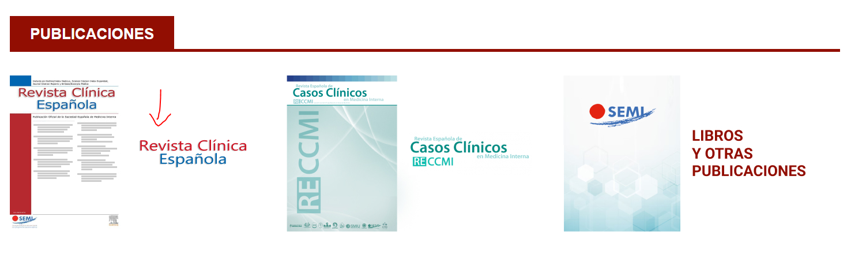
>>>https://www.fesemi.org/publicaciones/revista-clinica/noticias<<<


Suscriptor
Suscriptor de la revista

Si ya tiene sus datos de acceso, clique aquí.

Si olvidó su clave de acceso puede recuperarla clicando aquí y seleccionando la opción "He olvidado mi contraseña".
Suscribirse
Suscribirse a:
Revista Clínica Española
Comprar
Comprar acceso al artículo

Comprando el artículo el PDF del mismo podrá ser descargado

Comprar ahora
Contactar
Teléfono para suscripciones e incidencias
De lunes a viernes de 9h a 18h (GMT+1) excepto los meses de julio y agosto que será de 9 a 15h
Llamadas desde España
932 415 960
Llamadas desde fuera de España
+34 932 415 960
Email
Bibliografía
[1]
C. Kearon, E.A. Akl, J. Ornelas, A. Blaivas, D. Jimenez, H. Bounameaux, et al.
Antithrombotic Therapy for VTE Disease: CHEST Guideline and Expert Panel Report.
[2]
S.M. Stevens, S.C. Woller, L.B. Kreuziger, H. Bounameaux, K. Doerschug, G.J. Geersing, et al.
Antithrombotic Therapy for VTE Disease: Second Update of the CHEST Guideline and Expert Panel Report.
Chest, 160 (2021), pp. e545-e608
[3]
S.V. Konstantinides, G. Meyer, C. Becattini, H. Bueno, G.J. Geersing, V.P. Harjola, The Task Force for the diagnosis, management of acute pulmonary embolism of the European Society of Cardiology (ESC), et al.
2019 ESC Guidelines for the diagnosis and management of acute pulmonary embolism developed in collaboration with the European Respiratory Society (ERS): The Task Force for the diagnosis and management of acute pulmonary embolism of the European Society of Cardiology (ESC).
Eur Respir J, 54 (2019), pp. 1901647
[4]
J.I. Weitz, P. Prandoni, P. Verhamme.
Anticoagulation for Patients with Venous Thromboembolism: When is Extended Treatment Required?.
TH Open, 4 (2020), pp. e446-e456
[5]
J.L. Lobo, D. Jiménez, en nombre de los autores del Consenso.
Spanish Consensus for the Management of Pulmonary Thromboembolism.
Arch Bronconeumol, 57 (2021), pp. 612
[6]
L. Duffett, L.A. Castellucci, M.A. Forgie.
Pulmonary embolism: Update on management and controversies.
BMJ, 370 (2020), pp. m2177
[7]
T.L. Ortel, I. Neumann, W. Ageno, R. Beyth, N.P. Clark, A. Cuker, et al.
American Society of Hematology 2020 guidelines for management of venous thromboembolism: Treatment of deep vein thrombosis and pulmonary embolism.
[8]
M.A. Rodger, G. Le Gal.
Who should get long-term anticoagulant therapy for venous thromboembolism and with what?.
[9]
C. Kearon, A. Iorio, G. Palareti, Subcommittee on Control of Anticoagulation of the SSC of the ISTH.
Risk of recurrent venous thromboembolism after stopping treatment in cohort studies: recommendation for acceptable rates and standardized reporting.
J Thromb Haemost, 8 (2010), pp. 2313-2315
[10]
F. Khan, A. Rahman, M. Carrier, C. Kearon, J.I. Weitz, S. Schulman, MARVELOUS Collaborators, et al.
Long term risk of symptomatic recurrent venous thromboembolism after discontinuation of anticoagulant treatment for first unprovoked venous thromboembolism event: Systematic review and meta-analysis.
BMJ, 366 (2019), pp. l4363
[11]
F. Boutitie, L. Pinede, S. Schulman, G. Agnelli, G. Raskob, J. Julian, et al.
Influence of preceding length of anticoagulant treatment and initial presentation of venous thromboembolism on risk of recurrence after stopping treatment: Analysis of individual participants data from seven trials.
BMJ, 342 (2011), pp. d3036
[12]
G. Palareti, B. Cosmi, C. Legnani, A. Tosetto, C. Brusi, A. Iorio, PROLONG Investigators, et al.
D-dimer testing to determine the duration of anticoagulation therapy.
N Engl J Med, 355 (2006), pp. 1780-1789
[13]
J.I. Weitz, J.C. Fredenburgh, J.W. Eikelboom.
A Test in Context: D-Dimer.
J Am Coll Cardiol, 70 (2017), pp. 2411-2420
[14]
J. Douketis, A. Tosetto, M. Marcucci, T. Baglin, M. Cushman, S. Eichinger, et al.
Patient-level meta-analysis: Effect of measurement timing, threshold, and patient age on ability of D-dimer testing to assess recurrence risk after unprovoked venous thromboembolism.
[15]
M. Verhovsek, J.D. Douketis, Q. Yi, S. Shrivastava, R.C. Tait, T. Baglin, et al.
Systematic review: D-dimer to predict recurrent disease after stopping anticoagulant therapy for unprovoked venous thromboembolism.
[16]
M.N.D. Di Minno, I. Calcaterra, A. Papa, R. Lupoli, A. Di Minno, M. Maniscalco, et al.
Diagnostic accuracy of D-Dimer testing for recurrent venous thromboembolism: A systematic review with meta-analysis.: VTE recurrence and D-dimer.
Eur J Intern Med, 89 (2021), pp. 39-47
[17]
G. Palareti, B. Cosmi, C. Legnani, E. Antonucci, V. de Micheli, A. Ghirarduzzi, DULCIS (D-dimer and ULtrasonography in Combination Italian Study) Investigators, et al.
D-dimer to guide the duration of anticoagulation in patients with venous thromboembolism: a management study.
[18]
C. Kearon, S. Parpia, F.A. Spencer, S. Schulman, S.M. Stevens, V. Shah, et al.
Long-term risk of recurrence in patients with a first unprovoked venous thromboembolism managed according to d-dimer results; A cohort study.
J Thromb Haemost, 17 (2019), pp. 1144-1152
[19]
P. Prandoni, V. Vedovetto, M. Ciammaichella, E. Bucherini, S. Corradini, I. Enea, Morgagni Investigators, et al.
Residual vein thrombosis and serial D-dimer for the long-term management of patients with deep venous thrombosis.
[20]
C. Legnani, I. Martinelli, G. Palareti, A. Ciavarella, D. Poli, W. Ageno, et al.
D-dimer levels during and after anticoagulation withdrawal in patients with venous thromboembolism treated with non-vitamin K anticoagulants.
PLoS One, 14 (2019), pp. e0219751
[21]
G. Palareti, D. Poli, W. Ageno, C. Legnani, E. Antonucci, E. Bucherini, et al.
D-dimer and reduced-dose apixaban for extended treatment after unprovoked venous thromboembolism: The Apidulcis study.
[22]
S. Eichinger, G. Hron, C. Bialonczyk, M. Hirschl, E. Minar, O. Wagner, et al.
Overweight, obesity, and the risk of recurrent venous thromboembolism.
Arch Intern Med, 168 (2008), pp. 1678-1683
[23]
B.A. Vučković, S.C. Cannegieter, A. van Hylckama Vlieg, F.R. Rosendaal, W.M. Lijfering.
Recurrent venous thrombosis related to overweight and obesity: Results from the MEGA follow-up study.
J Thromb Haemost, 15 (2017), pp. 1430-1435
[24]
A. Stadnicki, I. Stadnicka.
Venous and arterial thromboembolism in patients with inflammatory bowel diseases.
World J Gastroenterol, 27 (2021), pp. 6757-6774
[25]
D. Gala, T. Newsome, N. Roberson, S.M. Lee, M. Thekkanal, M. Shah, et al.
Thromboembolic Events in Patients with Inflammatory Bowel Disease: A Comprehensive Overview.
[26]
B.K. Mahmoodi, J.L. Brouwer, M.K. Ten Kate, W.M. Lijfering, N.J.G.M. Veeger, A.B. Mulder, et al.
A prospective cohort study on the absolute risks of venous thromboembolism and predictive value of screening asymptomatic relatives of patients with hereditary deficiencies of protein S, protein C or antithrombin.
J Thromb Haemost, 8 (2010), pp. 1193-1200
[27]
W.M. Lijfering, J.-L.P. Brouwer, N.J. Veeger, I. Bank, M. Coppens, S. Middeldorp, et al.
Selective testing for thrombophilia in patients with first venous thrombosis: Results from a retrospective family cohort study on absolute thrombotic risk for currently known thrombophilic defects in 2479 relatives.
Blood, 113 (2009), pp. 5314-5322
[28]
M. Barbhaiya, S. Zuily, R. Naden, A. Hendry, F. Manneville, M.C. Amigo, ACR/EULAR APS Classification Criteria Collaborators, et al.
The 2023 ACR/EULAR Antiphospholipid Syndrome Classification Criteria.
Arthritis Rheumatol, 75 (2023), pp. 1687-1702
[29]
J.A. Heit.
Epidemiology of venous thromboembolism.
Nat Rev Cardiol, 12 (2015), pp. 464-474
[30]
J. Douketis, A. Tosetto, M. Marcucci, T. Baglin, B. Cosmi, M. Cushman, et al.
Risk of recurrence after venous throm-boembolism in men and women: Patient level meta-analysis.
Br Med J, 342 (2011), pp. d813
[31]
M. Carrier, M.A. Rodger, P.S. Wells, M. Righini, G.LE. Gal.
Residual vein obstruction to predict the risk of recurrent venous thromboembolism in patients with deep vein thrombosis: A systematic review and meta-analysis.
J Thromb Haemost, 9 (2011), pp. 1119-1125
[32]
G. Le Gal, M. Carrier, M.J. Kovacs, M.T. Betancourt, S.R. Kahn, P.S. Wells, et al.
Residual vein obstruction as a predictor for recurrent thromboembolic events after a first unprovoked episode: Data from the REVERSE cohort study.
J Thromb Haemost, 9 (2011), pp. 1126-1132
[33]
P. Robin, R. Le Pennec, M. Eddy, L. Sikora, P.-Y. Le Roux, M. Carrier, et al.
Residual pulmonary vascular obstruction and recurrence after acute pulmonary embolism: A systematic review and meta-analysis of individual participant data.
[34]
M. Stain, V. Schonauer, E. Minar, C. Bialonczyk, M. Hirschl, A. Weltermann, et al.
The post-thrombotic syndrome: Risk factors and impact on the course of thrombotic disease.
J Thromb Haemost, 3 (2005), pp. 2671-2676
[35]
A.K. Jönsson, J. Schill, H. Olsson, O. Spigset, S. Hägg.
Venous Thromboembolism During Treatment with Antipsychotics: A Review of Current Evidence.
CNS Drugs, 32 (2018), pp. 47-64
[36]
L.M. Mollard, R. Le Mao, C. Tromeur, E. Le Moigne, M. Gouillou, B. Pan-Petesch, et al.
Antipsychotic drugs and the risk of recurrent venous thromboembolism: A prospective cohort study.
Eur J Intern Med, 52 (2018), pp. 22-27
[37]
C. Parker, C. Coupland, J. Hippisley-Cox.
Antipsychotic drugs and risk of venous thromboembolism: Nested case-control study.
BMJ, 341 (2010), pp. c4245
[38]
M.A. Rodger, S.R. Kahn, P.S. Wells, D.A. Anderson, I. Chagnon, G. Le Gal, et al.
Identifying unprovoked thromboembolism patients at low risk for recurrence who can discontinue anticoagulant therapy.
CMAJ, 179 (2008), pp. 417-426
[39]
A. Tosetto, A. Iorio, M. Marcucci, T. Baglin, M. Cushman, S. Eichinger, et al.
Predicting disease recurrence in patients with previous unprovoked venous thromboembolism: A proposed prediction score (DASH).
J Thromb Haemost, 10 (2012), pp. 1019-1025
[40]
S. Eichinger, G. Heinze, L.M. Jandeck, P.A. Kyrle.
Risk assessment of recurrence in patients with unprovoked deep vein thrombosis or pulmonary embolism: The Vienna prediction model.
Circulation, 121 (2010), pp. 1630-1636
[41]
A.I. Franco Moreno, M.J. García Navarro, J. Ortiz Sánchez, R.M. Martín Díaz, E. Madroñal Cerezo, C.L. de Ancos Aracil, et al.
A risk score for prediction of recurrence in patients with unprovoked venous thromboembolism (DAMOVES).
Eur J Intern Med, 29 (2016), pp. 59-64
[42]
M.A. Rodger, G. Le Gal, D.R. Anderson, J. Schmidt, G. Pernod, S.R. Kahn, REVERSE II Study Investigators, et al.
Validating the HERDOO2 rule to guide treatment duration for women with unprovoked venous thrombosis: multinational prospective cohort management study.
BMJ, 356 (2017), pp. j1065
[43]
A. Tosetto, S. Testa, I. Martinelli, D. Poli, B. Cosmi, C. Lodigiani, et al.
External validation of the DASH prediction rule: A retrospective cohort study.
J Thromb Haemost, 15 (2017), pp. 1963-1970
[44]
M. Marcucci, A. Iorio, J.D. Douketis, S. Eichinger, En Tosetto, T. Baglin, et al.
Risk of recurrence after a first unprovoked venous thromboembolism: External validation of the Vienna Prediction Model with pooled individual patient data.
J Thromb Haemost, 13 (2015), pp. 775-781
[45]
P.L. Den Exter, S.C. Woller, H. Robert-Ebadi, C. Masias, P.E. Morange, D. Castelli, et al.
Management of bleeding risk in patients who receive anticoagulant therapy for venous thromboembolism: Communication from the ISTH SSC Subcommittee on Predictive and Diagnostic Variables in Thrombotic Disease.
J Thromb Haemost, 20 (2022), pp. 1910-1919
[46]
F.A. Klok, J. Kooiman, M.V. Huisman, S. Konstantinides, M. Lankeit.
Predicting anticoagulant-related bleeding in patients with ve-nous thromboembolism: A clinically oriented review.
Eur Respir J, 45 (2015), pp. 201-210
[47]
F. Khan, T. Tritschler, M. Kimpton, P.S. Wells, C. Kearon, J.I. Weitz, MAJESTIC Collaborators, et al.
Long-Term Risk for Major Bleeding During Extended Oral Anticoagulant Therapy for First Unprovoked Venous Thromboembolism: A Systematic Review and Meta-analysis.
Ann Int Med, 174 (2021), pp. 1420-1429
[48]
N. Ruiz Giménez, C. Suárez, R. González, J.A. Nieto, J.A. Todolí, A.L. Samperiz, RIETE Investigators, et al.
Predictive variables for major bleeding events in patients presenting with documented acute venous tromboembolism. Findings from the RIETE Registry.
Thromb Haemost, 100 (2008), pp. 26-31
[49]
F.A. Klok, V. Hösel, A. Clemens, W.D. Yollo, C. Tilke, S. Schulman, et al.
Prediction of bleeding events in patientswith venous thromboembolism on stable anticoagulation treatment.
Eur Respir J, 48 (2016), pp. 1369-1376
[50]
P.L. Lutsey, B.G. Windham, J.R. Misialek, M. Cushman, A. Kucharska-Newton, S. Basu, et al.
Long-Term Association of Venous Thromboembolism With Frailty, Physical Functioning, and Quality of Life: The Atherosclerosis Risk in Communities Study.
J Am Heart Assoc, 9 (2020), pp. e015656
[51]
G.J.A.M. Boon, M.V. Huisman, F.A. Klok.
Determinants and Management of the Post-Pulmonary Embolism Syndrome.
Semin Respir Crit Care Med, 42 (2021), pp. 299-307
[52]
F.A. Klok, T. van der Hulle, P.L. den Exter, M. Lankeit, M.V. Huisman, S. Konstantinides.
The post-PE syndrome: A new concept for chronic complications of pulmonary embolism.
Blood Rev, 28 (2014), pp. 221-226
[53]
G. Boon, S. Barco, L. Bertoletti, W. Ghanima, M.V. Huisman, S.R. Kahn, et al.
Measuring functional limitations after venous thromboembolism: Optimization of the Post-VTE Functional Status (PVFS) scale.
[54]
F.A. Klok, W. Ageno, C. Ay, M. Bäck, S. Barco, L. Bertoletti, et al.
Optimal follow-up after acute pulmonary embolism: a position paper of the European Society of Cardiology Working Group on Pulmonary Circulation and Right Ventricular Function, in collaboration with the European Society of Cardiology Working Group on Atherosclerosis and Vascular Biology, endorsed by the European Respiratory Society.
Eur Heart J, 43 (2022), pp. 183-189
[55]
P. Ramírez, R. Otero, J.A. Barberà.
Pulmonary chronic thromboembolic disease.
Arch Bronconeumol, 56 (2020), pp. 314-321
[56]
M. Humbert, G. Kovacs, M.M. Hoeper, R. Badagliacca, R.M.F. Berger, M. Brida, ESC/ERS Scientific Document Group, et al.
2022 ESC/ERS Guidelines for the diagnosis and treatment of pulmonary hypertension.
Eur Heart J, 43 (2022), pp. 3618-3731
[57]
P. Demelo-Rodriguez, F. Galeano-Valle, M. Proietti.
Use of Oral Anticoagulant Drugs in Patients with Pulmonary Hypertension.
Heart Fail Clin, 19 (2023), pp. 97-106
[58]
S.R. Kahn.
The post-thrombotic syndrome.
Hematology Am Soc Hematol Educ Program, 2016 (2016), pp. 413-418
[59]
J.P. Galanaud, M. Monreal, S.R. Kahn.
Epidemiology of the post-thrombotic syndrome.
Thromb Res, 164 (2018), pp. 100-109
[60]
A. Visonà, I. Quere, L. Mazzolai, M. Amitrano, M. Lugli, J. Madaric, et al.
European Society of Vascular Medicine (ESVM). Post-thrombotic syndrome.
[61]
L. Needleman, J.J. Cronan, M.P. Lilly, G.J. Merli, S. Adhikari, B.S. Hertzberg, et al.
Ultrasound for Lower Extremity Deep Venous Thrombosis: Multidisciplinary Recommendations From the Society of Radiologists in Ultrasound Consensus Conference.
Circulation, 137 (2018), pp. 1505-1515
[62]
N. Van Es, M. Coppens, S. Schulman, S. Middeldorp, H.R. Büller.
Direct oral anticoagulants compared with vitamin K antagonists for acute venous thromboembolism: Evidence from phase 3 trials.
Blood, 124 (2014), pp. 1968-1975
[63]
S. Chulman, C. Kearon, A.K. Kakkar, S. Schellong, H. Eriksson, D. Baanstra, RE-SONATE Trial Investigators, et al.
Extended use of dabigatran, warfarin, or placebo in venous thromboembolism.
N Engl J Med, 368 (2013), pp. 709-718
[64]
R. Bauersachs, S.D. Berkowitz, B. Brenner, H.R. Buller, H. Decousus, A.S. Gallus, et al.
Oral rivaroxaban for symptomatic venous thromboembolism.
N Engl J Med, 363 (2010), pp. 2499-2510
[65]
J.I. Weitz, A.W.A. Lensing, M.H. Prins, R. Bauersachs, J. Beyer-Westendorf, H. Bounameaux, EINSTEIN CHOICE Investigators, et al.
Rivaroxaban or aspirin for extended treatment of venous thromboembolism.
N Engl J Med, 376 (2017), pp. 1211-1222
[66]
G. Raskob, W. Ageno, A.T. Cohen, M.P.A. Brekelmans, M.A. Grosso, A. Segers, et al.
Extended duration of anticoagulation with edoxaban in patients with venous thromboembolism: A post hoc analysis of the Hokusai-VTE study.
Lancet Haematol, 3 (2016), pp. e228-e236
[67]
G. Agnelli, H.R. Büller, A. Cohen, M. Curto, A.S. Gallus, M. Johnson, AMPLIFY Investigators, et al.
Oral apixaban for the treatment of acute venous thromboembolism.
N Engl J Med, 369 (2013), pp. 799-808
[68]
O. Wu, S. Morris, T.B. Larsen, F. Skjøth, A. Evans, K. Bowrin, et al.
Effectiveness and Safety of Nonvitamin K Oral Anticoagulants Rivaroxaban and Apixaban in Patients with Venous Thromboembolism: A Meta-Analysis of Real-World Studies.
Cardiovasc Ther, 2022 (2022), pp. 2756682
[69]
T.A. Brighton, J.W. Eikelboom, K. Mann, M. Biostat, R. Mister, A. Gallus, ASPIRE Investigators, et al.
Low-dose aspirin for preventing recurrent venous thromboembolism.
N Engl J Med, 367 (2012), pp. 1979-1987
[70]
C. Becattini, G. Agnelli, A. Schenone, S. Eichinger, E. Bucherini, M. Silingardi, WARFASA Investigators, et al.
Aspirin for preventing the recurrence of venous thromboembolism.
N Engl J Med, 366 (2012), pp. 1959-1967
[71]
G.M. Andreozzi, A.A. Bignamini, G. Davì, G. Palareti, J. Matuška, M. Holý, et al.
Sulodexide for the Prevention of Recurrent Venous Thromboembolism: The Sulodexide in Secondary Prevention of Recurrent Deep Vein Thrombosis (SURVET) Study: A Multicenter, Randomized, Double-Blind, Placebo-Controlled Trial.
Circulation, 132 (2015), pp. 1891-1897
[72]
M.A. De Winter, G.C.P. Remme, K.H.A.H. Kaasjager, M. Nijkeuter.
Short-term versus extended anticoagulant treatment for unprovoked venous thromboembolism: A survey on guideline adherence and physicians’ considerations.
[73]
V. Mai, C.A. Guay, L. Perreault, S. Bonnet, L. Bertoletti, Y. Lacasse, et al.
Extended Anticoagulation for VTE: A Systematic Review and Meta-Analysis.
Chest, 155 (2019), pp. 1199-1216
[74]
L. Mazzolai, W. Ageno, A. Alatri, R. Bauersachs, C. Becattini, M. Brodmann, et al.
Second consensus document on diagnosis and management of acute deep vein thrombosis: Updated document elaborated by the ESC Working Group on aorta and peripheral vascular diseases and the ESC Working Group on pulmonary circulation and right ventricular function.
Eur J Prev Cardiol, 29 (2022), pp. 1248-1263
Idiomas
Revista Clínica Española
Opciones de artículo
Herramientas
Material suplementario