

Suggestions
Share
Journal Information
Visits
72
Special article
Uncorrected Proof. Available online 25 December 2025
Generative AI: foundational models. Natural Language Processing (NLP) and LARGE Language Models (LLM)
IA Generativa: Los modelos fundacionales. Procesamiento del lenguaje natural (PLN) y modelos de lenguaje grandes (LLM)
Visits
72
J. Mora-Delgadoa,b, L. Ramos-Rupertoa,c, M.J. Pardillad, M.Á. Siciliae, A. Rodríguez-Gonzálezf,g, J.M Sempereh,i,j, R. Puchadesa,k,
Corresponding author
rpuchades@gmail.com

Corresponding author.
a Grupo de Trabajo Medicina Digital de la SEMI, Spain
b Unidad de Gestión Clínica de Medicina Interna y Cuidados Paliativos, Hospital Universitario Jerez de la Frontera, Jerez, Spain
c Servicio de Medicina Interna, Hospital Universitario La Paz, Madrid, Spain
d Expert Data Analyst / MSC Big Data & AI, Spain
e Departamento de Ciencias de la Computación, Universidad de Alcalá, Spain
f Centro de Tecnología Biomédica, Universidad Politécnica de Madrid, Spain
g Escuela Técnica Superior de Ingenieros Informáticos, Universidad Politécnica de Madrid, Spain
h Departamento de Sistemas Informáticos y Computación (DSIC), Universidad Politécnica de Valencia, Spain
i Valencian Research Institute for Artificial Intelligence (VRAIN), Spain
j Valencian Graduate School and Research Network of Artificial Intelligence (VALGRAI), Spain
k Servicio de Medicina Interna, Hospital Universitario Dr Peset, Valencia, Spain
Ver más
This item has received
Article information
Abstract
Full Text
Bibliography
Download PDF
Statistics
Figures (3)
Show moreShow less
Tables (2)
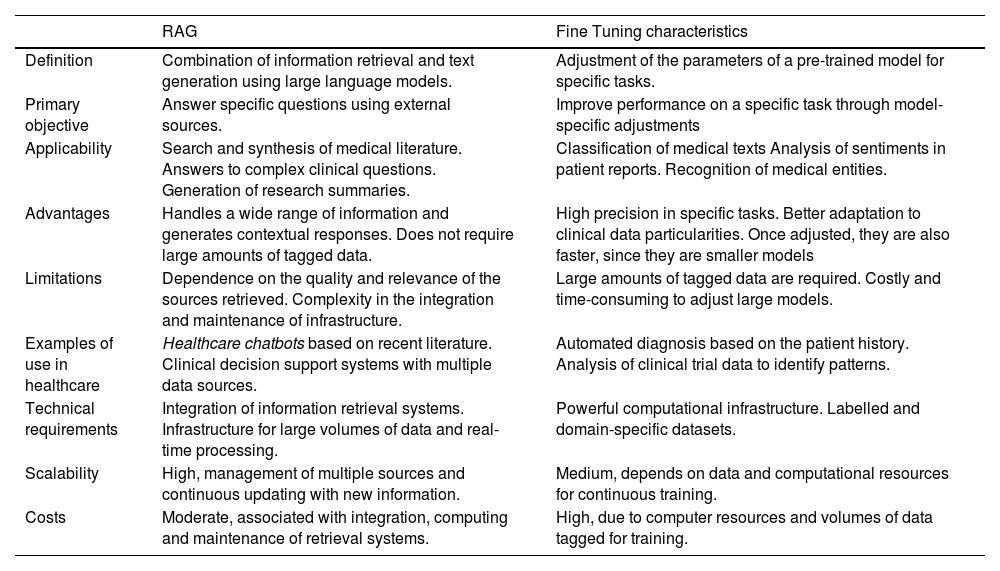
Table 1. Differences between retrieval-augmented generation (RAG) and fine-tuning.
Tables
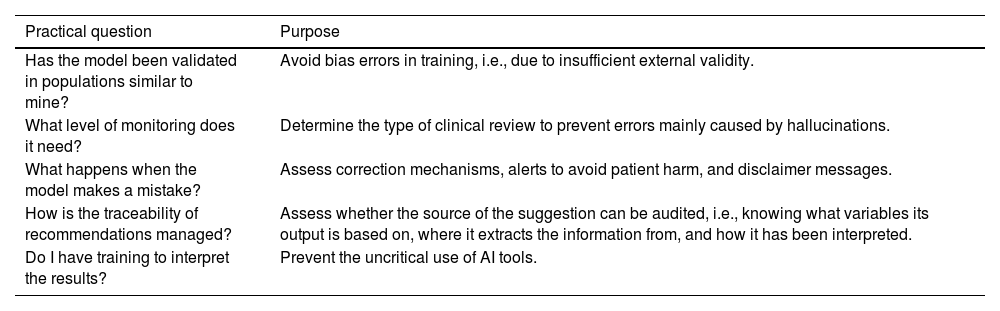
Table 2. Key questions before using an LLM in the clinical setting.
Tables
Show moreShow less
Abstract

This work aims to provide internists with a practical, focused overview of how generative AI based on large language models can be effectively integrated into daily clinical practice. It describes the primary adaptation mechanisms like fine-tuning and retrieval-augmented generation (RAG) for tasks such as report generation, synthesis of clinical findings, and support in differential diagnoses, highlighting real-world examples in Internal Medicine. Technical and organizational requirements for adoption are analyzed, including computing infrastructure, integration with electronic health records, and security/privacy protocols under GDPR and the EU AI Act. Opportunities for enhancing clinical decision-making, optimizing workflows, and reducing administrative burden are emphasized, alongside current limitations like bias, hallucinations, and the need for human oversight. Finally, recommendations are offered for prospective validation in real-world settings and for ensuring explainable transparency, with the goal of empowering internists to incorporate these innovative tools responsibly and efficiently.

Keywords:
Artificial intelligence
Clinical decision support systems
Electronic health records
Internists
Natural language processing
Resumen

Este trabajo pretende ofrecer a los internistas una visión práctica y orientada sobre cómo la IA generativa basada en modelos de lenguaje puede integrarse eficazmente en la práctica clínica diaria. Describimos los principales mecanismos de adaptación de estos sistemas, como fine-tuning y recuperación aumentada por recuperación (RAG) para tareas como la generación de informes, síntesis de hallazgos clínicos y apoyo en diagnósticos diferenciales, subrayando ejemplos reales de uso en medicina interna. Asimismo, analizamos los requisitos técnicos y organizativos necesarios para su adopción, incluyendo la infraestructura de cómputo, la integración con historias clínicas electrónicas y los protocolos de seguridad y privacidad según RGPD y Reglamento Europeo de IA. Por otro lado, destacamos las oportunidades de mejora en la toma de decisiones clínicas, la optimización de flujos de trabajo y la reducción de carga administrativa, junto con las limitaciones actuales, como sesgos, alucinaciones y necesidad de supervisión humana. Finalmente, ofrecemos recomendaciones para la validación prospectiva en entornos reales y para asegurar la transparencia explicable, con el objetivo de empoderar a los internistas en la incorporación responsable y eficiente de estas herramientas innovadoras.

Palabras clave:
Inteligencia artificial
Sistemas de apoyo a la decisión clínica
Registros electrónicos de salud
Internistas
Procesamiento de lenguaje natural

Article

These are the options to access the full texts of the publication Revista Clínica Española (English Edition)
Member
Si es usted socio de FESEMI siga los siguientes pasos:

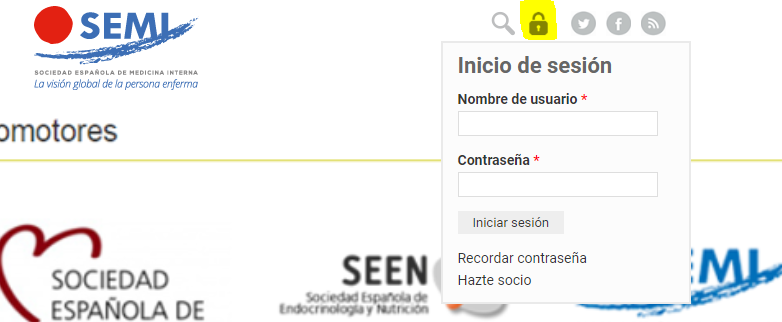
Diríjase desde aquí a la web de la >>>FESEMI<<< e inicie sesión mediante el formulario que se encuentra en la barra superior, pulsando sobre el candado.
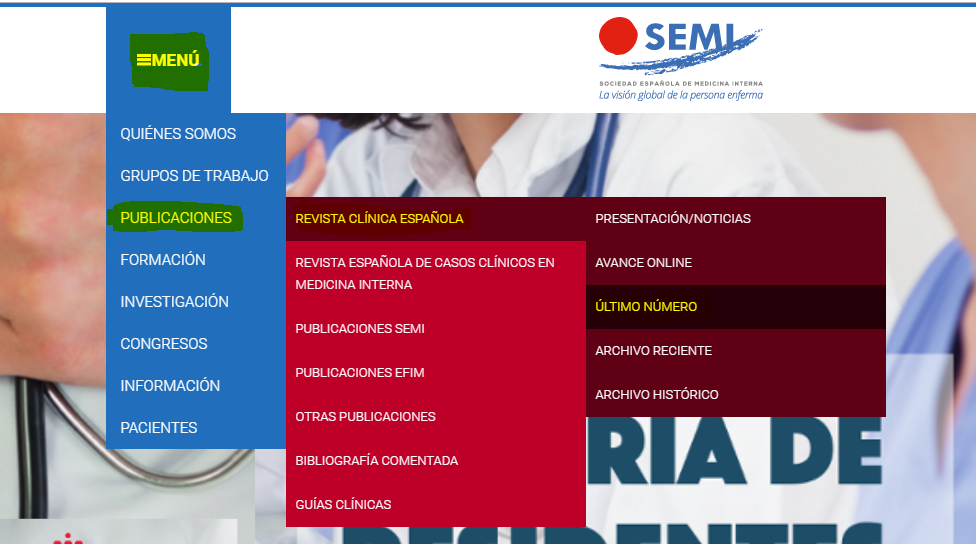
Una vez autentificado, en la misma web de FESEMI, en el menú superior, elija la opción deseada.
>>>FESEMI<<<


Subscriber
Subscriber

If you already have your login data, please click here .

If you have forgotten your password you can you can recover it by clicking here and selecting the option “I have forgotten my password”
Subscribe
Subscribe to

Revista Clínica Española (English Edition)

Purchase
Purchase article

Purchasing article the PDF version will be downloaded

Purchase now
Contact
Phone for subscriptions and reporting of errors
From Monday to Friday from 9 a.m. to 6 p.m. (GMT + 1) except for the months of July and August which will be from 9 a.m. to 3 p.m.
Calls from Spain
932 415 960
Calls from outside Spain
+34 932 415 960
Email
Idiomas
Revista Clínica Española (English Edition)
Article options
Tools