Sugerencias
Idioma
Guía para autores
Buscador
Información de la revista
Vol. 226. Núm. 6.
(Junio - Julio 2026)
Cita
Cita
Compartir
Descargar PDF
Más opciones de artículo
Visitas
606
Vol. 226. Núm. 6.
(Junio - Julio 2026)
Original article

Real-world observational study to evaluate the effectiveness and safety of direct oral anticoagulants compared with vitamin K antagonists for secondary venous thrombosis prevention in low-risk thrombotic antiphospholipid syndrome patients: DOACS-APS protocol

Estudio observacional de práctica clínica real para evaluar la efectividad y seguridad de los anticoagulantes orales de acción directa en comparación con antagonistas de la vitamina K en la prevención secundaria de la trombosis venosa en pacientes con síndrome antifosfolipídico trombótico de bajo riesgo: Protocolo del estudio DOACS-APS
Visitas
606
I. Perales Frailea, M. Martín Asenjob, C.L. de Ancos Aracilc, J. Torres Machod, L. Sáez Comete, M. Martín Cascónf, J. Alijotas Reigg, A. González Garcíah, A. Franco Morenod,
Autor para correspondencia
a Servicio de Medicina Interna, Hospital Universitario Infanta Sofia, Madrid, Universidad Europea de Madrid, FIIB HUIS-HUHEN, Madrid, Spain
b Servicio de Medicina Interna, Hospital Clínico Universitario de Valladolid, Universidad de Valladolid, Valladolid, Spain
c Servicio de Medicina Interna, Unidad de Tromboembolismo Venoso, Hospital Universitario de Fuenlabrada, Madrid, Spain
d Servicio de Medicina Interna, Unidad de Tromboembolismo Venoso, Hospital Universitario Infanta Leonor, Madrid, Universidad Complutense de Madrid, Madrid, Spain
e Servicio de Medicina Interna, Unidad de Enfermedades Autoinmunes Sistémicas, Hospital Universitario Miguel Servet, Zaragoza, Spain
f Servicio de Medicina Interna, Unidad de Enfermedades Autoinmunes Sistémicas, Hospital General Universitario Morales Meseguer, Murcia, Spain
g Servicio de Medicina Interna, Unidad de Enfermedades Autoinmunes Sistémicas, Hospital Universitario Vall d’Hebron, Universidad Autónoma de Barcelona, Barcelona, Spain
h Servicio de Medicina Interna, Unidad de Enfermedades Autoinmunes Sistémicas, Hospital Universitario Ramón y Cajal, IRYCIS, Grupo GEAS, Madrid, Spain
Este artículo ha recibido
Información del artículo
Resumen
Texto completo
Bibliografía
Descargar PDF
Estadísticas
Abstract
Background

The therapeutic management of thrombotic antiphospholipid syndrome (APS) is based on indefinite anticoagulation. Vitamin K antagonists (VKA) remain the standard of care, particularly in patients with triple antiphospholipid antibody positivity or a history of arterial thrombosis. In low-risk patients, defined as those with single or double antiphospholipid antibody positivity and no prior arterial thrombosis, recent data suggest that direct oral anticoagulants (DOAC) may provide efficacy comparable to VKA. However, the quality of the available evidence is moderate to low. This study aims to compare the effectiveness of DOAC versus VKA in preventing thrombotic recurrence in low-risk patients with APS.

Methods

This is a multicentre, ambispective, observational, analytical study conducted in Internal Medicine departments across Spanish hospitals. Adult patients with low-risk thrombotic APS treated with DOAC or VKA will be included and followed for a minimum of two years. The primary effectiveness outcome will be venous thrombotic recurrence.

Conclusions

The DOACS-APS study will provide clinically relevant real-world evidence on the effectiveness of DOAC in a selected subgroup of patients with APS, thereby improving therapeutic decision-making in routine clinical practice.

The study is registered at ClinicalTrials.gov (NCT07372170).

Keywords:
Vitamin K antagonists
Direct oral anticoagulants
Major bleeding
Serological profile
Secondary prevention
Antiphospholipid syndrome
Venous thrombosis
Resumen
Introducción

El abordaje terapéutico del síndrome antifosfolipídico (SAF) trombótico se basa en la anticoagulación indefinida. Los antagonistas de la vitamina K (AVK) siguen siendo el tratamiento estándar, especialmente en pacientes con triple positividad o trombosis arterial previa. En pacientes de bajo riesgo, definidos como aquellos con positividad simple o doble de anticuerpos antifosfolipídicos y sin historia de trombosis arterial, datos recientes sugieren que los anticoagulantes orales de acción directa (ACOD) pueden ofrecer una eficacia similar a los AVK. Sin embargo, la calidad de la evidencia es moderada a baja. El objetivo principal de este estudio es comparar la efectividad de los ACOD en la prevención de la recurrencia de trombosis venosa en el SAF frente a los fármacos AVK en pacientes considerados de bajo riesgo.

Métodos

Estudio observacional, analítico y ambispectivo, multicéntrico, realizado en servicios de Medicina Interna de hospitales españoles. Se incluirán pacientes adultos con SAF de bajo riesgo tratados con ACOD o AVK, con un seguimiento mínimo de dos años. La variable principal de efectividad será la recurrencia trombótica.

Conclusiones

El estudio DOACS-APS permitirá aportar información clínica relevante sobre la efectividad de los ACOD en un subgrupo seleccionado de pacientes con SAF, contribuyendo a optimizar la toma de decisiones terapéuticas en la práctica clínica.

Estudio registrado en ClinicalTrials.gov (NCT07372170).

Palabras clave:
Antagonistas de la vitamina K
Anticoagulantes orales de acción directa
Hemorragia mayor
Perfil serológico
Prevención secundaria
Síndrome antifosfolipídico
Trombosis venosa

Artículo

Opciones para acceder a los textos completos de la publicación Revista Clínica Española
Socio
Si es usted socio de FESEMI siga los siguientes pasos:

Diríjase desde aquí a la web de la >>>https://www.fesemi.org/publicaciones/revista-clinica/noticias<<< e inicie sesión mediante el formulario que se encuentra en la barra superior, pulsando sobre el candado.
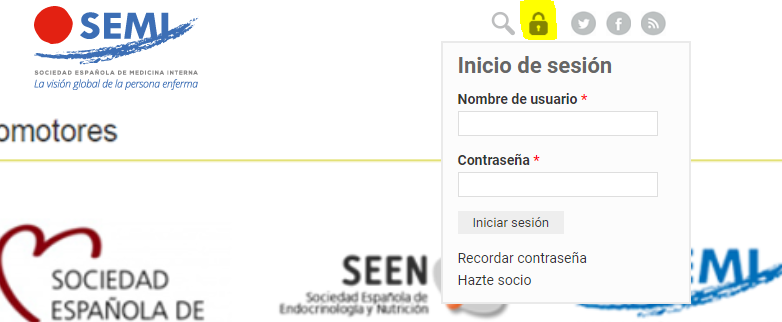
Deslice el cursor hacia abajo hasta la sección "PUBLICACIONES" y pinche en "Revista Clínica Española":

>>>https://www.fesemi.org/publicaciones/revista-clinica/noticias<<<


Suscriptor
Suscriptor de la revista

Si ya tiene sus datos de acceso, clique aquí.

Si olvidó su clave de acceso puede recuperarla clicando aquí y seleccionando la opción "He olvidado mi contraseña".
Suscribirse
Suscribirse a:
Revista Clínica Española
Comprar
Comprar acceso al artículo

Comprando el artículo el PDF del mismo podrá ser descargado

Comprar ahora
Contactar
Teléfono para suscripciones e incidencias
De lunes a viernes de 9h a 18h (GMT+1) excepto los meses de julio y agosto que será de 9 a 15h
Llamadas desde España
932 415 960
Llamadas desde fuera de España
+34 932 415 960
Email
References
[1]
D. Garcia, D. Erkan.
Diagnosis and management of the antiphospholipid syndrome.
N Engl J Med, 379 (2018), pp. 1290
[2]
B. Giannakopoulos, S.A. Krilis.
The pathogenesis of the antiphospholipid syndrome.
N Engl J Med, 368 (2013), pp. 1033-1044
[3]
G. Ruiz-Irastorza, M. Crowther, W. Branch, M.A. Khamashta.
Antiphospholipid syndrome.
Lancet, 376 (2010), pp. 1498-1509
[4]
M. Barbhaiya, S. Zuily, R. Naden, et al.
The 2023 ACR/EULAR antiphospholipid syndrome classification criteria.
Arthritis Rheumatol, 75 (2023), pp. 1687-1702
[5]
K.M.J. Devreese, M.L. Bertolaccini, D.W. Branch, et al.
An update on laboratory detection and interpretation of antiphospholipid antibodies for diagnosis of antiphospholipid syndrome.
J Thromb Haemost, 23 (2025), pp. 731-744
[6]
H. Cohen, M. Efthymiou, K.M.J. Devreese.
Monitoring of anticoagulation in thrombotic antiphospholipid syndrome.
J Thromb Haemost, 19 (2021), pp. 892-908
[7]
M.M. Bala, M. Celinska-Lowenhoff, W. Szot, et al.
Antiplatelet and anticoagulant agents for secondary prevention of stroke and other thromboembolic events in people with antiphospholipid syndrome.
Cochrane Database Syst Rev, 10 (2020),
[8]
J. Naftali, S. Finkelshtain, E. Auriel.
Secondary prevention strategies for ischemic stroke in antiphospholipid syndrome.
[9]
H. Cohen, D.A. Isenberg.
How I treat anticoagulant-refractory thrombotic antiphospholipid syndrome.
Blood, 137 (2021), pp. 299-309
[10]
C.T. Ruff, R.P. Giugliano, E. Braunwald, et al.
Comparison of the efficacy and safety of new oral anticoagulants with warfarin in patients with atrial fibrillation.
[11]
A. Gómez-Outes, A.I. Terleira-Fernández, R. Lecumberri, M.L. Suárez-Gea, E. Vargas-Castrillón.
Direct oral anticoagulants in the treatment of acute venous thromboembolism.
Thromb Res, 134 (2014), pp. 774-782
[12]
M. Lv, T. Wu, S. Jiang, W. Chen, J. Zhang.
Risk of intracranial hemorrhage caused by direct oral anticoagulants.
Am J Cardiol, 162 (2022), pp. 92-99
[13]
J.A. Joglar, M.K. Chung, A.L. Armbruster, et al.
2023 ACC/AHA/ACCP/HRS guideline for the diagnosis and management of atrial fibrillation.
Circulation, 149 (2024), pp. e1-e156
[14]
T.L. Ortel, I. Neumann, W. Ageno, et al.
American Society of Hematology 2020 guidelines for the management of venous thromboembolism.
[15]
T. Baglin, K. Bauer, J. Douketis, H. Buller, A. Srivastava, G. Johnson.
Duration of anticoagulant therapy after a first episode of unprovoked pulmonary embolism or deep vein thrombosis.
J Thromb Haemost, 10 (2012), pp. 698-702
[16]
H. Cohen, B.J. Hunt, M. Efthymiou, et al.
Rivaroxaban versus warfarin to treat patients with thrombotic antiphospholipid syndrome (RAPS).
Lancet Haematol, 3 (2016), pp. e426-e436
[17]
V. Pengo, G. Denas, G. Zoppellaro, et al.
Rivaroxaban vs warfarin in high-risk patients with antiphospholipid syndrome.
Blood, 132 (2018), pp. 1365-1371
[18]
J. Ordi-Ros, L. Sáez-Comet, M. Pérez-Conesa, et al.
Rivaroxaban versus vitamin K antagonist in antiphospholipid syndrome.
Ann Intern Med, 171 (2019), pp. 685-694
[19]
S.C. Woller, S.M. Stevens, D. Kaplan, et al.
Apixaban compared with warfarin to prevent thrombosis in thrombotic antiphospholipid syndrome.
[20]
C.D. Khairani, A. Bejjani, G. Piazza, et al.
Direct oral anticoagulants vs vitamin K antagonists in patients with antiphospholipid syndromes.
J Am Coll Cardiol, 81 (2023), pp. 16-30
[21]
D.R.J. Arachchillage, K. Gomez, R. Alikhan, et al.
Addendum to British Society for Haematology guidelines on investigation and management of antiphospholipid syndrome.
Br J Haematol, 189 (2020), pp. 212-215
[22]
S. Zuily, H. Cohen, D. Isenberg, et al.
Use of direct oral anticoagulants in patients with thrombotic antiphospholipid syndrome.
J Thromb Haemost, 18 (2020), pp. 2126-2137
[23]
S. Schulman, C. Kearon, Subcommittee on Control of Anticoagulation of the Scientific and Standardization Committee of the International Society on Thrombosis and Haemostasis.
Definition of major bleeding in clinical investigations of antihemostatic medicinal products in non-surgical patients.
J Thromb Haemost, 3 (2005), pp. 692-694
[24]
A. Franco-Moreno, A. Izquierdo-Martínez, C. Ancos-Aracil.
Rethinking the use of direct oral anticoagulants for secondary thromboprophylaxis in patients with thrombotic antiphospholipid syndrome.
Drug Discov Ther, 18 (2024), pp. 213-219
[25]
T.L. Ortel, S. Meleth, D. Catellier, et al.
Recurrent thrombosis in patients with antiphospholipid antibodies.
J Thromb Haemost, 18 (2020), pp. 2274-2286
[26]
A.I. Celia, G.M. Vescovo, G. Sarto, et al.
Direct oral anticoagulants versus vitamin K antagonists in antiphospholipid syndrome.
Semin Arthritis Rheum, 73 (2025),
[27]
L. Alfehaid, N. Alsuhebany, H. Alba’ll, et al.
Evaluating the efficacy and safety of direct oral anticoagulants compared to vitamin K antagonists in patients with antiphospholipid syndrome.
Clin Appl Thromb Hemost, 31 (2025),
[28]
P. Cerdà, C. Becattini, A. Iriarte, J.C. Hernández, X. Corbella, A. Riera-Mestre.
Direct oral anticoagulants versus vitamin K antagonists in antiphospholipid syndrome: a meta-analysis.
Eur J Intern Med, 79 (2020), pp. 43-50
[29]
M.F. Moraes-Fontes, F. Pedro, M.M. Campos, et al.
Primary antiphospholipid antibody syndrome.
[30]
M. Nicoletto, G. Ferrannini, E. Galli, et al.
Direct oral anticoagulants vs vitamin K antagonists in patients with single- or double-positive antiphospholipid syndrome.
Pol Arch Intern Med, 135 (2025),
[31]
C. Suárez, A. Pose, M. Montero-Pérez-Barquero, et al.
Validation of the ACTS satisfaction questionnaire in outpatients with atrial fibrillation treated with oral anticoagulants in Spain (ALADIN Study).
Med Clin (Barc), 147 (2016), pp. 192-198
Idiomas
Revista Clínica Española
Opciones de artículo
Herramientas