
Suggestions
Idioma
Guide for authors
Searcher
Journal Information
Vol. 226. Issue 7.
(August - September 2026)
Cite
Cite
Share
Download PDF
More article options
Visits
616
Vol. 226. Issue 7.
(August - September 2026)
Special article

Venous thromboembolic disease associated with hormonal contraceptives. Venous Thromboembolism Group of the Spanish Society of Internal Medicine and the Catalan Society of Contraception

La enfermedad tromboembólica venosa relacionada con los anticonceptivos hormonales. Grupo de Enfermedad Tromboembólica de la Sociedad Española de Medicina Interna y Sociedad Catalana de Anticoncepción.
Visits
616
A. Franco Morenoa,
Corresponding author
afranco278@hotmail.com

Corresponding author.
, J. Perelló Capób, O. Madridano Coboc, N. Muñoz Rivasa, M. Martín Asenjod, Á. Blanco Molinae
a Servicio de Medicina Interna, Unidad de Enfermedad Tromboembólica Venosa, Hospital Universitario Infanta Leonor, Universidad Complutense de Madrid, Madrid, Spain
b Servicio de Ginecología y Obstetricia, Hospital de la Santa Creu i Sant Pau, Universidad Autónoma de Barcelona, Barcelona, Spain
c Servicio de Medicina Interna, Unidad de Enfermedad Tromboembólica Venosa, Hospital Universitario Infanta Sofia, Universidad Europea de Madrid, Madrid, Spain
d Servicio de Medicina Interna, Hospital Clínico Universitario de Valladolid, Universidad de Valladolid, Valladolid, Spain
e Medicina Interna. CV. Hospital Universitario Reina Sofía. Córdoba, Spain
This item has received
Article information
Abstract
Full Text
Bibliography
Download PDF
Statistics
Abstract

Combined hormonal contraceptives (CHCs) constitute one of the most widely used contraceptive methods in women of reproductive age and play a relevant role not only in contraception but also in the treatment of various gynecological conditions. However, their use is associated with an increased risk of venous thromboembolic disease (VTE; deep vein thrombosis and pulmonary embolism) due to the induction of a hypercoagulable state. This effect is primarily related to the estrogenic component and is modulated by the type of associated progestogen. The formulations containing low-dose estrogen and levonorgestrel, as well as progestin-only contraceptives (except medroxyprogesterone), have the most favorable prothrombotic profile and should be prioritized when hormonal contraception is indicated, particularly in women with additional risk factors. In women with VTE risk factors, the use of progestogen-only is recommended, as these are not associated with an increased thrombotic risk. The use of CHC after an episode of VTE requires individualized assessment; in selected cases, it may be temporarily continued during anticoagulant therapy. Before discontinuation of anticoagulation, CHCs should be replaced by a progestogen-only. CHCs are contraindicated in women with a history of VTE who are not receiving anticoagulant treatment. Appropriate selection of the contraceptive method and patient education regarding the symptoms of VTE are essential to minimize thrombotic risk, optimize safety, and promote early detection of thrombosis. This document provides an updated review of the thrombotic risk associated with different CHCs and offers practical recommendations for their management in women at high risk or with a history of VTE, emphasizing the need for individualized evaluation and a multidisciplinary approach.

Keywords:
Hormonal contraception
Risk stratification
Estrogens
Women
Progestogens
Anticoagulant therapy
Venous thromboembolic disease
Resumen

Los anticonceptivos hormonales combinados (AHC) constituyen uno de los métodos anticonceptivos más utilizados en mujeres en edad fértil y desempeñan un papel relevante tanto en anticoncepción como en el tratamiento de diversas patologías ginecológicas. Sin embargo, su uso se asocia a un incremento del riesgo de enfermedad tromboembólica venosa (ETV; trombosis venosa profunda y embolia pulmonar) debido a la inducción de un estado de hipercoagulabilidad. Este efecto depende fundamentalmente del componente estrogénico y es modulable según el gestágeno asociado. Las formulaciones con dosis bajas de estrógeno y levonorgestrel, así como los anticonceptivos con solo progestágeno (excepto medroxiprogesterona), presentan el perfil protrombótico más favorable y deben priorizarse cuando se indique anticoncepción hormonal, especialmente en mujeres con factores de riesgo añadidos. En mujeres con factores de riesgo de ETV, se recomienda el uso de solo progestágeno, que no se asocian a un incremento del riesgo trombótico. El uso de AHC tras un episodio de ETV requiere una valoración individualizada; en casos seleccionados, puede mantenerse de forma temporal durante el tratamiento anticoagulante. Antes de la retirada de la anticoagulación, la AHC debe sustituirse por solo progestágeno. La AHC está contraindicada en mujeres con antecedentes de ETV que no reciben tratamiento anticoagulante. La adecuada elección del método anticonceptivo y la educación sobre los síntomas de la ETV son fundamentales para minimizar el riesgo trombótico, optimizar la seguridad y favorecer la detección precoz de la trombosis. Este documento ofrece una revisión actualizada del riesgo trombótico asociado a los distintos AHC y proporciona recomendaciones prácticas para su manejo en mujeres con riesgo elevado o con antecedentes de ETV, destacando la necesidad de una evaluación individualizada y de un abordaje multidisciplinar.

Palabras clave:
Anticoncepción hormonal
Estratificación del riesgo
Estrógenos
Mujer
Progestágenos
Tratamiento anticoagulante
Enfermedad tromboembólica venosa

Article

These are the options to access the full texts of the publication Revista Clínica Española (English Edition)
Member
Si es usted socio de FESEMI siga los siguientes pasos:

Diríjase desde aquí a la web de la >>>https://www.fesemi.org/publicaciones/revista-clinica/noticias<<< e inicie sesión mediante el formulario que se encuentra en la barra superior, pulsando sobre el candado.
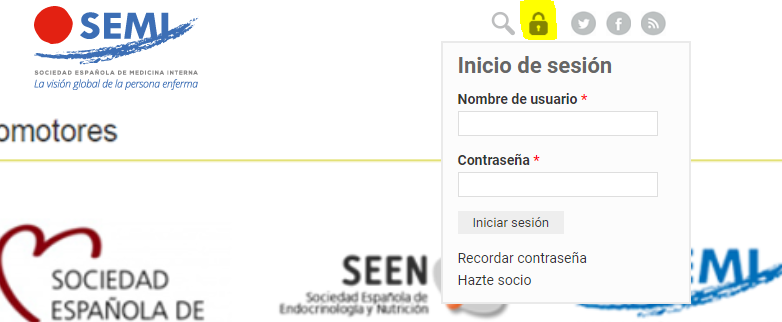
Deslice el cursor hacia abajo hasta la sección "PUBLICACIONES" y pinche en "Revista Clínica Española":

>>>https://www.fesemi.org/publicaciones/revista-clinica/noticias<<<


Subscriber
Subscriber

If you already have your login data, please click here .

If you have forgotten your password you can you can recover it by clicking here and selecting the option “I have forgotten my password”
Subscribe
Subscribe to
Revista Clínica Española (English Edition)
Purchase
Purchase article

Purchasing article the PDF version will be downloaded

Purchase now
Contact
Phone for subscriptions and reporting of errors
From Monday to Friday from 9 a.m. to 6 p.m. (GMT + 1) except for the months of July and August which will be from 9 a.m. to 3 p.m.
Calls from Spain
932 415 960
Calls from outside Spain
+34 932 415 960
Email
References
[1]
World family planning 2022: meeting the changing needs for family planning: contraceptive use by age and method, United Nations, Department of Economic and Social Affairs, (2022),
[2]
M.Y. Abou-Ismail, D. Citla Sridhar, L. Nayak.
Estrogen and thrombosis: a bench to bedside review.
Thromb Res., 192 (2020), pp. 40-51
[3]
O. Lidegaard, L.H. Nielsen, C.W. Skovlund, F.E. Skjeldestad, E. Løkkegaard.
Risk of venous thromboembolism from use of oral contraceptives containing different progestogens and oestrogen doses: Danish cohort study, 2001–09.
[4]
Ø. Lidegaard.
Hormonal contraception and venous thromboembolism.
Acta Obstet Gynecol Scand., 91 (2012), pp. 644-653
[5]
Practice Committee of the American Society for Reproductive Medicine.
Combined hormonal contraception and the risk of venous thromboembolism.
Fertil Steril., 107 (2017), pp. 43-51
[6]
M. de Bastos, B.H. Stegeman, F.R. Rosendaal, et al.
Combined oral contraceptives and venous thrombosis: a systematic review and meta-analysis.
Cochrane Database Syst Rev., 2014 (2014),
[7]
M.V. Dragoman, N.K. Tepper, R. Fu, K.M. Curtis, R. Chou, M.E. Gaffield.
A systematic review and meta-analysis of venous thrombosis risk among users of combined oral contraception.
Int J Gynaecol Obstet., 141 (2018), pp. 287-294
[8]
J. Douxfils, L. Raskin, M. Didembourg, et al.
Are natural estrogens used in contraception at lower risk of venous thromboembolism than synthetic ones? A systematic literature review and meta-analysis.
Front Endocrinol (Lausanne)., 15 (2024),
[9]
S. Reed, C. Koro, J. DiBello, J. Bitzer, K. Heinemann, T. Do Minh.
Prospective controlled cohort study on the safety of a monophasic oral contraceptive containing nomegestrol acetate 2.5 mg and 17-β-oestradiol 1.5 mg (PRO-E2 study).
Eur J Contracept Reprod Health Care, 26 (2021), pp. 439-446
[10]
J. Dinger, T. Do Minh, K. Heinemann.
Impact of estrogen type on cardiovascular safety of combined oral contraceptives.
Contraception., 94 (2016), pp. 328-339
[11]
M. Didembourg, M. Locquet, L. Raskin, et al.
Lower reporting of venous thromboembolisms events with natural estrogen-based combined oral contraceptives compared to ethinylestradiol-containing pills: a disproportionality analysis of the Eudravigilance database.
[12]
F. Fruzzetti, F. Trémollieres, J. Bitzer.
Venous thrombosis and hormonal contraception.
Eur J Contracept Reprod Health Care., 23 (2018), pp. 339-347
[13]
N.K. Tepper, A.T. Nguyen, M.K. Whiteman, K.M. Curtis.
Progestin-only contraception and thrombosis: an updated systematic review.
[14]
J. Beyer-Westendorf, A. Tichelli, M. Mueller, K. Sahin, M. Nagler.
Sex hormones and venous thromboembolism – from contraception to hormone replacement therapy.
[15]
B. Linnemann, U. Scholz, H. Rott.
Venous thromboembolism issues in women.
Hämostaseologie., 42 (2022), pp. 290-299
[16]
Sociedad Española de Contracepción.
Actualización en el manejo clínico de la anticoncepción hormonal, intrauterina y de urgencia. Conferencia de Consenso, Sociedad Española de Contracepción, (2011),
[17]
World Health Organization.
Medical eligibility criteria for contraceptive use, 6th ed., World Health Organization, (2025),
[18]
Faculty of Sexual and Reproductive Healthcare (FSRH).
[19]
S. Franik, J.T. Jensen, N. Maass, et al.
Hormonal contraception. Guideline of the DGGG, OEGGG and SGGG (S3 level).
Geburtshilfe Frauenheilkd., 81 (2021), pp. 152-182
[20]
C. LaVasseur, M. Cushman.
Hormonal therapies and venous thrombosis: considerations for prevention and management.
Res Pract Thromb Haemost., 6 (2022),
[21]
S. Middeldorp, M. Coppens, S. Schulman, et al.
American Society of Hematology 2023 guidelines for management of venous thromboembolism: thrombophilia testing.
[22]
E.F.W. van Vlijmen, N.J.G.M. Veeger, S. Middeldorp, et al.
Combined oral contraceptives, thrombophilia and the risk of venous thromboembolism: a systematic review and meta-analysis.
J Thromb Haemost., 14 (2016), pp. 1393-1403
[23]
L. Morimont, G. Le Gal, P.M. Roy, M. Righini.
Combined oral contraceptives and venous thromboembolism: review and perspective to mitigate the risk.
Front Endocrinol (Lausanne)., 12 (2021),
[24]
D.J. Arachchillage, L. Mackillop, A. Chandratheva, J. Motawani, P. MacCallum, M. Laffan.
Thrombophilia testing: A British Society for Haematology guideline.
Br J Haematol., 198 (2022), pp. 443-458
[25]
M.K. Baldwin, B. Samuelson Bannow, R.P. Rosovsky, N. Sokkary, L.V. Srivaths.
Hormonal therapies in females with blood disorders: thrombophilia, thrombosis, hemoglobinopathies, and anemias.
Res Pract Thromb Haemost., 7 (2023),
[26]
European Medicines Agency.
Combined hormonal contraceptives and venous thromboembolism: Article 31 referral—Annex II, European Medicines Agency, (2014),
[27]
Verstraete.
Venous thromboembolism in women on estrogen therapy: presentation, management, and outcomes in the RIETE Registry. Comunicación oral presentada en: Belgian Society on Thrombosis and Haemostasis (BSTH) Annual Meeting, (2025),
[28]
K.M. Nichols, S. Henkin, M.A. Creager.
Venous thromboembolism associated with pregnancy: JACC focus seminar.
J Am Coll Cardiol., 76 (2020), pp. 2128-2141
[29]
T. Azenkot, E.B. Schwarz.
Special considerations for women of reproductive age on anticoagulation.
J Gen Intern Med, 37 (2022), pp. 2803-2810
[30]
E. DeLoughery, B.S. Bannow.
Anticoagulant therapy for women: implications for menstruation, pregnancy, and lactation.
Hematology Am Soc Hematol Educ Program., 2022 (2022), pp. 467-473
[31]
C.M.M. de Jong, M. Blondon, C. Ay, et al.
Incidence and impact of anticoagulation-associated abnormal menstrual bleeding in women after venous thromboembolism.
Blood., 140 (2022), pp. 1764-1773
[32]
J.P.L. Verlaan, B.H. Stegeman, J.F. Timp, et al.
Hormonal contraceptive use after a first venous thrombotic event and the risk of recurrence in premenopausal women.
J Thromb Haemost., 22 (2024), pp. 2195-2202
[33]
R. Bauersachs, S.D. Berkowitz, B. Brenner, EINSTEIN Investigators, et al.
Oral rivaroxaban for symptomatic venous thromboembolism.
N Engl J Med., 363 (2010), pp. 2499-2510
[34]
H.R. Büller, M.H. Prins, A.W. Lensin, EINSTEIN–PE Investigators, et al.
Oral rivaroxaban for the treatment of symptomatic pulmonary embolism.
N Engl J Med., 366 (2012), pp. 1287-1297
[35]
S. Schulman, C. Kearon, A.K. Kakkar, RE-COVER Study Group, et al.
Dabigatran versus warfarin in the treatment of acute venous thromboembolism.
N Engl J Med., 361 (2009), pp. 2342-2352
[36]
S. Schulman, A.K. Kakkar, S.Z. Goldhaber, RE-COVER II Trial Investigators, et al.
Treatment of acute venous thromboembolism with dabigatran or warfarin and pooled analysis.
Circulation., 129 (2014), pp. 764-772
[37]
M.V. Huisman, M. Ferreira, M. Feuring, M. Fraessdorf, F.A. Klok.
Less abnormal uterine bleeding with dabigatran than warfarin in women treated for acute venous thromboembolism.
J Thromb Haemost., 16 (2018), pp. 1775-1778
[38]
A.T. Nguyen, N.K. Tepper, H. Gold, S. Ramer, K.M. Curtis, M.K. Whiteman.
Safety of contraception among women using Anticoagulant therapy: an updated systematic review.
[39]
H. Vaillant-Roussel, L. Ouchchane, C. Dauphin, P. Philippe, M. Ruivard.
Risk factors for recurrence of venous thromboembolism associated with the use of oral contraceptives.
Contraception., 84 (2011), pp. e23-30
[40]
F.A. Klok, S. Barco.
Optimal management of hormonal contraceptives after an episode of venous thromboembolism.
Thromb Res., 181 (2019), pp. S1-5
[41]
R.H. Cockrum, J. Soo, S.A. Ham, K.S. Cohen, S.G. Snow.
Association of progestogens and venous thromboembolism among women of reproductive age.
Obstet Gynecol., 140 (2022), pp. 477-487
[42]
S. Mantha, R. Karp, V. Raghavan, N. Terrin, K.A. Bauer, J.I. Zwicker.
Assessing the risk of venous thromboembolic events in women taking progestin-only contraception: a meta-analysis.
[43]
L. Skeith, S.M. Bates.
Estrogen, progestin, and beyond: thrombotic risk and contraceptive choices.
Hematology Am Soc Hematol Educ Program., 2024 (2024), pp. 644-651
[44]
L.R. Sammaritano, B.L. Bermas, E.E. Chakravarty, et al.
2020 American College of Rheumatology Guideline for the Management of Reproductive Health in Rheumatic and Musculoskeletal Diseases.
Arthritis Rheumatol, 72 (2020), pp. 529-556
[45]
K.J. Lindley, C.N. Bairey Merz, M.B. Davis, T. Madden, K. Park, N.A. Bello, American College of Cardiology Cardiovascular Disease in Women Committee and the Cardio-Obstetrics Work Group.
Contraception and reproductive planning for women with cardiovascular disease: JACC Focus Seminar 5/5.
J Am Coll Cardiol, 77 (2021), pp. 1823-1834
[46]
S. Teal, A. Edelman.
Contraception selection, effectiveness, and adverse effects: a review.
JAMA., 326 (2021), pp. 2507-2518
[47]
L.R. Sammaritano.
Contraception and preconception counseling in women with autoimmune disease.
Best Pract Res Clin Obstet Gynaecol, 64 (2020), pp. 11-23
[48]
L.R. Sammaritano, B.L. Bermas, E.E. Chakravarty, et al.
2020 American College of Rheumatology Guideline for the Management of Reproductive Health in Rheumatic and Musculoskeletal Diseases.
Arthritis Care Res (Hoboken), 72 (2020), pp. 461-488
[49]
A.T. Nguyen, K.M. Curtis, N.K. Tepper, et al.
Contributors. U.S. medical eligibility criteria for contraceptive use, 2024.
MMWR Recomm Rep, 73 (2024), pp. 1-126
[50]
G. Plu-Bureau, L. Maitrot-Mantelet, J. Hugon-Rodin, M. Canonico.
Hormonal contraceptives and venous thromboembolism: an epidemiological update.
Best Pract Res Clin Endocrinol Metab., 27 (2013), pp. 25-34
[51]
P. Batur, A. Brant, C. McCourt, E.B. Schwarz, with the assistance of Anitra Beasley; Jessica Atrio; and Danielle Gershon; Clinical Affairs Committee, and Neil A. Nero.
Society of Family Planning Clinical Recommendation: Contraceptive considerations for individuals with cancer and cancer survivors part 2 - Breast, ovarian, uterine, and cervical cancer: Joint with the Society of Gynecologic Oncology.
[52]
P. Batur, A. Brant, C. McCourt, E.B. Schwarz, with the assistance of Anitra Beasley; Jessica Atrio; and Danielle Gershon, on behalf of the Clinical Affairs Committee, and Neil A. Nero.
Society of Family Planning Clinical Recommendation: Contraceptive considerations for individuals with cancer and cancer survivors part 3 - Skin, blood, gastrointestinal, liver, lung, central nervous system, and other cancers: Joint with the Society of Gynecologic Oncology.
[53]
A. Gompel, I. Ramirez, J. Bitzer, European Society of Contraception Expert Group on Hormonal Contraception.
Contraception in cancer survivors - an expert review Part I. Breast and gynaecological cancers.
Eur J Contracept Reprod Health Care., 24 (2019), pp. 167-174
[54]
K. Gemzell-Danielsson, D. Apter, J. Zatik, et al.
Estetrol-Drospirenone combination oral contraceptive: a clinical study of contraceptive efficacy, bleeding pattern and safety in Europe and Russia.
[55]
M.D. Creinin, C.L. Westhoff, C. Bouchard, et al.
Estetrol-drospirenone combination oral contraceptive: North American phase 3 efficacy and safety results.
Contraception., 104 (2021), pp. 222-228
[56]
A. Bauerfeind, S. von Stockum, T. Boehnke, K. Heinemann.
Venous thromboembolic risk of estradiol valerate-dienogest compared with ethinyl estradiol-levonorgestrel combined oral contraceptives.
Obstet Gynecol, 143 (2024), pp. 431-434
[57]
Y. Vinogradova, C. Coupland, J. Hippisley-Cox.
Use of combined oral contraceptives and risk of venous thromboembolism: nested case-control studies using the QResearch and CPRD databases.
[58]
J. Dinger, S. Möhner, K. Heinemann.
Cardiovascular risk associated with the use of an etonogestrel-containing vaginal ring.
Obstet Gynecol., 122 (2013), pp. 800-808
[59]
S.S. Jick, J.A. Kaye, S. Russmann, H. Jick.
Risk of nonfatal venous thromboembolism in women using a contraceptive transdermal patch and oral contraceptives containing norgestimate and 35 microg of ethinyl estradiol.
Contraception., 73 (2006), pp. 223-228
[60]
D. Barcellona, E. Grandone, F. Marongiu.
Hormones and thrombosis: the dark side of the moon.
Blood Transfus., 22 (2024), pp. 46-54
Idiomas
Revista Clínica Española (English Edition)
Article options
Tools
