

Suggestions
Idioma
Guide for authors
Searcher
Journal Information
Cite
Cite
Share
Download PDF
More article options
Visits
152
Original article
Available online 5 October 2026

Utility of an extended 12-autoantibody panel in systemic sclerosis: Clinical and prognostic implications in a real-life cohort

Utilidad de un panel extendido de 12 autoanticuerpos en esclerosis sistémica: implicaciones clínicas y pronósticas en una cohorte de vida real
Visits
152
P. López de Turiso Ginera, L. Fumanal Idocinb,
Corresponding author
luisfidocin@gmail.com

Corresponding author.
, L. Martínez-Lostaoc,d, L. Corredor Sánchezc,d, L. Sáez Cómeta,d, J. Velilla Marcod
a Servicio de Medicina Interna, Hospital Universitario Miguel Servet, Zaragoza, Spain
b Servicio de Medicina Interna, Hospital Royo Villanova, Zaragoza, Spain
c Servicio de Inmunología, Hospital Clínico Universitario Lozano Blesa, Zaragoza, Spain
d Facultad de Medicina, Universidad de Zaragoza, Zaragoza, Spain
This item has received
Article information
Abstract
Full Text
Bibliography
Download PDF
Statistics
Abstract
Background and objective

Systemic sclerosis (SSc) is a highly heterogeneous autoimmune disease in which early prognostic stratification is essential. We analysed the clinical and evolutionary associations of 12 SSc-related autoantibodies (Scl-70, CENP-A, CENP-B, RNApol-III, U3-RNP, Th/To, NOR90, U1-RNP, PM/Scl100, PM/Scl75, Ku, and Ro52) in patients with suspected or diagnosed SSc.

Patients and methods

A study was conducted on 186 patients (110 of whom met SSc classification criteria) who tested positive for at least one of 12 antigens detected simultaneously via immunoblotting between 2019 and 2022. We analysed the phenotypic associations of each autoantibody and the time to development of interstitial lung disease (ILD) or elevated pulmonary artery systolic pressure (PASP).

Results

Most patients were female (81.7%), with a mean age at onset of 50.4 ± 15.1 years. Anti-Scl-70 was associated with diffuse SSc and was the main predictor of risk for ILD (HR: 2.43; 95% CI: 1.58–3.75) and elevated PASP (HR: 2.61; 95% CI: 1.09–3.68). Anti-CENP antibodies were linked to limited SSc and a lower incidence of ILD and elevated PASP (HR: 0.20; P < .001 and HR: 0.33; P = .013, respectively). Anti-RNApol-III showed high early pulmonary morbidity (52.9% for ILD and 47.1% for elevated PASP), with one-third of the events occurring within the first three years of evolution. Isolated anti-Ro52 positivity was associated with lower clinical expressivity and fewer evolutionary complications.

Conclusions

Autoantibody profiling via immunoblotting identifies distinct clinical and evolutionary phenotypes in patients with suspected or diagnosed SSc. Anti-RNApol-III is associated with early pulmonary involvement, while anti-Ro52 monospecificity is linked to a more favourable clinical course.

Keywords:
Systemic sclerosis
Autoantibodies
Line immunoblotting
Interstitial lung disease
Pulmonary hypertension
Systemic autoimmune diseases
Resumen
Antecedentes y objetivo

La esclerosis sistémica (ES) es una enfermedad autoinmune muy heterogénea donde la temprana estratificación pronóstica es esencial. Analizamos las asociaciones clínicas y evolutivas de 12 autoanticuerpos relacionados con la ES (Scl-70, CENP-A, CENP-B, RNApol-III, U3 RNP, Th/To, NOR90, U1RNP, PM/Scl100, PM/Scl75, Ku y Ro52) en pacientes con sospecha o diagnóstico de ES.

Pacientes y métodos

Un total de 186 pacientes (de los que 110 cumplían criterios de ES) presentaron entre 2019 y 2022 positividad frente a al menos uno de 12 antígenos detectados simultáneamente por immunoblot. Estudiamos las asociaciones fenotípicas de cada autoanticuerpo y, el tiempo hasta el desarrollo de enfermedad pulmonar intersticial difusa (EPID) o presión sistólica de la arteria pulmonar elevada (PSAP).

Resultados

El 81,7% fueron mujeres y la edad media al debut, 50,4 ± 15,1 años. El anti-Scl-70 se asoció con ES-difusa y fue el principal predictor de riesgo de EPID (HR: 2,43; IC 95%: 1,58–3,75) y de PSAP elevada (HR: 2,61; IC al 95% 1,09–3,68). Los anti-CENP se vincularon a ES-limitadas y menor incidencia de EPID y PSAP elevada (HR: 0,20; P < ,001 y HR: 0,33; P = ,013 respectivamente). El anti-RNApol-III mostró una elevada morbilidad pulmonar precoz (52,9% de EPID y 47,1% de PSAP elevada) con un tercio de los eventos registrados en los primeros tres años de evolución. La positividad aislada para anti-Ro52 mostró menor expresividad clínica y complicaciones evolutivas.

Conclusiones

El perfil de autoanticuerpos detectados por inmunoblot identifica distintos fenotipos clínico-evolutivos en pacientes con sospecha o diagnóstico de ES. El anti-RNApol-III se asocia a afectación pulmonar precoz, y la monoespecificidad anti-Ro52 a un curso clínico más favorable.

Palabras clave:
Esclerosis sistémica
Autoanticuerpos
Inmunotransferencia lineal
Enfermedad pulmonar intersticial difusa
Hipertensión pulmonar
Enfermedades autoinmunes sistémicas
Graphical abstract

Article

These are the options to access the full texts of the publication Revista Clínica Española (English Edition)
Member
Si es usted socio de FESEMI siga los siguientes pasos:

Diríjase desde aquí a la web de la >>>https://www.fesemi.org/publicaciones/revista-clinica/noticias<<< e inicie sesión mediante el formulario que se encuentra en la barra superior, pulsando sobre el candado.

Deslice el cursor hacia abajo hasta la sección "PUBLICACIONES" y pinche en "Revista Clínica Española":
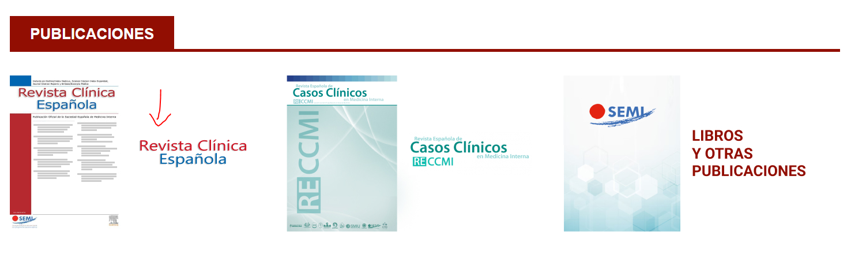
>>>https://www.fesemi.org/publicaciones/revista-clinica/noticias<<<


Subscriber
Subscriber

If you already have your login data, please click here .

If you have forgotten your password you can you can recover it by clicking here and selecting the option “I have forgotten my password”
Subscribe
Subscribe to
Revista Clínica Española (English Edition)
Purchase
Purchase article

Purchasing article the PDF version will be downloaded

Purchase now
Contact
Phone for subscriptions and reporting of errors
From Monday to Friday from 9 a.m. to 6 p.m. (GMT + 1) except for the months of July and August which will be from 9 a.m. to 3 p.m.
Calls from Spain
932 415 960
Calls from outside Spain
+34 932 415 960
Email
References
[1]
A.J. Tyndall, B. Bannert, M. Vonk, et al.
Causes and risk factors for death in systemic sclerosis: a study from the EULAR Scleroderma Trials and Research (EUSTAR) database.
Ann Rheum Dis, 69 (2010), pp. 1809-1815
[2]
I. Cavazzana, T. Vojinovic, P. Airo’, et al.
Systemic sclerosis-specific antibodies: novel and classical biomarkers.
Clin Rev Allergy Immunol, 64 (2023), pp. 412-430
[3]
Y. Hamaguchi, K. Takehara.
Anti-nuclear autoantibodies in systemic sclerosis: news and perspectives.
J Scleroderma Relat Disord, 3 (2018), pp. 201-213
[4]
F. van den Hoogen, D. Khanna, J. Fransen, et al.
2013 classification criteria for systemic sclerosis: an American College of Rheumatology/European League Against Rheumatism Collaborative Initiative.
Ann Rheum Dis, 72 (2013), pp. 1747-1755
[5]
K.T. Ho, J.D. Reveille.
The clinical relevance of autoantibodies in scleroderma.
Arthritis Res Ther, 5 (2003), pp. 80-93
[6]
S.I. Nihtyanova, A. Sari, J.C. Harvey, et al.
Using autoantibodies and cutaneous subset to develop outcome-based disease classification in systemic sclerosis.
Arthritis Rheumatol, 72 (2020), pp. 465-476
[7]
Y. Okano.
Antinuclear antibody in systemic sclerosis (scleroderma).
Rheum Dis Clin North Am, 22 (1996), pp. 709-735
[8]
J. Höppner, C. Tabeling, V. Casteleyn, et al.
Comprehensive autoantibody profiles in systemic sclerosis: clinical cluster analysis.
[9]
K.A. Patterson, P.J. Roberts-Thomson, S. Lester, et al.
Interpretation of an extended autoantibody profile in a well-characterized Australian Systemic Sclerosis (Scleroderma) Cohort using principal components analysis.
Arthritis Rheumatol Hoboken NJ, 67 (2015), pp. 3234-3244
[10]
N. Galiè, M. Humbert, J.L. Vachiery, et al.
2015 ESC/ERS Guidelines for the diagnosis and treatment of pulmonary hypertension: The Joint Task Force for the Diagnosis and Treatment of Pulmonary Hypertension of the European Society of Cardiology (ESC) and the European Respiratory Society (ERS): Endorsed by: Association for European Paediatric and Congenital Cardiology (AEPC), International Society for Heart and Lung Transplantation (ISHLT).
Eur Heart J, 37 (2016), pp. 67-119
[11]
M.R. Pokeerbux, J. Giovannelli, L. Dauchet, et al.
Survival and prognosis factors in systemic sclerosis: data of a French multicenter cohort, systematic review, and meta-analysis of the literature.
Arthritis Res Ther, 21 (2019), pp. 86
[12]
V.D. Steen.
Autoantibodies in systemic sclerosis.
Semin Arthritis Rheum, 35 (2005), pp. 35-42
[13]
E.L. Callejas-Moraga, A. Guillén-Del-Castillo, A.M. Marín-Sánchez, et al.
Clinical features of systemic sclerosis patients with anti-RNA polymerase III antibody in a single centre in Spain.
Clin Exp Rheumatol, 37 (2019), pp. 41-48
[14]
C. Peoples, T.A. Medsger, M. Lucas, B.L. Rosario, C.A. Feghali-Bostwick.
Gender differences in systemic sclerosis: relationship to clinical features, serologic status and outcomes.
J Scleroderma Relat Disord, 1 (2016), pp. 177-240
[15]
J.G. Royle, P.C. Lanyon, M.J. Grainge, A. Abhishek, F.A. Pearce.
The incidence, prevalence, and survival of systemic sclerosis in the UK Clinical Practice Research Datalink.
Clin Rheumatol, 37 (2018), pp. 2103-2111
[16]
C.P. Simeón, L. Armadans, V. Fonollosa, et al.
Mortality and prognostic factors in Spanish patients with systemic sclerosis.
Rheumatol Oxf Engl, 42 (2003), pp. 71-75
[17]
M. Koenig, M. Dieudé, J.L. Senécal.
Predictive value of antinuclear autoantibodies: the lessons of the systemic sclerosis autoantibodies.
Autoimmun Rev, 7 (2008), pp. 588-593
[18]
F.M.P. Meier, K.W. Frommer, R. Dinser, et al.
Update on the profile of the EUSTAR cohort: an analysis of the EULAR Scleroderma Trials and Research group database.
Ann Rheum Dis, 71 (2012), pp. 1355-1360
[19]
P. Żebryk, P. Przymuszała, J.K. Nowak, T. Piorunek, T. Mularek-Kubzdela, M. Puszczewicz.
Autoantibodies and clinical correlations in polish systemic sclerosis patients: a cross-sectional study.
J Clin Med, 12 (2023), pp. 657
[20]
E.G. Wirz, V.K. Jaeger, Y. Allanore, et al.
Incidence and predictors of cutaneous manifestations during the early course of systemic sclerosis: a 10-year longitudinal study from the EUSTAR database.
Ann Rheum Dis, 75 (2016), pp. 1285-1292
[21]
U.A. Walker, A. Tyndall, L. Czirják, et al.
Clinical risk assessment of organ manifestations in systemic sclerosis: a report from the EULAR Scleroderma Trials and Research group database.
Ann Rheum Dis, 66 (2007), pp. 754-763
[22]
C.P. Simeón-Aznar, V. Fonollosa-Plá, C. Tolosa-Vilella, et al.
Registry of the Spanish network for systemic sclerosis: clinical pattern according to cutaneous subsets and immunological status.
Semin Arthritis Rheum, 41 (2012), pp. 789-800
[23]
F.J. García-Hernández, M.J. Castillo-Palma, C. Tolosa-Vilella, et al.
Pulmonary hypertension in Spanish patients with systemic sclerosis. Data from the RESCLE registry.
Clin Rheumatol, 38 (2019), pp. 1117-1124
[24]
F.J. García Hernández, M.J. Castillo Palma, E. Montero Mateos, R. González León, J.E. López Haldón, J. Sánchez Román.
[Screening of pulmonary hypertension in a Spanish cohort of patients with systemic sclerosis].
Med Clin (Barc), 146 (2016), pp. 1-7
[25]
T. Satoh, O. Ishikawa, H. Ihn, et al.
Clinical usefulness of anti-RNA polymerase III antibody measurement by enzyme-linked immunosorbent assay.
Rheumatol Oxf Engl, 48 (2009), pp. 1570-1574
[26]
S.I. Motegi, S. Toki, K. Yamada, A. Uchiyama, O. Ishikawa.
Demographic and clinical features of systemic sclerosis patients with anti-RNA polymerase III antibodies.
J Dermatol, 42 (2015), pp. 189-192
[27]
A.M. Hoffmann-Vold, Ø Midtvedt, A.H. Tennøe, et al.
Cardiopulmonary disease development in anti-RNA polymerase III-positive systemic sclerosis: comparative analyses from an unselected, prospective patient cohort.
J Rheumatol, 44 (2017), pp. 459-465
[28]
M. Nikpour, P. Hissaria, J. Byron, et al.
Prevalence, correlates and clinical usefulness of antibodies to RNA polymerase III in systemic sclerosis: a cross-sectional analysis of data from an Australian cohort.
Arthritis Res Ther, 13 (2011), pp. R211
[29]
M. Humbert, G. Kovacs, M.M. Hoeper, et al.
2022 ESC/ERS Guidelines for the diagnosis and treatment of pulmonary hypertension.
Eur Heart J, 43 (2022), pp. 3618-3731
[30]
M. Hudson, J. Pope, M. Mahler, et al.
Clinical significance of antibodies to Ro52/TRIM21 in systemic sclerosis.
Arthritis Res Ther, 14 (2012), pp. R50
[31]
A. Lee, K.A. Patterson, D.J. Tan, et al.
Anti-Ro52/TRIM21 is independently associated with pulmonary arterial hypertension and mortality in a cohort of systemic sclerosis patients.
Scand J Rheumatol, 50 (2021), pp. 469-474
[32]
M.E. Martel, A. Leurs, D. Launay, et al.
Prevalence of anti-Ro52-kDa/SSA (TRIM21) antibodies and associated clinical phenotype in systemic sclerosis: data from a French cohort, a systematic review and meta-analysis.
[33]
H. Yin, W. Lin, C. Jia, et al.
Dual positivity for anti-Ro52 and anti-Ro60 antibodies is linked to greater organ involvement and disease progression in systemic sclerosis.
Semin Arthritis Rheum, 74 (2025),
[34]
M. Wodkowski, M. Hudson, S. Proudman, et al.
Monospecific anti-Ro52/TRIM21 antibodies in a tri-nation cohort of 1574 systemic sclerosis subjects: evidence of an association with interstitial lung disease and worse survival.
Clin Exp Rheumatol, 33 (2015), pp. S131-135
[35]
A. Sánchez-Montalvá, A. Fernández-Luque, C.P. Simeón, et al.
Anti-SSA/Ro52 autoantibodies in scleroderma: results of an observational, cross-sectional study.
Clin Exp Rheumatol, 32 (2014),
[36]
A. Stochmal, J. Czuwara, M. Trojanowska, L. Rudnicka.
Antinuclear antibodies in systemic sclerosis: an update.
Clin Rev Allergy Immunol, 58 (2020), pp. 40-51
[37]
C. Mejia Otero, S. Assassi, M. Hudson, et al.
Antifibrillarin antibodies are associated with native North American ethnicity and poorer survival in systemic sclerosis.
J Rheumatol, 44 (2017), pp. 799-805
[38]
C.A. Mecoli, B.L. Adler, Q. Yang, et al.
Cancer in systemic sclerosis: analysis of antibodies against components of the Th/To complex.
Arthritis Rheumatol, 73 (2021), pp. 315-323
[39]
L. Moschetti, M.G. Lazzaroni, I. Cavazzana, F. Franceschini, P. Airò.
Anti-Th/To antibodies in systemic sclerosis: analysis of long-term follow-up of pulmonary involvement, organ damage accrual and mortality in an Italian cohort with a case-control study.
Clin Exp Rheumatol, 41 (2023), pp. 1589-1598
[40]
A. Dima, M.C. Vonk, A. Garaiman, et al.
Clinical significance of the anti-Nucleolar Organizer Region 90 antibodies (NOR90) in systemic sclerosis: analysis of the European Scleroderma Trials and Research (EUSTAR) cohort and a systematic literature review.
Eur J Intern Med, 125 (2024), pp. 104-110
[41]
H. Ihn, K. Yamane, N. Yazawa, et al.
Distribution and antigen specificity of anti-U1RNP antibodies in patients with systemic sclerosis.
Clin Exp Immunol, 117 (1999), pp. 383-387
[42]
M. Wodkowski, M. Hudson, S. Proudman, et al.
Clinical correlates of monospecific anti-PM75 and anti-PM100 antibodies in a tri-nation cohort of 1574 systemic sclerosis subjects.
Autoimmunity, 48 (2015), pp. 542-551
[43]
M.G. Lazzaroni, E. Marasco, C. Campochiaro, et al.
The clinical phenotype of systemic sclerosis patients with anti-PM/Scl antibodies: results from the EUSTAR cohort.
Rheumatology, 60 (2021), pp. 5028-5041
[44]
S. Hoa, M. Hudson, Y. Troyanov, et al.
Single-specificity anti-Ku antibodies in an international cohort of 2140 systemic sclerosis subjects: clinical associations.
Medicine (Baltimore), 95 (2016),
[45]
B. Rozman, S. Cucnik, S. Sodin-Semrl, et al.
Prevalence and clinical associations of anti-Ku antibodies in patients with systemic sclerosis: a European EUSTAR-initiated multi-centre case-control study.
Ann Rheum Dis, 67 (2008), pp. 1282-1286
Idiomas
Revista Clínica Española (English Edition)
Article options
Tools
