

Suggestions
Idioma
Guide for authors
Searcher
Journal Information
Vol. 226. Issue 8.
(October 2026)
Cite
Cite
Share
Download PDF
More article options
Visits
598
Vol. 226. Issue 8.
(October 2026)
Original article

Sulfonylureas and fracture risk in patients with type 2 diabetes mellitus: a systematic review and meta-analysis

Sulfonilureas y riesgo de fractura en pacientes con diabetes mellitus tipo 2: una revisión sistemática y un metaanálisis
Visits
598
L. Xu, R. Yuan, H. Yue, M. Wang, W. Cai
Corresponding author
Caiwenwei2025ww@163.com

Corresponding author.
Department of Pharmacy, The Eighth People's Hospital of Wuxi, Wuxi City, Jiangsu Province, 214011, China
This item has received
Article information
Abstract
Full Text
Bibliography
Download PDF
Statistics
Abstract
Objective

To evaluate the association between sulfonylureas and fracture risk in patients with type 2 diabetes mellitus (T2DM).

Methods

PubMed, Web of Science, the Cochrane Library and Embase were systematically searched for observational studies evaluating sulfonylurea-associated fracture risk in patients with T2DM. Pooled relative risk (RR) and its 95% confidence interval (CI) were calculated.

Results

Twelve observational studies involving 5,854,139 patients were included. Sulfonylurea use was significantly associated with increased risks of overall fractures (RR = 1.28; 95% CI: 1.11–1.47) and osteoporotic fractures (RR = 1.38; 95% CI: 1.05–1.80). Site-specific analyses revealed a 23% increase in hip fracture risk (RR = 1.23; 95% CI: 1.03–1.46) and a 47% increase in vertebral fracture risk (RR = 1.47; 95% CI: 1.24–1.74). Fracture risk profiles varied across sulfonylurea subtypes.

Conclusion

Sulfonylureas are associated with a significant increase in the overall risk of fractures and the risk of osteoporotic fractures in patients with T2DM, and this risk is particularly prominent in hip and vertebral fractures.

Keywords:
Sulfonylureas
Type 2 diabetes mellitus
Fracture risk
Meta-analysis
Resumen
Objetivo

Evaluar la asociación entre el uso de sulfonilureas y el riesgo de fracturas en pacientes con diabetes mellitus tipo 2 (DMT2).

Métodos

Se realizaron búsquedas sistemáticas en PubMed, Web of Science, Cochrane Library y Embase de estudios observacionales que evaluaran el riesgo de fracturas asociado a las sulfonilureas en pacientes con DMT2. Se calcularon el riesgo relativo (RR) agrupado y su intervalo de confianza (IC) del 95%.

Resultados

Se incluyeron 12 estudios observacionales con un total de 5.854.139 pacientes. El uso de sulfonilureas se asoció significativamente con un mayor riesgo de fracturas generales (RR = 1,28; IC 95%: 1,11–1,47) y fracturas osteoporóticas (RR = 1,38; IC 95%: 1,05–1,80). Los análisis por sitio específico revelaron un aumento del 23% en el riesgo de fractura de cadera (RR = 1,23; IC 95%: 1,03–1,46) y un aumento del 47% en el riesgo de fractura vertebral (RR = 1,47; IC 95%: 1,24–1,74). Los perfiles de riesgo de fractura variaron según los subtipos de sulfonilureas.

Conclusión

Las sulfonilureas se asocian con un aumento significativo del riesgo general de fracturas y del riesgo de fracturas osteoporóticas en pacientes con DMT2, siendo este riesgo especialmente pronunciado en las fracturas de cadera y vertebrales.

Palabras clave:
Sulfonilureas
Diabetes mellitus tipo 2
Riesgo de fractura
Meta-análisis
Graphical abstract

Article

These are the options to access the full texts of the publication Revista Clínica Española (English Edition)
Member
Si es usted socio de FESEMI siga los siguientes pasos:

Diríjase desde aquí a la web de la >>>https://www.fesemi.org/publicaciones/revista-clinica/noticias<<< e inicie sesión mediante el formulario que se encuentra en la barra superior, pulsando sobre el candado.

Deslice el cursor hacia abajo hasta la sección "PUBLICACIONES" y pinche en "Revista Clínica Española":
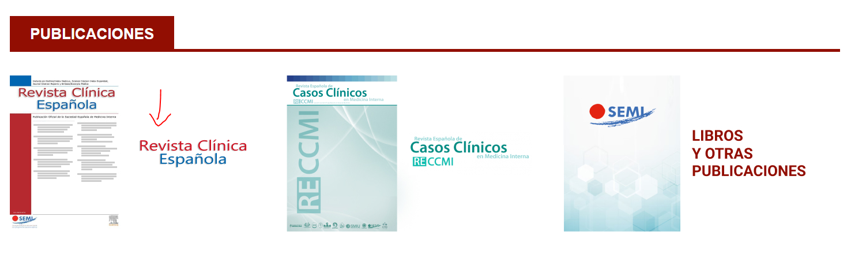
>>>https://www.fesemi.org/publicaciones/revista-clinica/noticias<<<


Subscriber
Subscriber

If you already have your login data, please click here .

If you have forgotten your password you can you can recover it by clicking here and selecting the option “I have forgotten my password”
Subscribe
Subscribe to
Revista Clínica Española (English Edition)
Purchase
Purchase article

Purchasing article the PDF version will be downloaded

Purchase now
Contact
Phone for subscriptions and reporting of errors
From Monday to Friday from 9 a.m. to 6 p.m. (GMT + 1) except for the months of July and August which will be from 9 a.m. to 3 p.m.
Calls from Spain
932 415 960
Calls from outside Spain
+34 932 415 960
Email
References
[1]
P. Saeedi, I. Petersohn, P. Salpea, et al.
Global and regional diabetes prevalence estimates for 2019 and projections for 2030 and 2045: results from the International Diabetes Federation Diabetes Atlas, 9th edition.
Diabetes Res Clin Pract, 157 (2019),
[2]
M. Zoulakis, L. Johansson, H. Litsne, K. Axelsson, M. Lorentzon.
Type 2 diabetes and fracture risk in older women.
JAMA Netw Open, 7 (2024),
[3]
N. Napoli, M. Chandran, D.D. Pierroz, et al.
Mechanisms of diabetes mellitus-induced bone fragility.
Nat Rev Endocrinol, 13 (2017), pp. 208-219
[4]
A.V. Schwartz, D.E. Sellmeyer.
Diabetes, fracture, and bone fragility.
Curr Osteoporos Rep, 5 (2007), pp. 105-111
[5]
C. Eller-Vainicher, E. Cairoli, G. Grassi, et al.
Pathophysiology and management of type 2 diabetes mellitus bone fragility.
J Diabetes Res, 2020 (2020),
[6]
L. Gudipaty, N.K. Rosenfeld, C.S. Fuller, R. Gallop, M.H. Schutta, M.R. Rickels.
Effect of exenatide, sitagliptin, or glimepiride on β-cell secretory capacity in early type 2 diabetes.
Diabetes Care, 37 (2014), pp. 2451-2458
[7]
S. Kalra, A.H. Aamir, A. Raza, et al.
Place of sulfonylureas in the management of type 2 diabetes mellitus in South Asia: a consensus statement.
Indian J Endocrinol Metab, 19 (2015), pp. 577-596
[8]
S. Yakar, C.J. Rosen, W.G. Beamer, et al.
Circulating levels of IGF-1 directly regulate bone growth and density.
J Clin Invest, 110 (2002), pp. 771-781
[9]
J. Dimakos, Y. Cui, R.W. Platt, C. Renoux, K.B. Filion, A. Douros.
Concomitant use of sulfonylureas and β-blockers and the risk of severe hypoglycemia among patients with type 2 diabetes: a population-based cohort study.
Diabetes Care, 46 (2023), pp. 377-383
[10]
M. Saito, Y. Kida, S. Kato, K. Marumo.
Diabetes, collagen, and bone quality.
Curr Osteoporos Rep, 12 (2014), pp. 181-188
[11]
H.M. Colhoun, S.J. Livingstone, H.C. Looker, et al.
Hospitalised hip fracture risk with rosiglitazone and pioglitazone use compared with other glucose-lowering drugs.
Diabetologia, 55 (2012), pp. 2929-2937
[12]
N. Napoli, E.S. Strotmeyer, K.E. Ensrud, et al.
Fracture risk in diabetic elderly men: the MrOS study.
Diabetologia, 57 (2014), pp. 2057-2065
[13]
J.K. Jung, H.J. Kim, H.K. Lee, S.S. Kim, C.S. Shin, J.T. Kim.
Fracture incidence and risk of osteoporosis in female type 2 diabetic patients in Korea.
Diabetes Metab J, 36 (2012), pp. 144-150
[14]
M.J. Page, J.E. McKenzie, P.M. Bossuyt, et al.
The PRISMA 2020 statement: an updated guideline for reporting systematic reviews.
BMJ, 372 (2021), pp. n71
[15]
A. Stang.
Critical evaluation of the Newcastle-Ottawa scale for the assessment of the quality of nonrandomized studies in meta-analyses.
Eur J Epidemiol, 25 (2010), pp. 603-605
[16]
P. Vestergaard, L. Rejnmark, L. Mosekilde.
Relative fracture risk in patients with diabetes mellitus, and the impact of insulin and oral antidiabetic medication on relative fracture risk.
Diabetologia, 48 (2005), pp. 1292-1299
[17]
M. Monami, B. Cresci, A. Colombini, et al.
Bone fractures and hypoglycemic treatment in type 2 diabetic patients: a case-control study.
Diabetes Care, 31 (2008), pp. 199-203
[18]
S.R. Majumdar, R.G. Josse, M. Lin, D.T. Eurich.
Does sitagliptin affect the rate of osteoporotic fractures in type 2 diabetes? Population-based cohort study.
J Clin Endocrinol Metab, 101 (2016), pp. 1963-1969
[19]
H.J. Choi, C. Park, Y.K. Lee, Y.C. Ha, S. Jang, C.S. Shin.
Risk of fractures and diabetes medications: a nationwide cohort study.
Osteoporos Int, 27 (2016), pp. 2709-2715
[20]
J. Starup-Linde, S. Gregersen, M. Frost, P. Vestergaard.
Use of glucose-lowering drugs and risk of fracture in patients with type 2 diabetes.
[21]
Y.C. Hung, C.C. Lin, H.J. Chen, et al.
Severe hypoglycemia and hip fracture in patients with type 2 diabetes: a nationwide population-based cohort study.
Osteoporos Int, 28 (2017), pp. 2053-2060
[22]
S. Kohler, S. Kaspers, A. Salsali, C. Zeller, H.J. Woerle.
Analysis of fractures in patients with type 2 diabetes treated with empagliflozin in pooled data from placebo-controlled trials and a head-to-head study versus glimepiride.
Diabetes Care, 41 (2018), pp. 1809-1816
[23]
M.A. Espeland, R.E. Pratley, J. Rosenstock, et al.
Cardiovascular outcomes and safety with linagliptin, a dipeptidyl peptidase-4 inhibitor, compared with the sulphonylurea glimepiride in older people with type 2 diabetes: a subgroup analysis of the randomized CAROLINA trial.
Diabetes Obes Metab, 23 (2021), pp. 569-580
[24]
A. Fouad Algendy, B. Illigens, A. Alyazeedi.
Increased frequency of severe hypoglycemia with the modified-release gliclazide compared to glimepiride in diabetic older adults; Propensity score-adjusted analysis.
Diabetes Metab Syndr Obes, 15 (2022), pp. 1563-1575
[25]
Y. Tao, M. E, J. Shi, Z. Zhang.
Sulfonylureas use and fractures risk in elderly patients with type 2 diabetes mellitus: a meta-analysis study.
Aging Clin Exp Res, 33 (2021), pp. 2133-2139
[26]
K.B. Kolman, J. Freeman, C.L. Howe.
Hypoglycemia with insulin and sulfonylureas.
Can Fam Physician, 66 (2020), pp. 335
[27]
W. Lv, X. Wang, Q. Xu, W. Lu.
Mechanisms and characteristics of sulfonylureas and glinides.
Curr Top Med Chem, 20 (2020), pp. 37-56
[28]
S.K. Lim, K. Choi, N.H. Heo, Y. Kim, J.Y. Lim.
Characteristics of fragility hip fracture-related falls in the older adults: a systematic review.
J Nutr Health Aging, 28 (2024),
[29]
P. Ma, B. Gu, W. Xiong, et al.
Glimepiride promotes osteogenic differentiation in rat osteoblasts via the PI3K/Akt/eNOS pathway in a high glucose microenvironment.
PLoS One, 9 (2014),
[30]
L.C. Hofbauer, B. Busse, R. Eastell, et al.
Bone fragility in diabetes: novel concepts and clinical implications.
Lancet Diabetes Endocrinol, 10 (2022), pp. 207-220
[31]
S. Prost, S. Pesenti, S. Fuentes, P. Tropiano, B. Blondel.
Treatment of osteoporotic vertebral fractures.
Orthop Traumatol Surg Res, 107 (2021),
Idiomas
Revista Clínica Española (English Edition)
Article options
Tools
Supplemental materials
