

Suggestions
Idioma
Guide for authors
Searcher
Journal Information
Cite
Cite
Share
Download PDF
More article options
Visits
187
Original article
Uncorrected Proof. Available online 30 September 2026

Prognostic value of the Edmonton Obesity Staging System among people hospitalized with obesity

Valor pronóstico del Edmonton Obesity Staging System en personas hospitalizadas con obesidad
Visits
187
J. Enaa,
,1
, J. Carretero Gomezb,1, F.J. Sanchez Lorac, M.V. Bonilla Hernandezd, A. Bustos Merloe, V. Lobo-Antuñaf, J.P. Miramontes Gonzalezg, P. Gonzalez Gonzalezh, P. Nadal Gomezi, C. Hernández-Cerónj, J.M. Fernandez Rodriguezk, B. Martinez Muriell, P. Arcos Peredai, A.R. Martinezi, en nombre del Grupo de Trabajo de Diabetes, Obesidad y Nutrición de la Sociedad Española de Medicina Interna
a Hospital Marina Baixa, Alicante, Spain
b Hospital Universitario de Badajoz, Spain
c Hospital de la Axarquia, Malaga, Spain
d Hospital Universitario de Navarra, Spain
e Hospital Universitario Virgen de las Nieves, Granada, Spain
f Consorcio Hospital General Universitario de Valencia, Spain
g Hospital Rio Hortega, Valladolid, Spain
h Hospital Perpetuo Socorro, Badajoz, Spain
i Hospital Universitario del Sureste, Madrid, Spain
j Hospital Comarcal do Salnes, Pontevedra, Spain
k Hospital Universitario Central de Asturias, Spain
l Hospital Clínico Universitario Lozano Blesa, Zaragoza, Spain
Ver más
This item has received
Article information
Abstract
Full Text
Bibliography
Download PDF
Statistics
Abstract
Background

Obesity is a heterogeneous clinical condition whose severity is not adequately reflected by body mass index (BMI). We used the Edmonton Obesity Staging System (EOSS), which integrates obesity-related comorbidities and functional impairment, to assess the prognosis of hospitalised patients with obesity.

Methods

Prospective cohort study conducted in 26 Spanish hospitals. Hospitalised individuals with a BMI > 30 kg/m2 were included. We evaluated sociodemographic and anthropometric variables, comorbidities, laboratory parameters, baseline treatment and treatment prescribed at discharge, EOSS stage, and outcomes at 90 days after discharge (readmissions and mortality).

Results

Of 3218 screened individuals, 496 (15.4%) were obese. The mean age was 75 years, and 50.1% were women. Most patients with obesity were classified into EOSS stages 2 (35.9%) and 3 (33.1%). Advanced stages were associated with higher comorbidity burden, worse laboratory profile (renal dysfunction, anaemia), and greater therapeutic complexity. As the EOSS stage increased, the trend analysis demonstrated a progressive increase in the risk of readmission (p = 0.026) and death (p = 0.023). In the discharge report, we recorded a significant relative increase in prescriptions of medications with cardiometabolic benefit and effect on body weight (relative increase of 33% for SGLT2 inhibitors and 11.8% for GLP-1/GLP1-GIP receptor agonists).

Conclusions

The EOSS classification system applied to hospitalised patients may identify subgroups of patients with worse prognosis helping physicians to initiate specific treatment to improve health outcomes.

Keywords:
Obesity
Edmonton Obesity Staging System
Hospitalisation
Prognosis
Readmission
Mortality
Resumen
Fundamento

La obesidad es una entidad clínica heterogénea cuya gravedad no queda adecuadamente reflejada por el índice de masa corporal (IMC). Utilizamos el Sistema de Estadificación de la Obesidad de Edmonton (Edmonton Obesity Staging System, EOSS), que integra comorbilidades y limitación funcional para evaluar el pronóstico de los pacientes hospitalizados con obesidad.

Métodos

Estudio de cohortes prospectivo realizado en 26 hospitales españoles. Se incluyeron personas hospitalizadas con IMC > 30 kg/m2. Evaluamos variables sociodemográficas, antropométricas, comorbilidades, variables analíticas, tratamiento habitual y tratamiento prescrito al alta del paciente, estadio EOSS y desenlaces ocurridos a los 90 días del alta (reingresos, mortalidad).

Resultados

De 3.218 personas cribadas, 496 (15,4%) presentaban obesidad. La edad media fue de 75 años y el 50,1% eran mujeres. La mayoría de las personas se clasificaron en estadios EOSS 2 (35,9%) y EOSS 3 (33,1%). Los estadios avanzados se asociaron con mayor carga de comorbilidad, peor perfil analítico (deterioro de la función renal, anemia) y mayor complejidad terapéutica. A medida que aumentaba el estadio EOSS, el análisis de tendencias demostró un aumento progresivo en el riesgo de reingreso (p = 0,026) y muerte (p = 0,023). En el informe de alta, registramos un aumento relativo significativo en las prescripciones de medicamentos con beneficio cardiometabólico y efecto sobre el peso corporal (aumento relativo del 33% para inhibidores SGLT2 y del 11,8% para agonistas de los receptores GLP-1 / GLP1-GIP).

Conclusiones

El sistema de clasificación EOSS aplicado a pacientes hospitalizados puede identificar subgrupos de pacientes con peor pronóstico, lo que ayuda a los médicos a iniciar un tratamiento específico para mejorar los resultados en salud.

Palabras clave:
Obesidad
Sistema de Estadificación de la Obesidad de Edmonton
Medicina Interna
Reingreso hospitalario
Mortalidad
Graphical abstract

Article

These are the options to access the full texts of the publication Revista Clínica Española (English Edition)
Member
Si es usted socio de FESEMI siga los siguientes pasos:

Diríjase desde aquí a la web de la >>>https://www.fesemi.org/publicaciones/revista-clinica/noticias<<< e inicie sesión mediante el formulario que se encuentra en la barra superior, pulsando sobre el candado.

Deslice el cursor hacia abajo hasta la sección "PUBLICACIONES" y pinche en "Revista Clínica Española":
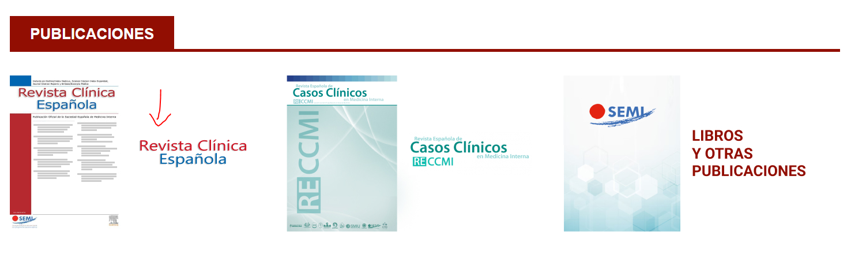
>>>https://www.fesemi.org/publicaciones/revista-clinica/noticias<<<


Subscriber
Subscriber

If you already have your login data, please click here .

If you have forgotten your password you can you can recover it by clicking here and selecting the option “I have forgotten my password”
Subscribe
Subscribe to
Revista Clínica Española (English Edition)
Purchase
Purchase article

Purchasing article the PDF version will be downloaded

Purchase now
Contact
Phone for subscriptions and reporting of errors
From Monday to Friday from 9 a.m. to 6 p.m. (GMT + 1) except for the months of July and August which will be from 9 a.m. to 3 p.m.
Calls from Spain
932 415 960
Calls from outside Spain
+34 932 415 960
Email
References
[1]
K. Nadolsky, B. Addison, M. Agarwal, et al.
American Association of Clinical Endocrinology Consensus Statement: addressing stigma and bias in the diagnosis and management of patients with obesity/adiposity-based chronic disease and assessing bias and stigmatization as determinants of disease severity.
Endocr Pract, 29 (2023), pp. 417-427
[2]
Y. Wu, D. Li, S.H. Vermund.
Advantages and limitations of the body mass index (BMI) to assess adult obesity.
Int J Environ Res Public Health, 21 (2024), pp. 757
[3]
A.M. Sharma, R.F. Kushner.
A proposed clinical staging system for obesity.
Int J Obes (Lond), 33 (2009), pp. 289-295
[4]
S. Chiappetta, C. Stier, R.A. Weiner, members of StuDoQ|MBE of Deutsche Gesellschaft für Allgemein- und Viszeralchirurgie/StuDoQ.
The Edmonton Obesity Staging System predicts perioperative complications and procedure choice in obesity and metabolic surgery—a German nationwide register-based cohort study (StuDoQ|MBE).
Obes Surg, 29 (2019), pp. 3791-3799
[5]
S.L. Skulsky, J.T. Dang, N.J. Switzer, A.M. Sharma, S. Karmali, D.W. Birch.
Higher Edmonton Obesity Staging System scores are independently associated with postoperative complications and mortality following bariatric surgery: an analysis of the MBSAQIP.
Surg Endosc, 35 (2021), pp. 7163-7173
[6]
J.L. Kuk, C.I. Ardern, T.S. Church, et al.
Edmonton Obesity Staging System: association with weight history and mortality risk.
Appl Physiol Nutr Metab, 36 (2011), pp. 570-576
[7]
K. Ejima, N.A. Xavier, T. Mehta.
Comparing the ability of two comprehensive clinical staging systems to predict mortality: EOSS and CMDS.
Obesity (Silver Spring), 28 (2020), pp. 353-361
[8]
J. Carretero Gómez, J.C. Arévalo Lorido, R. Gómez Huelgas, et al.
Prevalence of obesity according to Edmonton staging in the Internal Medicine consultations. Results of the OBEMI study.
Rev Clin Esp (Barc), 217 (2017), pp. 71-78
[9]
E. von Elm, D.G. Altman, M. Egger, S.J. Pocock, P.C. Gøtzsche, J.P. Vandenbroucke, STROBE Initiative.
The Strengthening the Reporting of Observational Studies in Epidemiology (STROBE) statement: guidelines for reporting observational studies.
[10]
F. Rubino, D.E. Cummings, R.H. Eckel, et al.
Definition and diagnostic criteria of clinical obesity.
Lancet Diabetes Endocrinol, 13 (2025), pp. 221-262
[11]
O. Unlu, A.S. Bhatt, A.J. Blood.
Use of sodium-glucose cotransporter 2 inhibitors in hospitalized patients.
[12]
G. Caldeira Gaelzer, A. Armani Prata, L. Gustavo Rizzolli, L. Mendes Afonso, G. Lenci Marques.
Efficacy of GLP-1 receptor agonists in obese patients with heart failure with preserved ejection fraction: a systematic review and meta-analysis of randomized trials and propensity score-matched cohorts.
[13]
J. Librero, G. Sanfélix-Gimeno, S. Peiró.
Medication adherence patterns after hospitalization for coronary heart disease. a population-based study using electronic records and group-based trajectory models.
[14]
E. Atlantis, J.R. John, S.L. Hocking, et al.
Development and internal validation of the Edmonton Obesity Staging System-2 Risk screening Tool (EOSS-2 Risk Tool) for weight-related health complications: a case-control study in a representative sample of Australian adults with overweight and obesity.
Idiomas
Revista Clínica Española (English Edition)
Article options
Tools
